The end of 'euphoria': How retail investors in silver and gold have trapped themselves
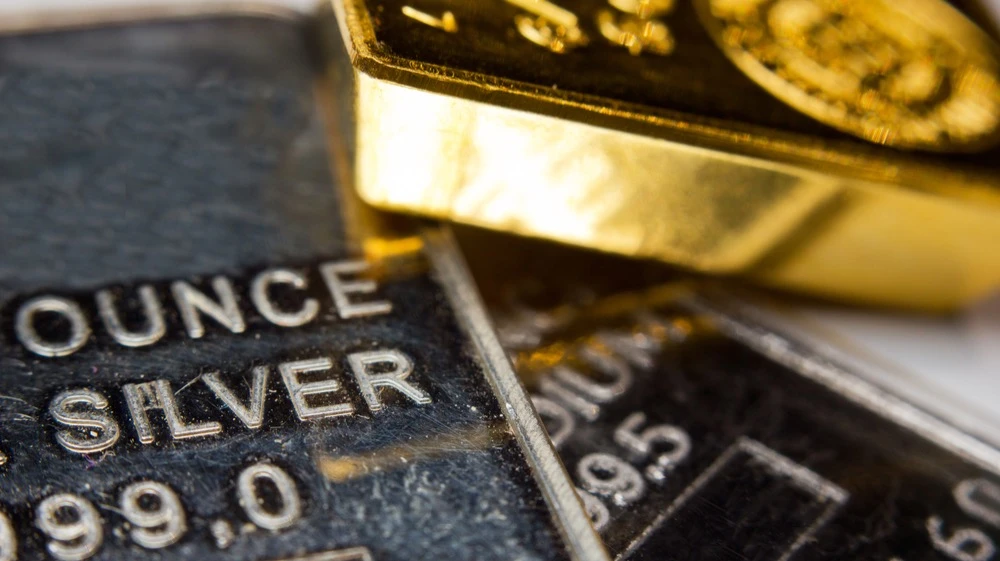
Gold and silver market in late January - early February experienced a collapse, by the current moment it was able to recover only partially / Photo: corlaffra / Shutterstock.com
Gold in the morning of February 9 cost a little above $5 thousand, silver - $81.5. The two metals were able to recoup some of their losses after the historic collapse in late January - early February. One of its reasons was the mass arrival of retail investors to the market with the rapid growth of prices. And the bull market, according to John Templeton, one of the greatest investors of the twentieth century, "dies in euphoria". How will events in the metals market develop further?
A grand collapse
The Financial Times quotes a Reddit user who bought shares in the ProShares Ultra Silver silver exchange-traded fund (known by the ticker AGQ) in the last week of January, i.e. just before the collapse. That began in U.S. trading on Thursday, Jan. 29, and swept through global markets in full force on Friday. AGQ is a leveraged ETF that amplifies price changes (both up and down) by a factor of two.
By the close of Friday, Jan. 30, that user's losses exceeded $25k. "I lost a year's worth of after-tax income today across my entire portfolio," he wrote on the forum.
Another Reddit user who traded silver derivatives admitted to "losing a monstrous amount of money" on Friday, when the white metal's price fell a record 27% in one day.
From a peak of $121.64 to a bottom of $71.33 an ounce in trading Thursday through Monday, February 2, the price of silver fell 41%. Such a collapse has not happened since 1980, when the bubble burst as a result of the Hunt brothers trying to bring the silver market under control.
The price of gold fell 21.5% in the same three days, from $5608.4 to $4404.7.
Precious metals have been rising in price for more than a month, but the rally accelerated rapidly in January, shaking the imagination of even experienced traders, Bloomberg writes. The reasons were increased geopolitical instability (events around Venezuela, Greenland, Iran), fear of dollar depreciation, threat to the independence of the U.S. Federal Reserve System. All this was overlaid by a massive influx of retail players and especially Chinese speculators, whose activity coincided with the traditional buying on the eve of the Lunar New Year. Almost every trading day, starting in Asia, began at higher levels.
"To summarize, there are too many players coming into the market," Bloomberg quoted market commentator Robert Gottlieb, who previously traded precious metals at JPMorgan Chase, as saying.
Buy at the peak
Although the classic market maxim is "buy at the bottom, sell at the peak", individual investors traditionally enter the popular market at the end of an uptrend. The reason is simple: when prices for some asset are at a low level, fluctuate for a long time in a "sideways" or just start to grow within a long-term trend, there is almost no information about it in the public field. Therefore, an individual trader who is not engaged in thorough market analysis does not know about this asset. And the fundamental reasons that may cause further price growth are discussed in narrow professional circles, at most - in the specialized press.
To attract widespread attention of the media and the investment public, a trend must become sustainable, and to create excitement and astonishing returns, it must enter the "overheating" phase. This step-by-step development of the trend was formulated by Templeton: "Bull markets are born in skepticism, grow on pessimism, mature on optimism and die in euphoria".
In January, at the peak of euphoria, individual traders invested a record $1 billion in silver exchange-traded funds, according to Vanda Research calculations. At the end of 2025, inflows into these funds were below $500 million, and at the beginning of the year at the price of the metal at $29-33 per ounce, even outflows of hundreds of millions of dollars were recorded.
The volume of trading in units of the most popular exchange-traded fund for silver, iShares Silver Trust, reached $39.4 billion on January 26, almost equaling the turnover of $41.9 billion on SPDR S&P 500, the most popular fund on the S&P 500 index, writes FT. On the same day in 2025, these figures differed by a factor of 70.
Many private equity investors, in a bid to make more money, have set themselves up for even greater exposure by investing in leveraged exchange-traded funds such as AGQ. These funds "tend to appeal specifically to retail investors" because institutional ones can get leverage "in a more efficient way", Trevor Yates of Global X ETFs told the FT.
AGQ's share price fell 60% on Friday, January 30, and another 9% on the following Monday.
"Get to know the markets."
The collapse in the silver and gold markets stunned professionals as much as the January growth.
"This is by far the wildest thing I've seen in my career," said Dominik Sperzel, director of trading at Germany's Heraeus Precious Metals, one of the world's largest precious metals refiners. "A collapse in gold prices on a scale like today is something I haven't seen since the dark days of the 2008 global financial crisis," IG analyst Tony Sycamore said on Feb. 2(quoted by Reuters).
As for silver, because of its high volatility, it has "always been a death trap," says Rona O'Connell, an analyst at StoneX: "In the past few weeks, we've seen a move in hyperbole - and a crash was only a matter of time."
Those who resort to a booming market, especially one less traditional than simple stock trading, are far from ignorant of how it works.
"Let me introduce you to the futures markets," wrote Jon Treacy, publisher of investment newsletter Fuller Treacy Money, when the price of silver collapsed from $83.6 to $70.5 an ounce in Dec. 29 trading. - If you own silver and are listening closely to all these newfangled experts who tell you that its price will never fall, or that it will hit $500 in the next five years, then this post is for you."
Futures exchanges are not only trading platforms, they also have a responsibility to ensure the efficient functioning of the market for commercial consumers of commodities, Tricey explained.
Silver is just actively used in industry, including electronics. New York COMEX, the main exchange for precious metals in the U.S., by January 29, twice in two weeks increased the guarantee: for futures transactions, a trader needs money for only a fraction of the face value of the contract, resulting in leverage. That is, traders now need 33% more money to open and maintain long positions, Treacy wrote: "Have the factors that fueled speculative growth changed? The answer is no. What has changed are the factors that gave leverage."
The exchange could further tighten trading conditions, up to and including banning long positions, Treacy wrote (which is how exchange officials "pricked" the Hunt Brothers bubble).
When the market recovered from the Dec. 29 drop and continued to rise, COMEX continued to raise collateral, Treacy later pointed out.
With rapid, speculative growth of quotations, fueled by borrowed funds, other risks arise. As prices spike, banks stop quoting, "liquidity evaporates and volatility explodes," as traders' bids are not "answered" by banks, Ole Hansen, director of commodity strategy at Saxo Bank, told Bloomberg.
In addition, exchange-traded funds purchase a physical asset or, as in the case of AGQ, futures. Dealers selling options do the same for hedging purposes, especially when demand for such instruments grows rapidly, Bloomberg explains. Options have become a popular tool for retail investors, and in the case of gold and silver, their buying has reached record levels.
On January 29 (the day before the full-blown collapse), the market bought 6.73 million and 5.02 million silver and gold upside options, respectively. Three months earlier, these figures were 4.6 million and 3.9 million. The purchase of metal by funds and dealers further stimulates the price of metal to rise - and also further stimulates its fall when they start selling it en masse.
In conducting a rebalancing Jan. 30 to reflect the new value of its assets, AGQ sold about $4 billion worth of silver futures, Hansen says.
A trend break as a result of such a large correction, as happened a week ago, is usually followed by a long sideways period, which in the case of precious metals can last months or even years, says Treacy.
In this case, geopolitical instability may help to shorten this period, especially in the case of gold: the circle of its buyers is much wider than that of silver, and central banks actively acquiring it will help to form a support level.
Either way, investors will have plenty of time to see if the market has found a bottom, says Treacy, and it's better to re-establish a position by investing piecemeal.
This article was AI-translated and verified by a human editor