The "glory days" are coming: how investor attitudes toward green energy have changed

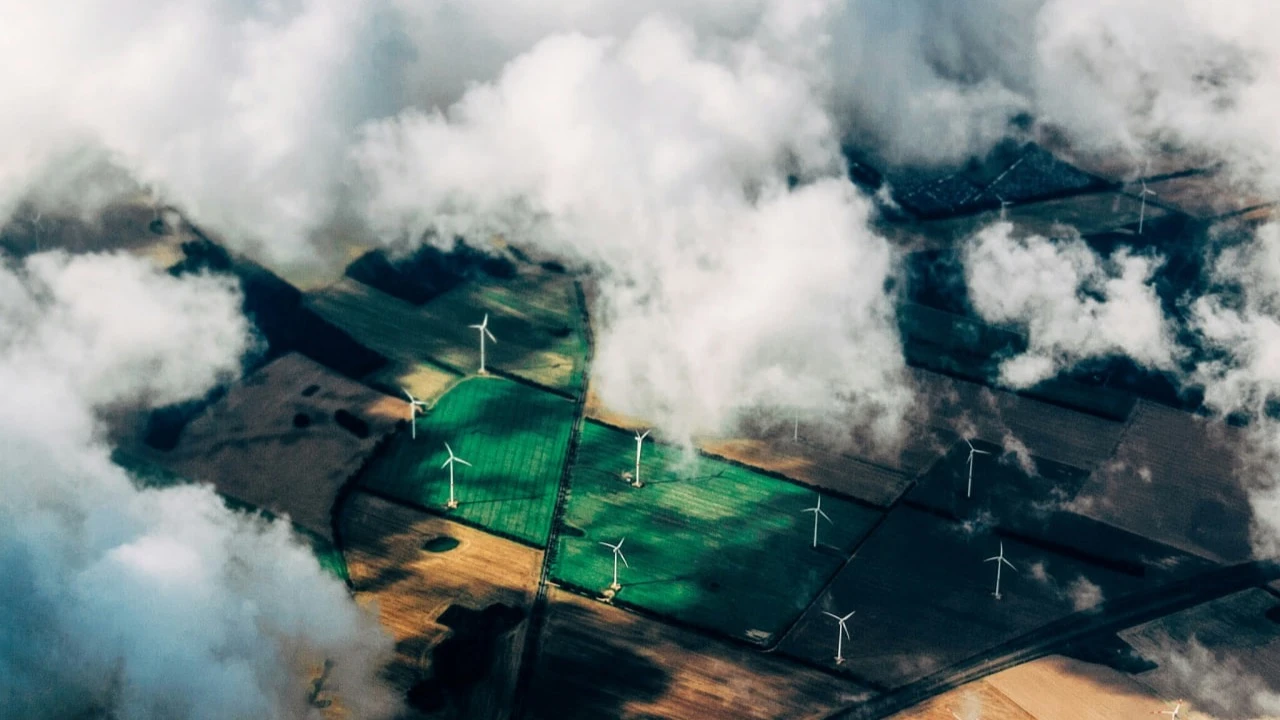
U.S. President Donald Trump's crusade against renewable energy seemed like it should have brought the sector's shares down even further. But the opposite has happened - the sector has once again attracted investors' attention and has become one of the highest-yielding sectors in the world this year. That said, quotes are still at low levels. Most importantly, the clean energy sector no longer needs subsidies, analysts say.
"Glory days."
In the U.S., alternative energy funds received their first, albeit small, inflow of funds in June - before that, $24 billion had left the market in 25 months, according to Lipper, which analyzes funds.
The new funds then came in August and September (nearly $400 million and $800 million, respectively), Reuters cites the company's data.
Trump launched an offensive against green energy almost immediately after his return to the White House and, as a result, largely removed government support for it. However, according to fund managers, the consequences have not been as severe as many feared. Company valuations were so disconnected from fundamentals "that the mere confirmation of negative news was enough to trigger a shift in sentiment to positive," Alastair Bishop, portfolio manager at BlackRock, the world's largest UCI, told the agency. That, he said, "allowed investors to focus on fundamentals."
Aniket Shah, managing director of Jefferies Financial Group, describes the resurgence of green investing as the advent of "glory days."
"We're at that wonderful moment where both capital markets and the real economy are stepping up efforts on sustainability and the energy transition," he told Bloomberg.
According to Shah, the world is "fixated" on what's happening in the U.S., but to get a better idea of how the energy transition is going, you have to look at China, Japan, India, Europe and even individual U.S. states that, despite federal government policies, are not about to curtail green projects.
Intellectual demand
Over the past decade, demand for electricity has grown twice as fast as for energy in general, but now, between now and 2035, it will grow six times faster, given the proliferation of electric cars, air conditioning (including as a result of global warming), computer chips, artificial intelligence, etc., the International Energy Agency (IEA) predicts.
According to IEA experts, AI could radically transform the energy sector: electricity demand from data centers is forecast to more than double by 2030, to 945 TWh, slightly exceeding Japan's current total consumption. The main driver of this growth will be AI: it will demand more than four times as much electricity from data centers by the end of the decade. The main sources of this demand will be the US and China.
Even if countries maintain their current policies, let alone accelerate the energy transition, low-carbon sources (solar, wind, nuclear, hydro) will start producing more than half of the world's electricity by 2030. This requires investment not only in generating capacity, but also in distribution and battery storage, the IEA notes.
Shares of companies related to these needs have experienced rapid growth in recent months. Shares of U.S. Bloom Energy, which has agreed with Oracle to supply electricity-generating fuel cells for data centers, have quadrupled in four months, and China's Goldwind Science & Technology, the world's largest wind turbine maker, have doubled since early April, when Trump first sought to impose import duties of more than 100 percent on China and then announced a trade truce.
After such a jump, Bloom Energy shares are worth more than the average target price expected by analysts - $108.53 (as of October 27 close) versus $80.2. 13 of them (the majority) recommend "hold" the stock, while 11 have a "buy" or "above market" recommendation. Another three have a "below market" or "sell" recommendation. Goldwind's average target price (11.2 yuan) is also higher than the current one (15.57 yuan as of October 27), but 13 of them give a "buy" or "above market" recommendation, five of them give a "hold" recommendation, and no one recommends "sell".
In the US, electricity demand has remained stable for more than a decade, but is now expected to boom due to the development of AI and the need for data centers. Nextera Energy, which generates electricity from renewable energy sources (RES), predicts that the US will need an additional 450 GW of generating capacity by 2030. Of this, gas-fired power plants will be able to provide only 75 GW, while delayed decommissioning of coal-fired plants and a slight increase at nuclear plants will provide 40 GW, Reuters cites its calculations.
It will take years to significantly increase the capacity of the nuclear power plants that the technology companies are negotiating with. In this situation, solar power plants, together with energy storage capacity, appear to be the only source that can quickly accommodate production growth.
"Data centers will need electricity in two to three years. So they will put as much renewables into operation as they can. It's not only the cheapest source [of electricity], but also the one that can be built the fastest," Roman Boughner, portfolio manager at Robeco, told Reuters.
These trends show that renewable energy is transforming from a sector that was largely driven by subsidies and the policies of the governments that support it to an industry whose rise is largely market-driven. Demand for electricity is growing rapidly, and "every electron counts," Boner says.
"The industry has revitalized."
The MSCI Global Alternative Energy index of alternative energy companies has halved since its peak in January 2021, but added 17% in Q3 2025. In its best-performing quarter since late 2020, it posted twice as much growth as the S&P 500 U.S. broad market index. Shares of US solar energy company First Solar rose 33% in the third quarter, while Portugal's EDP Renovaveis rose 18%.
First Solar has an average target price of $240.82 with a current target price of $247.69 (as of October 27). 32 out of 37 analysts give a "buy" or "outperform" recommendation on the stock. EDP Renovaveis has an average target price roughly on par with the current price (€12.88), 11 analysts give a "buy" or "above market" recommendation, 11 give a "hold" recommendation and two give a "below market" recommendation.
Despite the jump in prices in recent months, the MSCI Global Alternative Energy index trades at a 40% discount to the MSCI World index of developed countries, a few months ago the gap reached 67%. Meanwhile, on average over the past 10 years, the index has traded at a 7.4% premium, Reuters notes. The ratio of capitalization of its member companies to their projected earnings (P/E) is only 14.6 versus 20.4 for MSCI World.
According to Jonathan Weghorn, who manages green energy funds at Guinness Asset Management, the profits of renewable energy companies will start to grow, especially those related to supplying data centers and AI, power grid provisioning, "The industry is just now picking up and the market is responding to that."
BlackRock's Bishop also expects earnings forecasts to rise, which usually supports quotes.
Shares of the sector, which requires significant investment, are also supported by the easing of monetary policy by leading central banks. Quotes have been falling in recent years, including due to rising interest rates, which increased the debt burden of companies.
Private equity funds began to actively enter the sector. In early October, Brookfield Asset Management announced that it had raised $20 billion in a clean energy transition fund, which has become the world's largest in this area. At the same time, Resolution Investors announced the formation of a global climate equity fund, which intends to raise $1 billion.
Demand for energy is "growing rapidly, fueled by the development of AI as well as the electrification of industry and transportation," said Connor Teskey, president of Brookfield Asset Management, "In this environment, we need an 'anything and everything' approach to energy investment, where low-carbon resources will continue to be favored."
This article was AI-translated and verified by a human editor