The IEA wants to dump a record amount of oil on the market. What will happen to prices?
Unlocking strategic oil reserves has not always had positive results for consuming countries

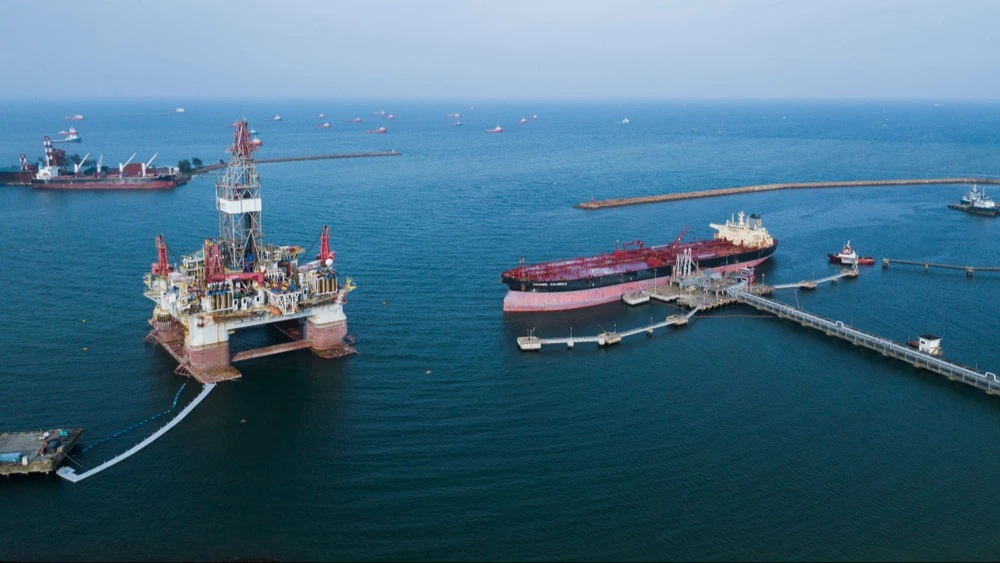
Gulf oil and petroleum product exports from Iran hit 14.5 million bpd due to Iran's war / Photo: pijie_mhar / Shutterstock.com
The International Energy Agency (IEA), created by the U.S. and Western allies after the 1970s oil crisis to counterbalance the OPEC cartel, has proposed the largest release of oil reserves in its history, The Wall Street Journal reported, citing anonymous officials. The IEA hopes in this way to bring down prices, which have risen sharply due to the war in Iran. The decision could be made as early as today.
Details
The International Energy Agency has convened an emergency meeting of representatives of specialized agencies of 32 member countries - they plan to make a decision on the proposed initiative on March 11, sources told WSJ. The volume of released oil will exceed 182 million barrels - that's how much the IEA member countries brought to the market in two stages in 2022, when Russia invaded Ukraine, the publication recalls. The proposal must be approved by all IEA members: the objection of even one state will postpone the implementation of the plan, WSJ notes.
How long will it last
Before the Iran war, the Gulf states exported about 20 million barrels of oil and oil products per day, which is about one-fifth of the world's consumption. According to the IEA, about 5.5 million barrels per day of this volume could be supplied via pipeline infrastructure bypassing the Strait of Hormuz blocked by Iran. Thus, 14.5 million barrels of export supplies are subject to daily substitution, WSJ writes.
IEA member countries have 1.2 billion barrels in reserves, plus another 600 million barrels in the form of mandatory commercial stocks, the agency's executive director Fatih Birol said earlier this week. The WSJ calculates that this volume would be enough to offset the fallout from the Gulf supply for about 124 days.
What's up with oil prices
Futures for benchmark Brent and North American WTI crude oil were rising weakly before the WSJ published the IEA's plans. After the publication of the article, both contracts immediately fell, leveling the initial rise in prices, reports Reuters. Now Brent is trading in the plus by 0.1%, WTI adds 0.7%.
A day earlier, on March 10, contradictory statements by U.S. officials caused sharp volatility on the oil market: prices collapsed after the publication on the page of U.S. Energy Secretary Chris Wright in social network X that the U.S. Navy conducted a tanker through the Strait of Hormuz. However, the post was quickly deleted and White House press secretary Carolyn Levitt denied the convoy. Brent and WTI recovered some of their losses as a result.
Using IEA reserves can be "both a safety valve and a warning signal," Charu Chanana, chief investment strategist at Saxo Markets in Singapore, told Bloomberg. "It can temporarily increase supply and contain panic, but it also signals to the market that the risk of disruption is so great that extraordinary measures were needed," the analyst explained.
The initial shock to the oil market seems to have already been factored into prices, and the base case scenario assumes lower quotes as "there is a big political drive to get this done," said Joshua Crabb, head of Asia-Pacific equities at Robeco in Hong Kong. "The market is coming back to the fundamentals and they are still good, especially if oil prices come down," he said.
Lessons from the past
History shows that printing out the IEA's strategic reserves brings mixed results, WSJ writes. This tool has significant limitations. First, sold-out reserves must be replenished, which inevitably creates additional pent-up demand. As storage facilities become depleted, markets become concerned that there is sufficient supply to replenish them. In addition, the contents of IEA reserves differ in composition from the oil and petroleum products locked up in the Persian Gulf, the publication emphasizes.
An illustrative example of unpredictable market reaction was the events of 2022, when, after the outbreak of hostilities in Ukraine, IEA member countries tried to stabilize the situation at the expense of reserves. Initially, this step led to the exact opposite effect. Traders took the emergency intervention as a sign that the scale of the crisis was much more serious than expected. As a result, prices soared by about 20% in the week after the announcement of the release of reserves to the market. It was not until some time later that these deliveries really helped to bring down oil prices.
However, history also knows exceptionally successful examples, such as Operation Desert Storm in 1991. At that time, the U.S. and the IEA initiated the first ever release of oil from reserves right on the night of the attack on Iraq according to a pre-prepared plan. The effect was instantaneous: on the first day of the offensive, prices plummeted by more than 20%.
This article was AI-translated and verified by a human editor