The internet and social media have changed investment: why isn't it always for the better?

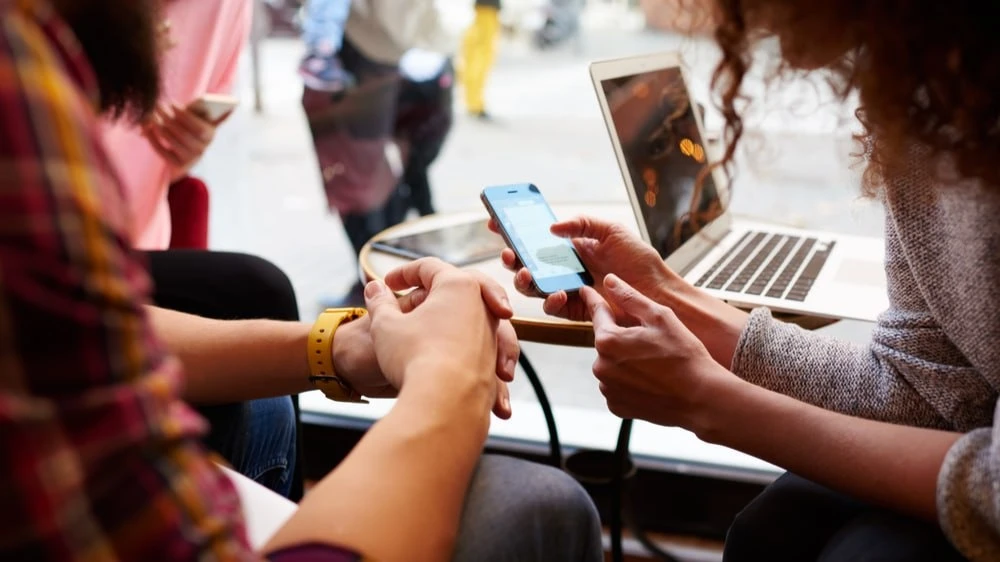
The Internet was supposed to be the investor's main ally. Access to information is instantaneous, free training materials abound, a brokerage account is opened in a couple of minutes, financial blogs and channels throw up investment ideas every day.
But along with this freedom came a new reality: speed and emotion became more important than analysis. Social networks create the illusion of knowledge, push for unnecessary transactions and become an ideal tool for manipulation.
"To the Moon!"
One of the clearest examples of the internet's influence on investment is the story of GameStop, AMC and Bed Bath & Beyond. In early 2021, thousands of members of the r/WallStreetBets community on Reddit agreed to buy shares of the same companies together. As a result, the stock price of, for example, struggling retailer GameStop soared from $20 to more than $500 in a matter of weeks (equivalent to $125 dollars for GameStop's current stock price adjusted for the split that took place in 2022). Even Elon Musk participated in this stock run-up, encouraging buyers by retweeting"Gamestonk!!!".
A classic"short-squeeze" happened, which caused several large funds that were short on the stock to lose billions of dollars. However, among those who participated in the GameStop stock run-up, not everyone managed to stay in profit: after the end of the wave of aggressive purchases, prices quickly fell, and those who did not have time to jump out of a long position found themselves in losses.
It seemed like a lesson learned. But in Ma 2024, a legendary trader from the r/WallStreetBets community named Roaring Kitty suddenly returned to X (Twitter) after three years of silence, where he posted just one single picture: a man with a joystick, propped up in a chair - a popular meme among gamers that means things are getting serious.
This was enough to start a new surge of purchases of GameStop shares - their price quickly doubled for no apparent fundamental reason. A similar effect happened with the quotes of other securities that Reddit users were hyping in 2021.
This phenomenon is not an exclusively American phenomenon. In April 2024, the European Securities and Markets Authority (ESMA) released a report showing that social media sentiment can move European stock prices faster than classic media. This is particularly evident in the case of companies with low transparency, where the lack of facts leads the market to speculate on rumors.
Sometimes financial advice on social media isn't just noise, it's purposeful manipulation.
In December 2022, the U.S. Securities and Exchange Commission accused eight major Twitter and Discord influencers of organizing a pump-and-dump scheme worth about $100 million: they promoted specific securities that they had previously bought on the cheap and dumped the previously bought into the market on the growth of their price. The court later dropped some of the charges, but some of the bloggers managed to plead guilty and make a deal with the authorities.
And in Germany, the local regulator BaFin has already recorded cases when fraudsters disguised as "analysts" swindled investors out of money via Telegram and WhatsApp and took them to unlicensed platforms.
Anyway, these are all important signals for the markets. Firstly, the speed of change and its "virality" is now quite an important market factor. And secondly, although regulators do not like it, their powers are not enough to reliably protect investors from manipulation.
But why are tens of thousands of people themselves so easily drawn into this vortex? The answer lies in psychology.
Feeling yourself as part of a large and living social networking organism activates the brain's dopamine system. Likes and reposts become easy and instant "rewards" for the ego. This feeling reinforces the FOMO (fear of missing out) effect - the fear of missing out and the desire to take urgent action. In addition, the Internet has radically simplified not only access to information, but also greatly increased the likelihood of self-deception about one's own competence.
"I repost, therefore I understand."
In a series of experiments, researchers from the University of Texas at Austin Adrian Ward, Frank Zheng and Susan Broniarczyk showed that the very fact of reposting some material in social networks increases the subjective feeling of "I know", even if the person forwarding the text itself has not fully read and comprehended it. The work is called: I Share, Therefore I Know? Participants of the experiment who shared links "about finance", then gave more confident answers in tests, although in reality the level of their knowledge did not become higher. This is especially dangerous in investments: you send a video or a post "about the top 3 stocks of this October" and you already feel like an expert.
Another paper by Adrian Ward, done with Tim Grillo and Philip Fernbach - Confidence Without Competence - found a different correlation: searching for financial information online psychologically makes people bolder and more risk-averse. Participants in the experiment were given the task of searching for information on Google before making a financial decision. After the search, their confidence increased, but objective tests again showed that there was no reason to do so. When this "pumped up courage" meets the virality of social media, the negative effects multiply.
A study by Sunwoo Tessa Lee and Sherman Hanna on NFCS data (National Financial Capability Study, 2018, USA) demonstrates that people who overestimate their financial knowledge are more likely to make early withdrawals from their retirement or savings accounts (we're talking about hardship withdrawals).
The costs of self-confidence are also the subject of a recent paper by French researchers from EM Normandie - Damien Chanet, Magali Treloan and David Moroz - with the telling title: "When thinking you're good makes you dumber." The conclusion is unpleasant but important: when subjective "expertise" overtakes real knowledge, people become less open to new things, more likely to choose information that confirms their views and ignore alternatives, generally provoking classic "closed-mindedness" and dogmatism. In the marketplace, this is almost a recipe for error.
Social media savvy investors are more likely to hold penny stocks (stocks under $5) and their investment portfolios are less diversified. This combination increases risk but does not guarantee a positive outcome.
Social media can provoke over-activity. A study by Miranda Reiter, Di Qing and Morgen Nations from Texas Tech University found that users who take investment ideas from social networks are significantly more likely to make more than 10 deals per month than those who do not use social networks (26% vs. 17%). And as behavioral finance experts Brad Barber and Terrence Odian found out back in the last century, the most active investors consistently lose to the index. Having studied the dynamics of 66.5 thousand brokerage accounts, they found that commissions, taxes and errors in choosing the entry point negate all attempts to outsmart the market. Now, a quarter of a century later, the Internet further amplifies this effect, as the investor's natural excessive activity is fueled by likes, memes, and advice from social networks.
When the internet helps investors
It is important to realize that the Internet itself is by no means the enemy. Forums and communities can be a great help in learning new things, if you have the right way of dealing with incoming information. And of course, the Internet is a great medium for gaining structured knowledge.
An NBER meta-analysis of 76 randomized experiments in 33 countries showed that financial education programs, on average, have positive effects both in the level of knowledge about how to handle money and in improving students' daily practice in this area. In addition, active learning formats (exercises, tests, feedback) have a more sustainable effect than conventional lectures.
Professional financial marketers, too, can help their retail clients be more rational. In a fresh field experiment conducted by German and Swiss researchers on the clients of a robo-advisor, they changed just one little thing: they made the default choice a "sustainable" portfolio with a low risk ratio. And almost immediately the share of clients who chose this particular one increased from 23% to 36%. In other words, the very interface of a brokerage application can encourage you to make a more balanced decision, even when emotions are pushing you in the other direction.
And another European experiment showed that the way the "sell" screen in an app is arranged can reduce the so-called "disposition effect" - the habit of taking profits too quickly and holding losing positions for too long. In other words, even simple customization of buttons and prompts can remove a massive error that millions of investors face.
How not to fall victim to the social network effect
- Separate certainty from knowledge. Before a transaction, ask yourself a simple question: what do I know for sure, and what did I just see in a social media feed?
- Frequent transactions are not a guarantee of success. On the contrary, they are more likely to create unnecessary costs and stress. It is better to do less, but thoughtfully.
- Form filters. Consider who to read, who to trust. Checking the author, his reputation, and conflicts of interest is not "paranoia" but a reasonable defense.
- Learn new things, but don't demand immediate breakthroughs from yourself. And when you realize that many people only think they know more than they really know, that's a good sign.
- Plan. Decide in advance what you will do when the market is down and when it is up. Let rebalancing strategies, automatic replenishments, stop losses and take profits become part of your sustainable financial future.
This article was AI-translated and verified by a human editor