The Minsky moment and the AI market: what's being overlooked in the bubble debate

Rising investment in AI and Oracle's troubles are spurring discussions about the Minsky moment, a tipping point where companies begin to run up debt without regard for common sense and eventually collapse. How close is the market to this point? Independent analyst Mikhail Zavaraev believes that the situation is far from being resolved, and the right strategy is more important than attempts to predict the moment of crisis onset.
AI optimists vs AI pessimists
The general public's interest in the possible formation of a financial bubble in the AI sphere has dropped significantly over the past month, but in the investment community this issue remains extremely topical, because the main arguments of the parties - both AI optimists and AI pessimists - have not lost their significance. The dispute is getting hotter and hotter, as the market capitalization of AI-related companies continues to grow, the amount of investment is exciting, and concerns about their "lock-in" within the AI ecosystem have not gone away. Market participants are trying to find an answer to the question of whether there is a bubble in the AI sector.
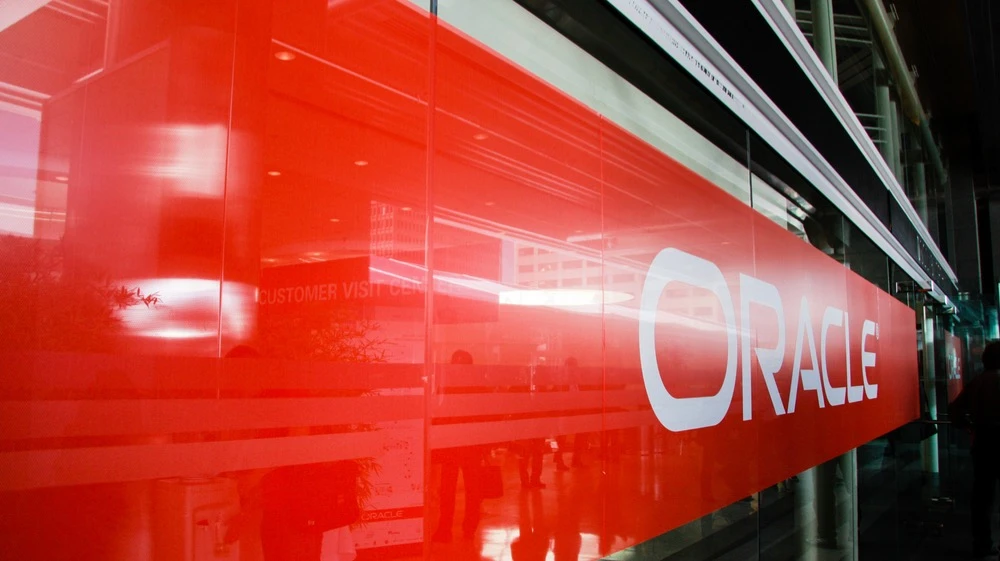
The situation around Oracle is adding fuel to the fire, which for market bears may look like the collapse of the AI bubble in miniature.
The company's shares rose 32% in June, following a successful report that showed continued strong revenue growth in the cloud infrastructure segment. In September, the company's quotes soared more than 40% in one day on news of four multi-billion dollar contracts with AI industry leaders, including OpenAI.
But in the months that followed, Oracle had a rather unexpected plot twist - its stock plummeted 40% from its September peak. The reason is quite simple: investors are no longer satisfied with simple promises of a bright future. At the very least, they should be told what road Oracle will take to that bright future and where it will get the money to fulfill the multibillion-dollar contracts it has signed. Oracle already had a relatively high debt load even before announcing its recent large-scale investments in AI infrastructure.
After the announcement of new contracts, the value of Oracle's 5-year credit default swaps (CDS, insurance against default) rose to a 16-year high in December. And it is not surprising, because the company's debt is already $127 billion, $25 billion of which is to be repaid in the next three years. At the same time, the company has less than $20 billion of cache on its balance sheet. Oracle has recorded negative free cash flow in the last 12 months. That is, it has spent more live cash than it has earned. It's far from certain that the situation will dramatically change for the better anytime soon. The company's financial partner, Blue Owl Capital, has refused to provide $10 billion for a data center project in Michigan. This news is unlikely to please Oracle bondholders, especially if we take into account that one of the reasons for the refusal is the fear of the techno-company's debt.
Oracle's example should cool the fervor of AI optimists, who so far have not been particularly concerned about a possible bubble in the AI market.
And while investor Ray Dalio's fears about the extreme similarity of the current situation to the dot-com bubble should hardly have alarmed anyone, given his regular predictions of a possible apocalypse, statements by OpenAI head Sam Altman - an industry insider not interested in stoking fears - that a bubble in the AI market is in the process of forming should sound much more sobering. Among others, Michael Burry, who predicted the 2008 mortgage crisis, has spoken out about the inevitable collapse of the AI bubble. Even Fed Chairman Jerome Powell has already drawn attention to the high valuations of the stock market.
Interestingly, one of his predecessors, Ben Bernanke, whose mandate was precisely during the mortgage crisis and its aftermath, admitted in his memoirs that the crisis came as something of a surprise to him. This is not to say that he did not see the imbalances in the American economy and did nothing to correct them. It's just that imbalances don't always mean that markets will inevitably crash.
In this connection, the number of speakers who so confidently predict the inevitable collapse of the AI bubble in the foreseeable future is certainly surprising. The pessimists are usually virtually inaudible over the rumbling voices of a much larger number of optimists.
After all, as Charles Prince, then head of Citigroup (then the world's largest bank), observed in 2007: "As long as the music is playing, you have to get up and dance. We're still dancing." Certainly there were those who warned of the growing risks. For example, Robert Shiller in his book Irrational Exuberance in 2005, and other economists even earlier, in 2003-2004. But I fear that if they had put their money on the collapse of the mortgage bubble at the time of their warnings, their portfolios would not have survived until 2007.
Yes, Charles Prince made a mistake, and a serious one, which led to huge losses for his bank, the consequences of which are still being felt today. Knowing the outcome, it seems simple and obvious - they should have gotten out of the troubled assets sooner rather than later. Backward thinking is strong for everyone. But it is possible that investors lost (or didn't make) more money by closing positions too early in anticipation of the bubble bursting, rather than because the bubble burst.
What stage is the market in?
It is often said that a bubble has formed somewhere after it has burst. Another rather serious problem is that many people give different meanings to the concept of a market bubble. Usually the term refers to a situation when there is a boom in investment and participants are willing to pay much more for assets than their fundamental value suggests, with the expectation of further growth. But not every rise in asset prices, even a rapid one, means a bubble. Their fundamental value depends on a variety of factors, many of which are not directly related to a particular asset type. Indeed, if bubbles were so easy to identify, it is unlikely that they would occur with such enviable regularity.
Accordingly, the question remains open: how can we tell if an investment boom is turning into a bubble? Investor Paul Kedrosky suggests using the concept of a "Minsky moment" - a tipping point when quality projects run out and investors start investing in startups with dubious prospects, often with borrowed funds. This helps to increase the rate of return, but if the bubble collapses, the payback is inevitable: many people simply lose money.
The Minsky moment is based on Hyman Minsky's theory of financial instability, which describes cycles of credit growth and debt risk accumulation, which sooner or later lead to a financial crisis. In total, there are three stages in the cycle. The first one is safe financing, when income covers debt, at the second one debt starts to accumulate and income covers only a part of it. And finally, the third stage is when market players take on new debt to service the old one, with the expectation of future growth. The concept of the Minsky moment was introduced by Paul McCulley, former managing director and chief economist at PIMCO. He used the theory to analyze financial markets and credit cycles. The concept became particularly popular after the 2008 crisis.
One of the main reasons for the Minsky moment is the long period of stability in the financial markets (quite applicable to the current situation), which leads investors to take excessive risk, forgetting what it led to in the past. Their memory is short and there is nothing they can do about it.
The key question is whether or not this shift has occurred in AI, especially as hyperscalers' capital expenditures gradually begin to outpace their revenue growth.
At the very least, we can state that the first of the three stages of the Minsky cycle has passed. Companies are increasingly relying on debt financing. But even taking into account the situation around Oracle, we can say that so far the state of affairs in the industry is far from the third stage.
At the moment, most investments go into quality projects with clear prospects. Uncertainty exists, but it is an inevitable part of the investment process. Moreover, many of these investments have had quite a tangible effect on the US economy, allowing it to avoid not only recession but even a "soft landing" in the last two years, despite all the shocks.
On the issue of both the Minsky moment in AI investment and the bubble in this sector, the discussion is more like a dilemma about the fullness of the glass. At least, for every argument for the existence of a bubble, there is an argument against it.
The fact is that by most multiples, the market is trading noticeably above its historical averages. Does that mean the market is "expensive"? Not necessarily. After all, if revenues and earnings continue to grow at current or, as expected, even higher rates, multiples are no longer stunningly high. Then again, you can always find some metric or another that will be significantly lower or higher than what was seen during past bubbles.
The problem is that this will often all be a solution fitted to an answer that will have little to do with reality. Most likely, the correct answer, which is highly likely to be post-facto consistent with current reality, is that we've already gone some way towards the AI bubble, but we haven't reached its peak yet.
Don't miss the point
But such heated discussions about the AI bubble suggest that having knowledge about its presence or absence is the holy grail that allows one to survive the "end of the world" that will inevitably come after the collapse of this very bubble (if there is one). At the same time, the experience of previous financial bubbles shows that it is an unpleasant thing, but not fatal for the majority of investors.
The all-or-nothing approach looks much more dangerous. At the very least, even if many people agree that a bubble has already inflated in the market, it may well "inflate" for another year or two. And when it will burst, it is hard to predict. Moreover, it is assumed that an investor's portfolio is constantly filled with some assets. Yes, its risk characteristics may change depending on the current situation, but this is not an all in story.
At any given moment (and especially in the current moment), a responsible and proper approach to portfolio construction is far more important than trying to predict some massive event like the AI bubble collapsing.
Yes, the portfolio should not consist 100% of risky assets. The share of cache should be increased compared to calm times. It is better to avoid securities where the crowd has recently "come or is still coming" and increase the share of defensive stocks, preferably from stable sectors with high dividend yields. Yes, the portfolio should be rebalanced regularly to eliminate unnecessary concentration of risk.
But this does not mean that it is necessary to completely abandon stocks from the AI segment. At least a year ago, all the current arguments in favor of a bubble in the AI market were already valid in one form or another. But in the past year, the S&P 500 Index has added more than 16%, excluding dividends, and the Nasdaq Composite Index has added more than 20%. In cash, you could have earned 4-5% in that time. The difference is quite significant, even if in the first scenario we would have had to go through unpleasant moments in March-April of this year.
This article was AI-translated and verified by a human editor