The Warsh Revolution: what will change if Trump's nominee heads the Fed
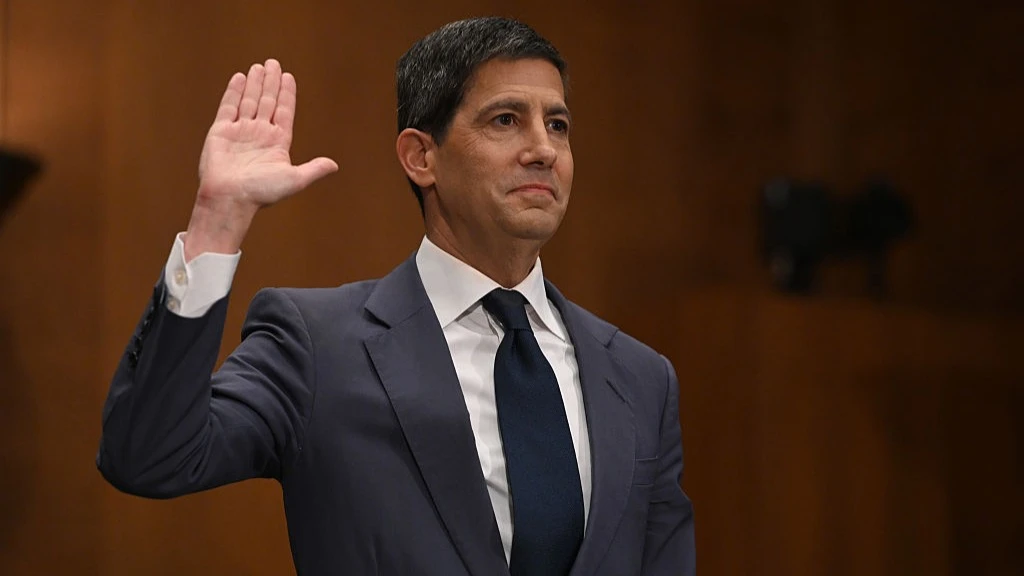
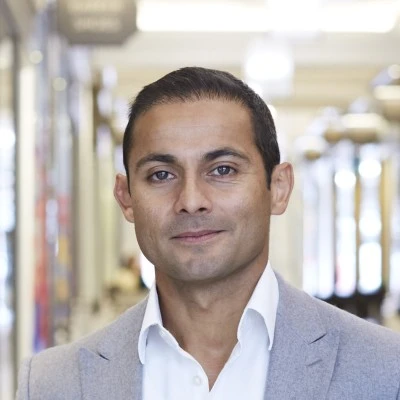
Three days after the Senate hearing, the DOJ cleared the hurdle to confirm Kevin Warsh as Fed chief and closed the case against Jerome Powell. Photo: Chen Mengtong/China News Service/VCG via Getty Images
On April 21, the U.S. Senate Banking Committee held a hearing to consider the candidacy of Kevin Warsh for the post of the head of the Fed. Judging by his statements, he wants to seriously change the Fed and strengthen the role of the dollar as an instrument of geoeconomics, writes Oninvest editor Alfia Zivere.
Kevin Warsh's plan
The sooner we can reform the institution with my colleagues, if their nomination is approved, the sooner we can ensure price stabilization.
The first thing candidate Trump wants to do is start counting inflation differently. Right now, the Fed focuses on the PCE (Personal Consumption Expenditures) and core PCE indexes - the same index, but excluding energy and food prices. Warsh wants to exclude all extreme jumps from the calculations and see a "pure trend".
Financial analyst and columnist Jack Bowman notes that Brett Matsumoto, a candidate for commissioner of the U.S. Bureau of Labor Statistics, is also advocating the idea of revising the way inflation is measured.
Inflation metrics have been criticized on both sides. It's unclear where this is going, but I can't imagine that in a few years we'll be measuring inflation in the same way. In my opinion, that may be a good thing, as long as the updates are honest attempts to modernize data collection and formulas.
Reuters writes that the Federal Reserve Bank of Dallas uses a similar methodology that Warsh is leaning toward. In February, he to cut off abnormal price spikes (such as a 384% annualized jump in the price of moving services or a 50% annualized drop in calculator and typewriter prices) and his truncated mean PCE calculations indicated an inflation rate of 2.3%, close to the Fed's 2% target.
Omair Sharif, president and founder of Inflation Insights, told the agency that the truncated average currently shows the lowest inflation rate of any common measurement method. That makes it more consistent with the course of interest rate cuts expected by U.S. President Donald Trump. But the same indicator "looked past" the widening and acceleration of inflation in 2021 that more traditional statistics have recorded.
Warsh's second idea is no less revolutionary. He believes that the Fed over-shares its plans with the public and has to stick to its promises - even when the situation calls for more flexibility and quicker decisions.
Unlike many of my colleagues, I am not a proponent of forward guidance [predetermined guidance on rates and policy rate - Oninvest note]. I do not believe that I should disclose future decisions to you in advance.
And finally, the third. Warsh favors shrinking the Fed's balance sheet. The U.S. central bank's assets include more than $4 trillion in Treasury bonds and $2 trillion in mortgage-backed securities. Warsh didn't say how much he wants to shrink the balance sheet, but he did specify that he wants to get rid of his holdings of long-term Treasury bonds. They were purchased when interest rates were much lower, and now their market value is below the current cost of keeping them on the balance sheet, notes Michael Gray, founder of Gray Capital Management LLC.
At the end of the year, the Fed's unrealized loss on Treasury bonds was $535.3 billion and on mortgage-backed securities was $309 billion. The combined unrealized loss of $844 billion represents a 13% decline from the purchase price. The quickest way to reduce their holdings is to sell, but if the securities are sold, it will force the Fed to record huge losses.
Warsh himself admits that a major sale could destabilize the market, "It took 18 years to create this balance sheet problem, we can't solve it in 18 minutes," he said.
Change the role of the dollar
Worsh's speech signaled a message that was barely discussed at the hearing, but which could prove key, notes Financial Times columnist Gillian Tett. He made it clear that the Fed under him will play a "supportive role" in the broader U.S. economic strategy - that is, to work not only with inflation and rates, but also with foreign policy objectives. Simply put, this is a shift to a geo-economy where the financial system is used as an instrument of influence.
As the Financial Times points out, this is happening against a backdrop of growing demand for dollar liquidity from other countries - from the Gulf States to Asia. But if earlier such mechanisms as dollar swap lines were controlled by the Fed and presented as a neutral stabilization tool, now they are increasingly coming under the influence of the Ministry of Finance and can be used to support allies and put pressure on opponents. And what is important in this is that the Fed is already ceding some of its authority to Scott Bessent's department.
This changes the very role of the Fed. The question is no longer just whether Warsh will be able to maintain his independence from the White House on monetary policy. The question is whether the Fed will become part of the U.S. foreign policy architecture, with implications for markets and the global financial system.
Warsh's mistakes
The Employ America think tank writes that Warsh has repeatedly advocated misguided solutions. During the Great Recession of 2008 and after, he consistently overestimated the threat of inflation and called for policy tightening despite deflation and rising unemployment. His predictions have not materialized. But the position on rates, as well as tariffs, has fluctuated repeatedly - depending on who was in office:
Free trade is a belief that Warsh seems to hold when a Democrat is in the White House. However, he abandons that belief when Republicans consider his candidacy for a position that involves imposing duties.
At the Senate hearing, Warsh, when asked if he would become a "puppet" of the president if appointed, replied, "Absolutely not."
"At no time did the president ask me to predetermine, promise, lock in, or make any decision on interest rates during our deliberations - and I would never have agreed to do so even if he had asked," the nominee repeated several times, responding to individual committee members.
This article was AI-translated and verified by a human editor