Top story for the morning: US-Iran talks collapse, $12 billion deal in pharma market

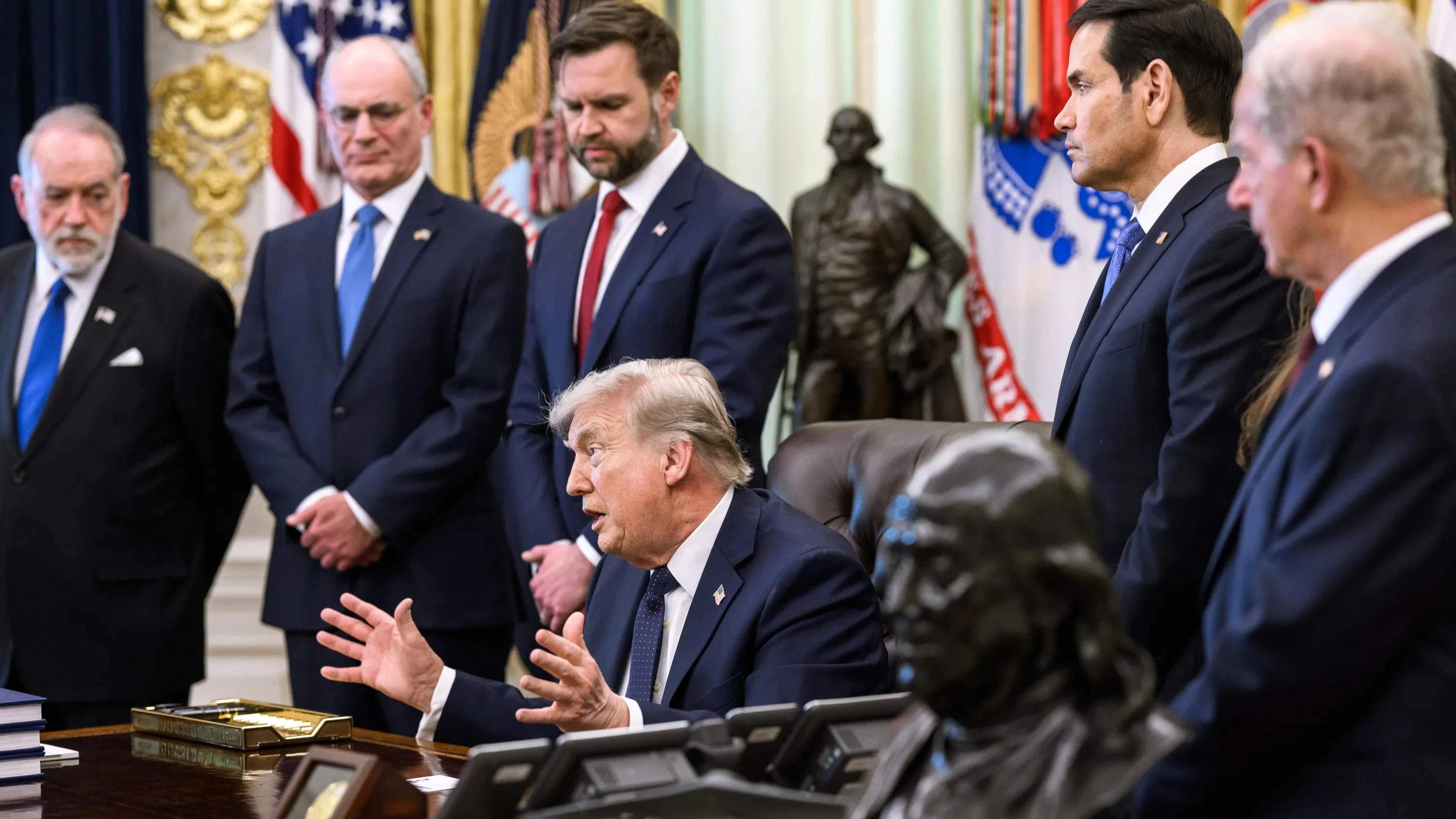
Oil prices rose after the breakdown of the second round of talks between the US and Iran in Pakistan / Photo: The White House
Oil prices exceeded $105 per barrel amid the breakdown of talks between the US and Iran and the escalation in the Strait of Hormuz. At the same time, the war in the Middle East hit electronics supply chains: the shortage of raw materials for printed circuit boards after logistical disruptions and attacks on petrochemical facilities drove up their prices. About these and other topics - in our review of key events by the morning of April 27.
U.S.-Iran talks break down, oil rises
Oil prices rose after the breakdown of the second round of talks between the U.S. and Iran and escalating tensions near the Strait of Hormuz, with Brent rising above $107 per barrel and WTI crossing $96, CNBC reports. Iranian forces reportedly boarded two cargo ships near the Strait of Hormuz, intensifying risks to supplies, the channel notes.
US President Donald Trump canceled sending negotiators to Pakistan over the weekend, claiming divisions within the Iranian leadership and a lack of clarity over who makes decisions. Tehran confirmed that no meetings with the US were planned: Iranian Foreign Minister Abbas Araghchi visited Pakistan over the weekend, but limited himself to talks with Pakistani officials, CNBC notes. Axious nevertheless reported on April 27, citing sources, that Iran had presented the US with a new proposal to reopen the Strait of Hormuz and end the war, which includes a postponement of nuclear talks. But this only briefly managed to bring down oil quotations, which at the time of publication jumped back to $107.
Sun Pharma buys Organon for $11.75 billion
Shares of Indian Sun Pharmaceutical rose on the National Stock Exchange of India by 7% after the announcement of the purchase of American Organon for $11.75 billion (including debt): the Indian company offered $14 per share - this is higher than the previous price, so investors reacted positively, writes CNBC. Shares of Organon itself had previously jumped by almost a third on rumors of the deal. After closing the main trading session in New York on Friday, April 24, they added about 16% more.
The deal will strengthen Sun Pharma's position in the global market and bring it into the top 25 pharmaceutical companies with revenues of about $12.4 billion, the channel points out. The purchase will expand the portfolio in the segment of innovative drugs and increase its share in sales from 20% to 27%.
The war in the Middle East has driven up prices for electronics components
Conflict in the Middle East has disrupted the supply of raw materials for printed circuit boards, a key component of almost all electronics, from smartphones to servers, Reuters reports. After a strike on a petrochemical complex in Saudi Arabia halted production of an important resin, and logistics in the region became more complicated, leading to shortages and a spike in prices, which rose by up to 40% in April.
This has increased pressure on electronics manufacturers, who already face expensive chips. Other materials - copper foil and fiberglass - are also becoming more expensive, with demand rising due to the AI boom. Companies are starting to raise prices and renegotiate supplies, expecting shortages to persist, the agency points out.
SK Hynix shares hit a new high amid expectations of AI demand
Shares of South Korean chip maker SK Hynix rose more than 7% to a record high after Intel's report, which reinforced expectations of rising demand for artificial intelligence solutions, Reuters writes.
Samsung Electronics shares added about 2.5%, but the growth is held back by risks of an employee strike in South Korea scheduled for Ma.
What's in the markets
- Japan's broad Topix index was up 0.9 percent on April 27, while the Nikkei 225 was up 1.8 percent.
- Hong Kong's Hang Seng Index was falling 0.1 percent, while mainland China's CSI 300 index was up 0.2 percent.
- In South Korea, the Kospi index was up 2.5% and the Kosdaq was up 1.8%.
- Australia's S&P/ASX 200 was down 0.2 percent.
- Futures on the S&P 500 were unchanged, futures on the Nasdaq Composite were adding 0.2%. Exchange contracts on Dow Jones Industrial Average were down 0.2%.
This article was AI-translated and verified by a human editor