Trump Family Inc.: How the president's son-in-law Jared Kushner makes money on foreign policy
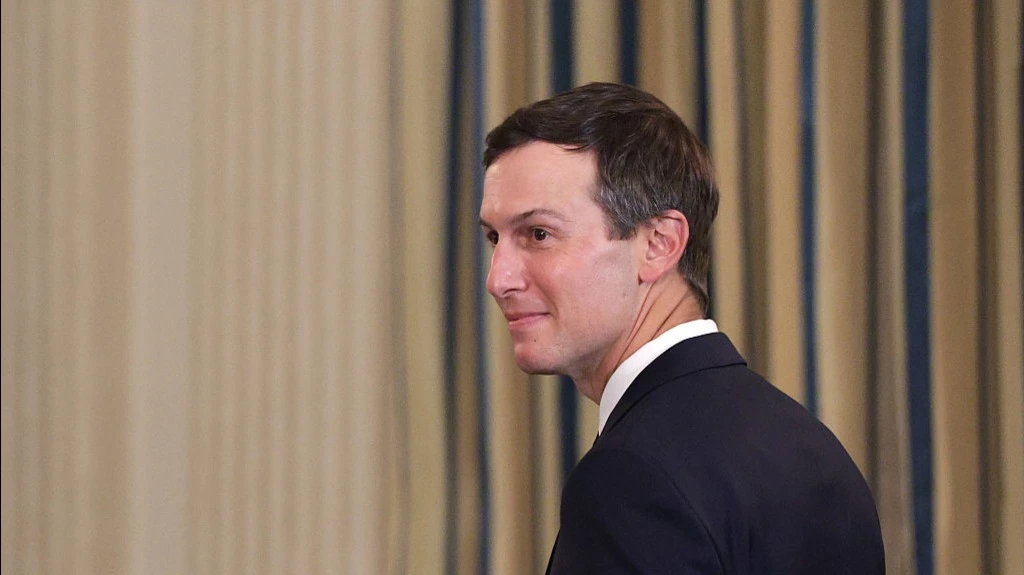
In Serbia, protests against a $500 million project of the US president's son-in-law Jared Kushner. In the Middle East, a peace plan in which he may play a key role. Between these stories is the same business model: the private company of the president's son-in-law attracted $4.8 billion from sovereign funds of those states that are directly involved in the foreign policy of the United States. Oninvest continues the series of materials about how members of the family of the American leader make money on the famous family name. This article is about why Donald Trump's foreign policy has become a gold mine for the husband of his eldest daughter.
Synopsis: Jared Kushner, 44, husband of Donald Trump's eldest daughter. Graduated with honors with a bachelor's degree from Harvard University, followed by a dual degree in law and business administration (JD/MBA). The Kushner family owns a successful real estate business in New York City, and Jared's parents were close friends of the Clinton family. The future husband of Ivanka Trump himself was registered as a supporter of the Democratic Party until 2009, but later became a Republican. In the first presidential term of Donald Trump worked as his senior adviser, responsible, among other things, for the international agenda. In September 2025, American Forbes wrote that Jared Kushner became a billionaire.
Operation Belgrade Developer: How Kushner's project ended up on the site of a former NATO target
Anti-government protests in Serbia have been going on for a year, but this fall they have a new object of discontent: Jared Kushner, the son-in-law of the U.S. president, and his company Affinity Global Development. It was he who got the contract for the development of a large piece of land in Belgrade. According to the development project, the Serbian capital will soon have a luxury hotel, a complex of apartments, premises for commercial real estate, as well as a museum. To realize the project Affinity Global Development and the Serbian government will create a joint venture: the country's authorities will get a little more than 20%, and the rest will go to the American partners. President Vucic is sure that this is a very favorable deal:
We are providing the land, and they are investing at least €650 million, a huge investment for our country. This will benefit Belgrade, attracting even more tourists. The cost of the project will immediately exceed one billion euros.
The American and European media estimate the cost of the project to be a third less - $500 million. But the protesters are dissatisfied not with the concept itself, but with the choice of location. The hotel and residential complex are to be built on the site of the General Staff building partially destroyed by NATO troops during the conflict in Kosovo. For many people in Serbia, this place became a kind of monument in memory of the victims of the conflict. In addition, the building had a special cultural status - as the only building of Yugoslav modernist star Nikola Dobrovic in Belgrade. Last fall, the Vučić government stripped the complex of its protective status, and on November 7, the Serbian parliament approved a special law allowing the project to undergo legal procedures in an expedited mode.
The Guardian notes that the "simplification" vote came a month after US President Trump imposed sanctions on Serbia's national oil company NIS - the controlling stake in the company is owned by Gazprom and its structures; in November, the Serbs managed to convince the Russians to sell their stake. Some protesters are sure that the coincidence is not coincidental.
"We are protesting against this law [on expedited legal procedures - Oninvest's note]," one of the protesters told reporters. - By passing this law, he [Vucic] is trying to please Trump and win his favor.
He [Vucic - Oninvest's note] is trying to bribe Trump
Neither Jared Kushner himself nor representatives of Affinity Global Development wanted to comment on the situation to reporters.
Jared Kushner's Middle East Project
Perhaps Jared really didn't have time for the project in Belgrade. After all, throughout the fall, the president's son-in-law was engaged in a much larger and more important matter: he became a key figure in the settlement of the current escalation of the conflict between Israel and Palestine, as well as the release of Israeli hostages.
As The Wall Street Journal reported, it was Kushner who convinced Steve Whitkoff to accept the position of Trump's special envoy for the Middle East. It was Kushner who, back in August 2025, teamed up with former British Prime Minister Tony Blair to develop a plan for post-war reconstruction of the Gaza Strip. It was Kushner, as WSJ sources reported, who helped Trump convince Israeli Prime Minister Benjamin Netanyahu to apologize to Qatari authorities for the Sept. 9 airstrike - without which the U.S. president refused to support peace talks. Moreover, Kushner and Whitkoff were the ones who wrote the text of the apology for Netanyahu. After all, it was Kushner and Whitkoff who drafted the 20-point peace plan.
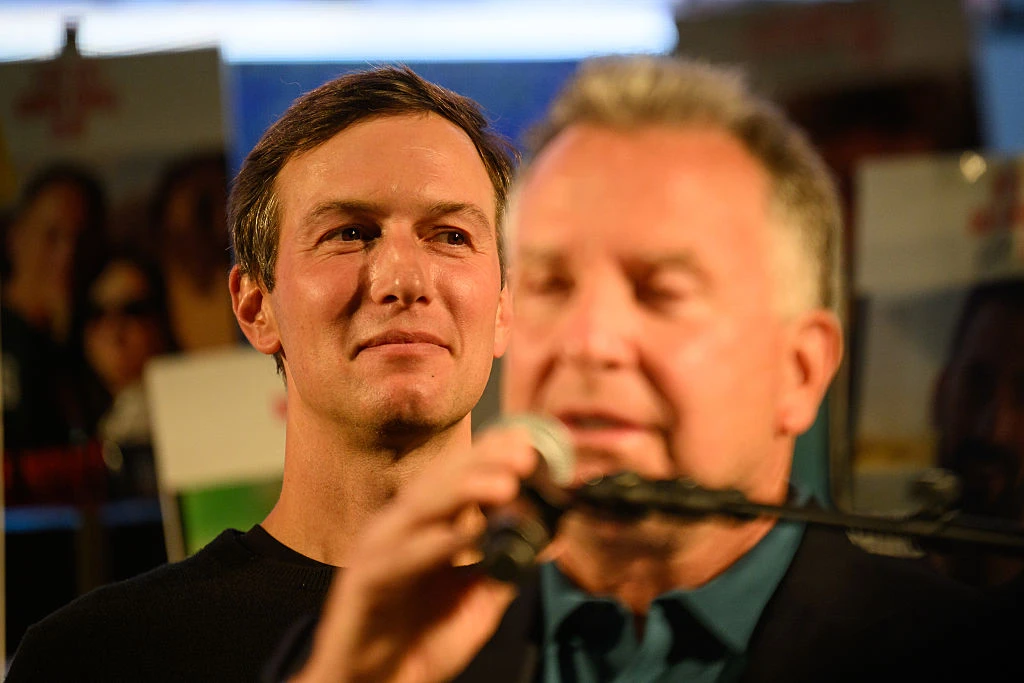
The publication's sources say: if the peace plan is fully realized, Kushner and Whitkoff will also be in charge of further rebuilding Gaza. They are already in preliminary talks with developers who are willing to promote Trump's vision of a "Middle East Riviera." According to people familiar with the situation, the president's son-in-law has been tasked with selecting the people who will serve on a board to manage the project.
The appearance of the US president's son-in-law in news headlines came as a surprise to many, as Jared Kushner and Ivanka Trump have emphasized distancing themselves from Trump the president since his return to the White House. On the other hand, Kushner's competence in the matter is rather unquestioned, as he handled international affairs as a senior adviser to the president during Trump's first term. He was one of the key architects of the Abraham Accords, a package of agreements normalizing Israel's relations with the three Arab states.
I put Jared in that job because he's a very smart man, he knows the region, he knows the people, he knows a lot of the key players. And combined with him ... we had a very smart team. ... These are high IQ people, okay?
Donald Trump's family member status has also been helpful.
"I believe Jared played a role in convincing President Trump - along with Steve Whitkoff - to come forward with this initiative [the 20-step plan - Oninvest note]. The moment was well chosen. Few people here believed it would succeed, but it worked," Michael Herzog, Israel's former ambassador to the United States, told the New York Times.
Jared and his partners
However, along with praise for Jared the peacemaker, criticism of the decision to involve Kushner in the peace process was growing: many saw a conflict of interest between his diplomatic work and his current business projects.
For several years now, the president's son-in-law has had close business contacts with several countries in the Middle East - connections he built up while he was an adviser to Trump in his first cadence. The countries in question are Saudi Arabia, Qatar and the UAE. They are the biggest investors in Jared Kushner's private company, Affinity Partner. The firm was organized in 2021, right after the Trump family left the White House. And almost immediately, Kushner, who had no prior experience in wealth management, first managed to raise $2 billion from a Saudi sovereign fund. And then he got another $1.5 billion from partners in Qatar and the UAE.
The NYT wrote in 2022 that advisers to the Saudi crown prince had many objections to the decision, including fund managers arguing that Affinity's management was "inexperienced," that the young firm's diligence was "unsatisfactory on all fronts," that the proposed asset management fee was "excessive" and that there were "public image risks" associated with Kushner's previous position as a senior adviser to his father-in-law.
Nevertheless, by March 2025, Affinity Partner's total funds under management reached the $4.8 billion mark. Nearly 99% of assets in Affinity-managed funds come from non-U.S. investors.
These same 3 countries are also stakeholders in the resolution of the Israeli-Palestinian conflict, as well as in potential reconstruction projects in the Gaza Strip.
"The Gaza agreement is far from being fully realized. A colossal amount depends on Kushner's relationships with three people: Saudi Crown Prince Mohammed bin Salman, UAE President Sheikh Mohammed bin Zayed and Qatar's Emir Tamim bin Hamad Al Thani. Why have these Middle Eastern leaders invested most of the $4.8 billion in Jared's team and his private equity firm Affinity Partners? What do Kushner's backers really want? When business mixes with diplomacy, who ends up paying the musician - or, simply put, who's playing who?" - asks the rhetorical questions ABC television station.
The fact that Ivanka Trump's husband does not always see the difference between business relationships and outright bribery for the sake of bringing "partners" closer to the U.S. president was discussed by the U.S. media during Trump's first term. In 2018, The Washington Post released an investigation alleging that at least 4 countries - Israel, Mexico, UAE and China - were discussing how to take advantage of the president's son-in-law given "his complicated business schemes, financial difficulties and lack of foreign policy experience." The president's administration feared that Kushner was "naive and being tricked," the publication wrote, citing White House sources.
At one point, Kushner was downgraded to a lower security clearance level and had to account for some of his contacts with foreign government officials, The Washington Post reported. But there were no lasting consequences to the story, and many old-timers on Capitol Hill did not see anything unique in the situation itself.
"Every country will be looking for something to push back on," an anonymous source familiar with intelligence intercepts of foreign officials' conversations about Kushner shared with the newspaper.
His ongoing business dealings with eastern partners, on the other hand, received a separate congressional investigation. In September 2024, Ron Wyden, a Democratic senator from Oregon, who was chairman of the Finance Committee at the time, initiated an audit of Affinity Partners. It revealed that since 2021, Affinity had received up to $157 million in commissions from foreign clients, $87 million of which came from the Saudi Arabian government - with no profit or return on investment to the partners.
"Affinity investors may not be driven by commercial interests, but by a desire to funnel money from foreign governments to members of President Trump's family," Senator Wyden wrote.
In January 2025, Republicans won election to both houses of Congress, Wyden lost his post as head of the Senate Finance Committee, and the investigation was closed. But Affinity Partners' March report filed with the Securities Commission showed that Wyden's claims were unfounded: by March 2025, Affinity had already made a profit on its investments, according to Bloomberg, which had access to the documents.
The delay in returning investments to Eastern partners and the current success of Jared Kushner's company was described by Forbes in a September article: the article said that Affinity Partners was really quite careful in its first investments, spending only $500 million by the end of 2023. But now the pace of investment has picked up: by April 2025, Affinity has publicly invested over $2 billion and is on track to invest another $1 by the end of this year alone. It now has about 25 investment projects, including 22 portfolio companies ranging from fitness technology to auto leasing, in at least eight countries.
Jared himself until recently called his best investment the purchase of 10% of shares in the Israeli company Phoenix, which specializes in the insurance and financial markets. According to the entrepreneur, he has already made more than nine times his profit.
But the Phoenix investment is nothing compared to Affinity Partners' recent deal: In late September, a consortium including Saudi Arabia's Public Investment Fund (PIF) and Silver Lake bought video game maker Electronic Arts. The $55 billion deal will be the largest leveraged buyout (LBO) in the history of the company. And Jared Kushner helped organize it.
"Jared Kushner was the one who initially brought the based video game maker together with Saudi Arabia's Public Investment Fund (PIF) and was a key figure in the negotiations for months. When momentum for the deal began to wane by mid-year, Kushner was active in making sure the process continued," Bloomberg's sources share details.
The Financial Times believes that Kushner's role in the historic deal does not end here: Kushner's involvement could also facilitate the deal's passage through the Committee on Foreign Investment in the United States.
Personal condition
In September, American Forbes wrote that the president's son-in-law is a billionaire. The publication obtained this assessment by counting all of Jared Kushner's assets.
Kushner owns 100 percent of Affinity. According to Forbes, the company is now worth $215 million. This makes it Kushner's second largest asset after his 20 percent stake in the family company Kushner Companies, valued at $560 million. Another successful investment of Jared and his wife Ivanka Trump is the purchase of a house on Indian Creek Island in Florida. Its possible value today is $105 million. The rest of Kushner's fortune is cash, artwork worth $15 million and personal investments, the publication writes.
Thus, the assets of the president's son-in-law are about on the same mark as Donald Trump's two older sons, Eric and Donald Trump Jr. But all three are still a long way from the American president himself, whose assets Forbes estimated in September at $7.3 billion.
In previous episodes:
- Trump Family Corp.: How Melania Trump is capitalizing on her status as U.S. first lady
The sequel follows....
This article was AI-translated and verified by a human editor