Trump's negotiation strategy: how investors can read the US president's threats

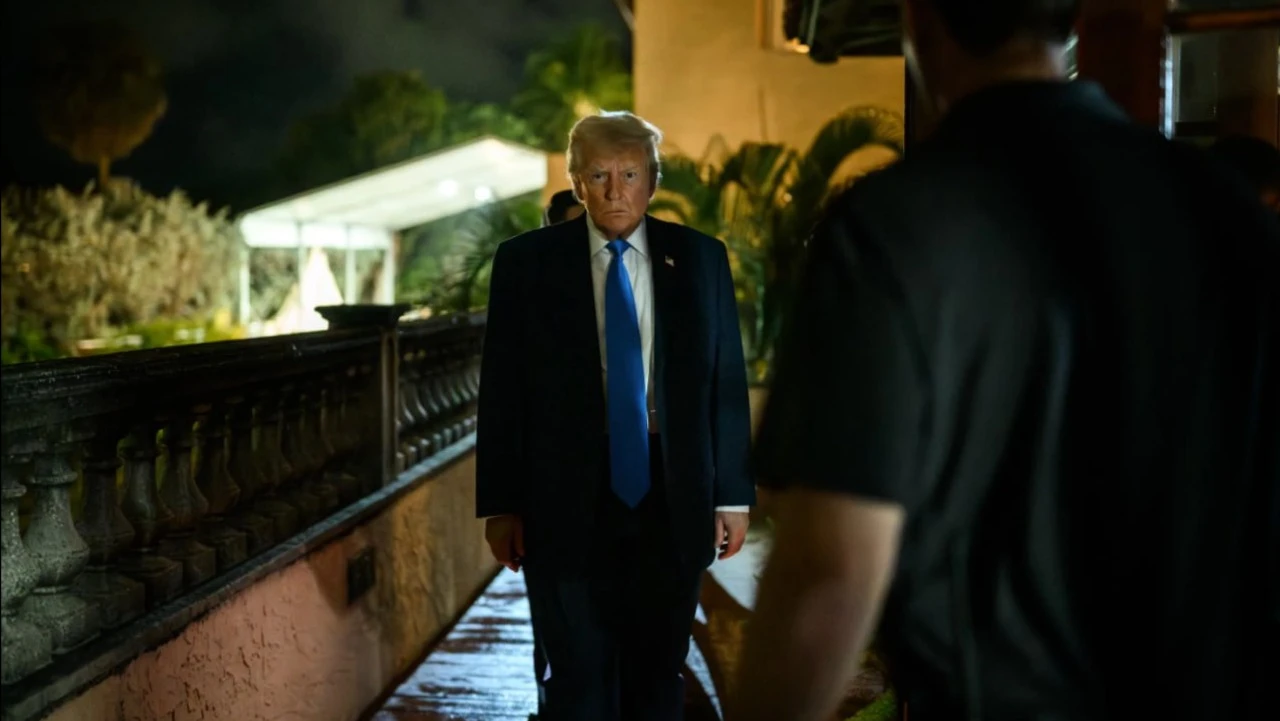
"Life is a theatrical art," Donald Trump wrote in his book Think Like a Champion. - As an artist, you have a responsibility to your audience to perform to the best of your ability" Photo: The White House
In a year into his second term, US President Donald Trump has forced new trade deals on many of Washington's allies. After he declared the first trade war last April, investors lost about $6.6 trillion in the U.S. stock market in two days. When he backtracked in negotiations, indexes soared, with the S&P 500 up 7% and the Nasdaq up more than 9%. For investors, Trump's negotiating strategy has become a significant market risk factor.
The thrill of hard bargains
Donald Trump is the richest man ever to become president of the United States. At the time of his first election in 2016, his fortune was estimated by Forbes at $3.7 billion, and in 2024 it will be $7.3 billion. The president has repeatedly stated that he uses business strategies in running the government - and his foreign policy is indeed similar to what he called good negotiations during his business career.
The US President has repeatedly described himself as a great negotiator. He has claimed that role since the late 1980s. In 1987, he published The Art of the Deal, which spent 13 weeks at the top of The New York Times bestseller list. It sold over a million copies in the U.S. market alone.
In this book, Trump claimed that the thrill of completing large and complex deals was his main motivation in business. How did he formulate his business strategy then and how has it changed now?
Power deal
The worst thing a businessman doing a deal can do is to let his partners feel how much he is interested in it. Like sharks, they will immediately smell blood.
The best strategy, in Trump's version, is to think ahead of time about leverage with partners, letting them know you have something they can't do without.
Trump recognizes the benefits of a positive approach to deals, but his main emphasis is on a willingness to confront. "All my life I've been used to fighting back, and very hard," the future president wrote in the book. While agreeing that such an approach can make a situation worse, he argued that his life experience shows that defending one's point of view always turns out to be beneficial in the end.
After 40 years, conflict has become the basis of his negotiating strategy. Trump does not seek to understand his opponent's interests to create mutual benefit, but studies them to find weaknesses to attack - and this is his key difference from classical methods, says Eugene Kogan, an expert in KPMG's negotiation and coaching team.
He calls this approach "structured choice. Having found an opponent's vulnerabilities, the U.S. president increases pressure with leverage and public bravado, and then puts the partner before a tough choice with no room for maneuver.
Turbulence and chaos
As levers, Kogan writes, Trump uses inflated starting demands, media attention, and a demonstrative willingness to withdraw from the deal under threat of negative consequences. Thus his vis-a-vis is left with a choice of two options. This makes a "positive" decision on Trump's terms psychologically easier.
Another method of the U.S. president Kogan calls giving out random favors, for example, in the form of unexpected support or praise. In this way, the other party begins to feel obliged, but at the same time does not know what to expect next - "reward" or "punishment". In this situation, people subconsciously seek a predictable solution - the alternative is negative uncertainty and the U.S. president's willingness to destroy.
Trump artfully stokes fires and then douses them periodically - alternating between a pattern of entertainer and destroyer behavior, notes communications consultant Andrew Wolf in a conversation with Oninvest.
Trump is very comfortable in circumstances of turbulence and chaos, unlike most politicians and entrepreneurs who avoid this environment.
Strategists recommend looking not at Trump's rhetoric at such moments, but at the so-called BATNA - Best Alternative To a Negotiated Agreement - of his opponent. If Trump's vis-a-vis doesn't have strong alternatives, the president is likely to carry out the threat, acting as a "controller." If there are alternatives, his loud statements should be perceived as a starting auction move aimed at narrowing down the partner's choice to a binary solution.
Does this mean you can use the cycle to your advantage and bet the market for or against Trump's promises?
For a person familiar with the tactics and strategy of the negotiation process, such processes will look predictable. But it is impossible to be sure which scenario will be realized.
Motivation through fear of loss
By setting strict limits, Trump is exploiting the psychological effect of fear of loss: people are more motivated to avoid losses than to strive to gain equal value, says Sebastian Moritz, a negotiation expert at IMD Business School. As an example, he cites the US president's promises to impose barrier duties against trading partners.
By doing so, Moritz says, Trump is not offering a discussion of the issue - he is giving a decision that his opponent can only try to talk him out of. Refusing to make concessions now means not maintaining the status quo, but economic problems, which are knowingly more difficult to accept.
From a game theory perspective, bargaining power in a negotiation is determined by two factors: the number of alternatives available to you and your ability to publicly commit to certain actions.
In the tariff wars, the fastest and most effective response to Trump's ultimatum was China's immediate imposition of retaliatory duties. This forced Washington to converge its positions and find a compromise.
The Kremlin way
China's quick response and the bewildered reaction of European allies can be explained by different negotiating cultures. In Western countries, Wolf says, they more often use the classic Harvard model, which is based on a clear set of rules and agreements.
It presupposes predetermined red lines and the availability of three basic scenarios for the parties to withdraw from the negotiations: the ideal achievement of goals, the optimal option and the minimum program, the boundary below which the party is not ready to fall.
Wolf calls Trump's negotiating style a synthesis of the Kremlin's - through pressure - and the East's - through mutual guile. This is why, the expert explains, negotiations with Trump cause irritation in Western countries. "It's as if they say: 'You are not acting according to the rules.' And he replies: 'Yes, that's exactly right'."
Instead of a zero-sum game, Rodrigo Gouveia-Oliveira and Horace Falcao of INSEAD Business School recommend looking for added value: what else can be offered so that negotiators like Trump are willing to consider the interests of the other side as well. "If the new deal turns out to be twice as good for them as it is for you - but your position improves - that's worthwhile."
This article was AI-translated and verified by a human editor