Trump's sons are betting on drones. Should investors follow their lead?

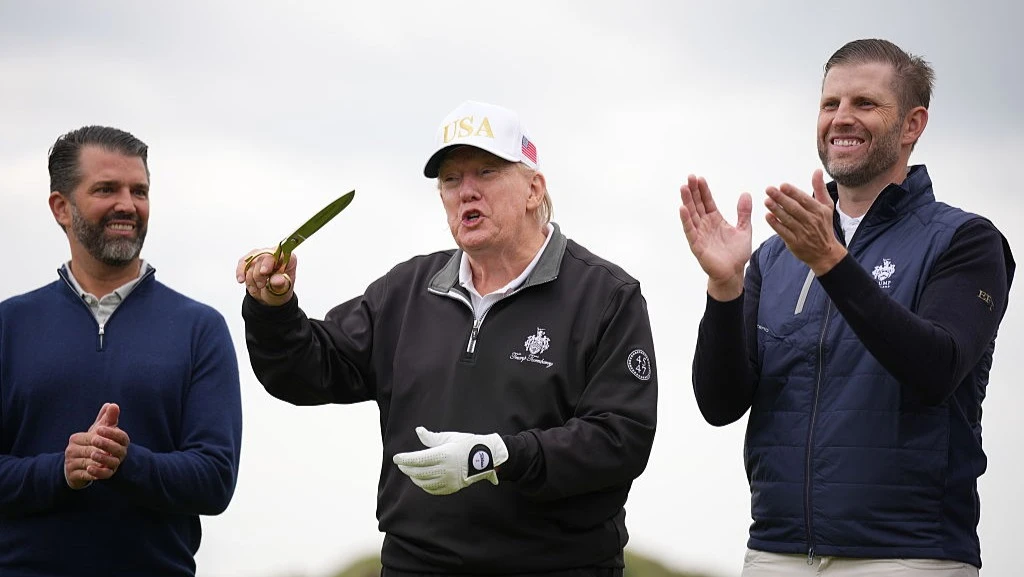
Trump's sons are backing a new drone company that is targeting Pentagon sales, and this is not their first such deal / Photo: Andrew Harnik/Getty Images
The elder sons of U.S. President Donald Trump – Eric Trump and Donald Trump Jr. – are investing in drone maker Powerus. The company is seeking a fast-track path to the public markets to help meet Pentagon demand through a merger with Aureus Greenway Holdings, which is already listed on the Nasdaq and backed by the Trump sons. Below Oninvest looks at what makes the deal important and what investors should be paying attention to.
Drone sector outlook
According to forecasts, the drone market will grow from $20.8 billion in 2026 to $30.9 billion by 2034, implying a compound annual growth rate of 6.8% over the period, Business Fortune writes.
Global Market Insights offers a more aggressive outlook: it expects the drone market to more than triple to $66.5 billion by 2035 (CAGR 13.8%). "A considerable rise in global defense modernization programs and geopolitical tensions is expected to strengthen the demand for military drones industry," the research outfit said.
The U.S., the largest market, is expected by both Business Fortune and Global Market Insights to remain the main driver of demand growth. Powerus CEO Andrew Fox was quoted by the Wall Street Journal as saying the U.S. drone market “is certainly going to grow faster than, say, golf courses are.”
Golf courses and drones
Last week, Aureus Greenway Holdings, a golf club operator, said it would merge with Powerus, which has backing from the Trump sons. The deal also involves Unusual Machines, which specializes in drone components and where Donald Jr. is a shareholder and advisory board member, WSJ noted. Unusual Machines will invest $50 million. The deal is being advised by investment bank Dominari Holdings, whose board the Trump sons joined in early February last year after participating in a $13.3 million private placement.
Powerus plans to list on the Nasdaq in the coming months through a reverse merger with Aureus Greenway. The combined company will be renamed Powerus Corporation and will trade under the ticker PUSA.
Golf resort operator Aureus Greenway Holdings runs two clubs in Florida: Kissimmee Bay and Remington. They are located near each other (within a mile) on a shared area of about 117 hectares and feature 18-hole courses, restaurants, banquet halls, and pro shops.
Aureus was founded in 2014 and completed an IPO on Nasdaq in February 2025. It placed 3.75 million shares at $4 apiece, raising $15 million, but subsequent volatility pushed the stock into penny-stock territory (shares below $1). To stabilize its position, and avoid delisting, the company completed a $26 million private placement in July.
The ownership structure of Aureus Greenway Holdings reflects the Trump family’s strategic presence in the golf resort sector through a network of affiliated entities. A key element is the American Ventures fund, which holds an 86% stake in Aureus. According to WSJ, the fund serves as the family’s primary investment vehicle.
Betting on drones
WSJ notes that Powerus, founded in 2025, has aggressively acquired assets over the past six months to build a full drone ecosystem. As a result, Powerus now fully owns three subsidiaries: Kaizen Aerospace (specializing in heavy-lift drones), Tandem Defense (focused on tactical platforms and kamikaze drones), and Agile Autonomy (a developer of software and systems for maritime drones that converts conventional boats into autonomous reconnaissance vessels).
Following the deal, Aureus Greenway Holdings’ golf assets are expected to continue operating and may be used as testing grounds for Powerus agricultural drones.
Powerus itself says it plans to produce more than 10,000 drones per month – exceeding the current output of any U.S. manufacturer, and surpassing previous Defense Department procurement levels.
Powerus cofounder Brett Velicovich, a U.S. Army special operations veteran and drone expert, said the company is working on deals to acquire Ukrainian manufacturers or license their technology for production in the U.S. under a U.S. brand, WSJ wrote.
The Donald Trump family has other interests in the drone sector. Prior to the latest deal, Eric Trump invested in Israeli drone maker Xtend as part of a $1.5 billion transaction to take the company public through a merger with JFB Construction.
In November 2025, the Pentagon awarded Xtend’s U.S. unit a multimillion-dollar fixed-price contract. The company will supply small tactical teams with “lethal” unarmed drones for precision operations in complex terrain.
Drone stocks as an investment
Aureus does not have, and has not had, analyst ratings, MarketWatch data shows. After the deal was announced, Aureus shares rose 12.3% to $5.48 apiece in trading on March 9. Since the start of the year, the stock has jumped more than 60%. In February, the shares were spotlighted by Simply Wall St. in that context that “investors may uncover hidden gems in the market capable of delivering impressive returns.”
Shares of Unusual Machines gained 5% on the day the deal was announced and continued to rise for four consecutive sessions, but then gave back almost all these gains. On Monday, ThinkEquity (the note has been seen by Oninvest) reiterated its “buy” rating on the stock while raising its target price from $15 to $25 per share. This implies nearly 35% upside to the closing price on Thursday, March 19.
Litchfield Hills Research reiterated its $25 target with a “buy” recommendation, citing, among other factors, the company's strategic investments, including the Trump family’s deal with Powerus. Unusual Machines is targeting the market for components of U.S.-made drones, which is approximately $5 billion, estimates Litchfield Hills analyst Barry M. Sine in a March 9 note (seen by Oninvest). Growth in this market should be supported by Federal Communications Commission restrictions introduced in December 2025 on foreign drones and components.
The outlook for the new, combined company – part golf operator, part drone manufacturer – could be supported by government programs, including the Pentagon’s Drone Dominance, WSJ writes. The initiative provides for $1.1 billion in spending to procure hundreds of thousands of systems by 2027. Such measures are aimed at boosting domestic production in a sector long dominated by China. At the same time, the U.S. market remains fragmented – consisting of many small companies with low revenue competing for limited defense contracts, the Journal notes.