U.S. should be involved in choosing Iran's next leader - Trump
The US president considers it unlikely that the post of the head of Iran will go to the son of the deceased supreme leader Ali Khamenei

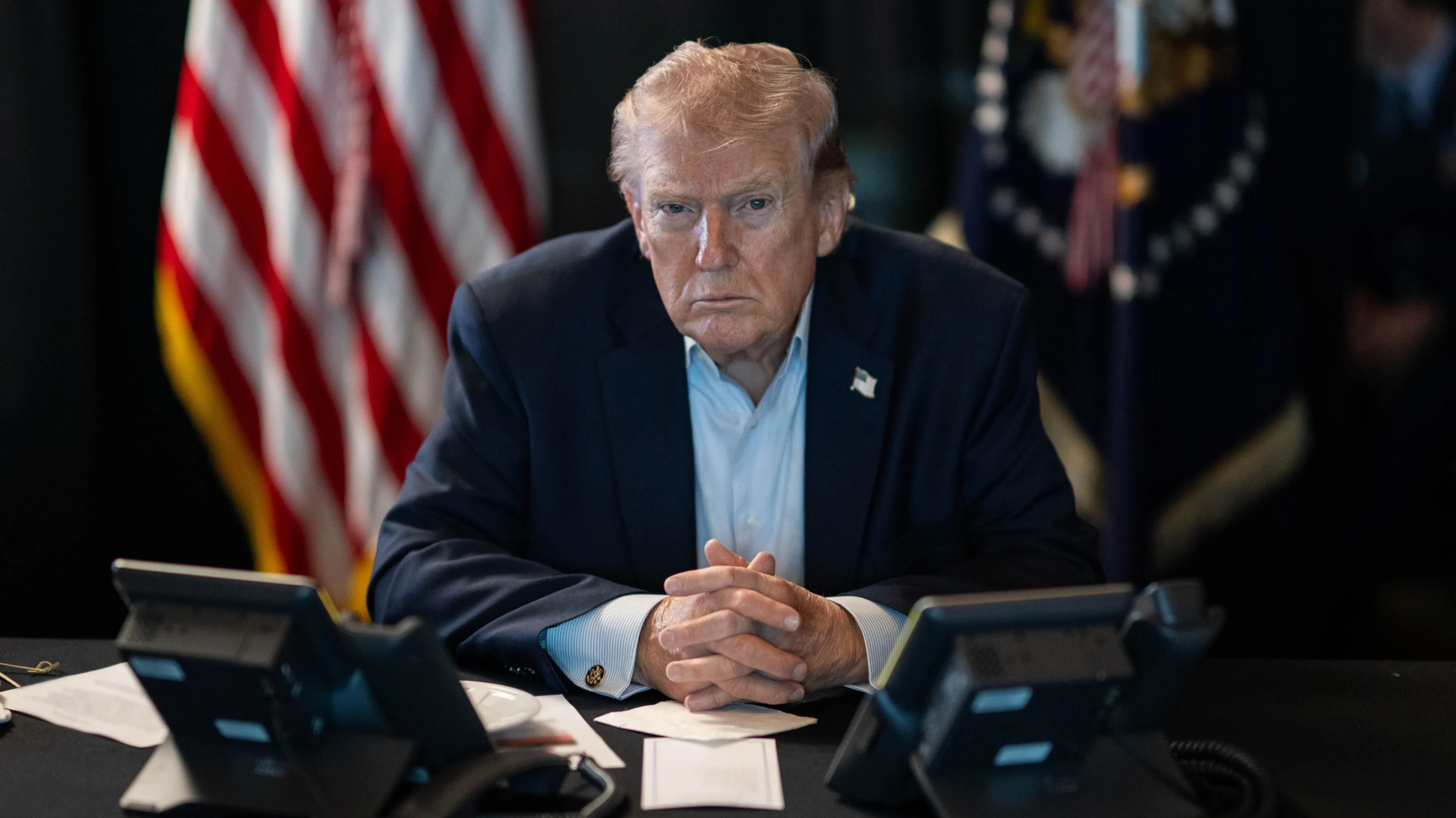
US President Donald Trump believes the US should be involved in the process of choosing Iran's next leader / Photo: x.com/WhiteHouse
The United States should be involved in choosing Iran's next leader, US President Donald Trump said in a telephone interview with Reuters.
Details
"We're going to have to choose that person along with Iran. We're going to have to choose that person," Trump said.
The US president drew a parallel with Venezuela: in January 2026, US forces removed President Nicolas Maduro from power, leaving his deputy, Delcy Rodriguez, in charge of the country, who Trump said "has done a wonderful job".
"We want to be involved in the process of choosing someone who will lead Iran into the future so that we don't have to go back every five years and do it [military operations] over and over again. We want someone who will be great for the people, great for the country," the White House chief noted. Trump also told Axios earlier on March 5 that he would like to personally participate in the selection of Iran's next leader - just as he did in Venezuela.
In a conversation with Reuters, the U.S. president expressed the opinion that the successor to assassinated Iranian Supreme Leader Ali Khamenei is unlikely to be his son Mojtaba, who until recently was considered the main candidate for the post. Asked whether exiled Iranian Crown Prince Reza Pahlavi (son of the last Shah) was being considered, Trump said, "I think everything is in play. It's too early."
Support for the Kurds
Trump has endorsed the aspiration of Iraq-based Kurdish militias to cross the border into Iran and launch an offensive. "I think it's wonderful that they want to do that, I would be totally in favor of it," the US president said.
Asked by Reuters whether the United States had offered to provide the Kurds with air cover, Trump replied, "I can't tell you that," adding that the Kurds' goal in such a case would be to "win."
A coalition of Kurdish groups based on the Iran-Iraq border in the semi-autonomous region of Iraqi Kurdistan is preparing for such an attack in hopes of weakening the country's armed forces - amid U.S. and Israeli missile and bombing strikes on Iranian targets, the agency said.
Oil prices
Closing the Strait of Hormuz, a narrow transportation corridor between Iran and Oman through which one-fifth of the world's maritime supply of crude oil and a significant amount of liquefied natural gas passes, has been one of Iran's main goals; Iranian strikes on ships have virtually halted transit through this crucial energy artery.
"They [Iran] don't have a navy, you know the navy is at the bottom of the sea right now," Trump told Reuters in an interview. - I'm watching the Strait of Hormuz very closely."
On March 5, new tankers were attacked in Persian Gulf waters and Iranian drones invaded Azerbaijani airspace, threatening to spread the crisis to other oil producers.
However, Trump said he's not worried about rising gasoline prices. "They're going to go down very quickly when this is all over. And if they're going up, they're going up. But what's going on right now is much more important than the fact that gasoline prices are going to go up a little bit," he said.
The American president declined to predict a timeline for the end of the conflict, but emphasized that the situation was developing rapidly. "I would say things are moving ahead of schedule and much more powerfully than anyone could have expected," Trump concluded.
Context
The escalation of the conflict in the Middle East continues for the seventh day, with Brent crude oil prices rising 18% to $85 per barrel, Bloomberg calculated.
This article was AI-translated and verified by a human editor