US and Israel conduct military operation against Iran: online
The markets' reaction to the conflict in the Middle East is likely to be a decline in risk appetite and a rise in the cost of oil, analysts say
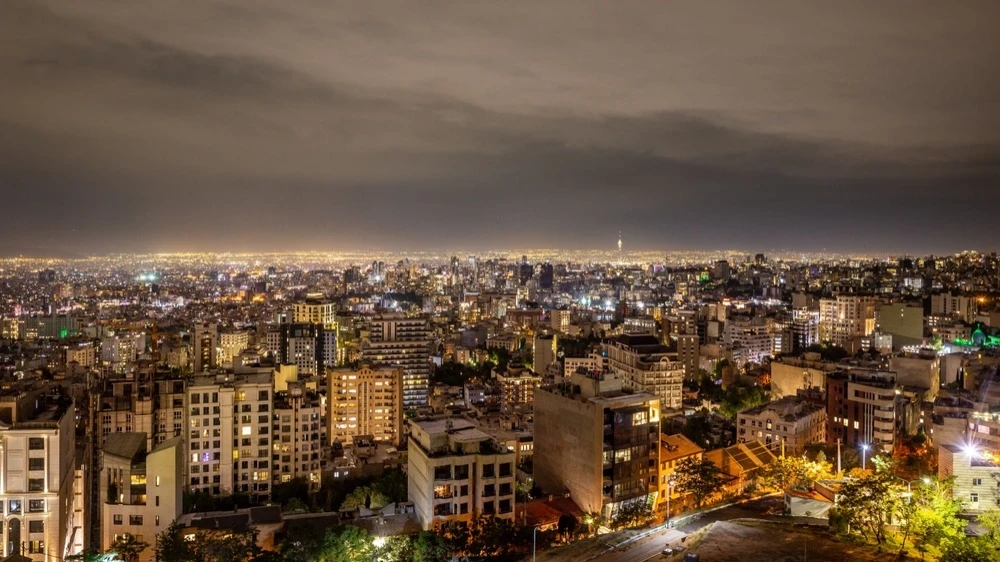
The U.S. and Israel launched a irstrikes on Iran on the morning of February 28, targeting government, military and intelligence targets. The Pentagon calls the operation "Epic Fury", Israel calls it "Lion's Roar". Donald Trump said the purpose of the operation was to eliminate the threats posed by Iran and urged the Iranians to seize the chance to topple the regime. Iran responded by firing missiles at targets in Israel and U.S. facilities in the region. The UAE reported a fatality from falling debris from a downed missile. Gulf states closed their airspace.
The attack was preceded by a U.S. military buildup in the region and talks on Iran's nuclear program that did not result in a new agreement. Israel said the operation would last several days. For the main story, see this online.
12.10 CET: Most analysts believe a direct hit on Iran's oil export infrastructure is unlikely as it carries the risk of a price spike and wider regional implications, Barron's writes. However, oil markets are pricing in a roughly $5-10 risk premium for possible disruptions to the region's oil supply.
12.00 CET: We won't know how an attack on Iran will affect oil prices until Monday night when Brent futures open trading. The worst-case scenario for supplies is that Iran tries to close the Strait of Hormuz, writes the WSJ. Oil analysts call a complete closure of the strait unlikely. But a recent note from RBC Capital Markets noted that Iran could fire on tankers in the strait and mine the crossing.
Brigitte Paine, head of energy forecasting at Oxford Economics, estimates that a 50% drop in shipping in the Strait of Hormuz from normal levels would raise oil prices to $84 a barrel (currently below $73). A complete shutdown of transit for a week would be a shock comparable to Russia's invasion of Ukraine and would push prices up to $140.
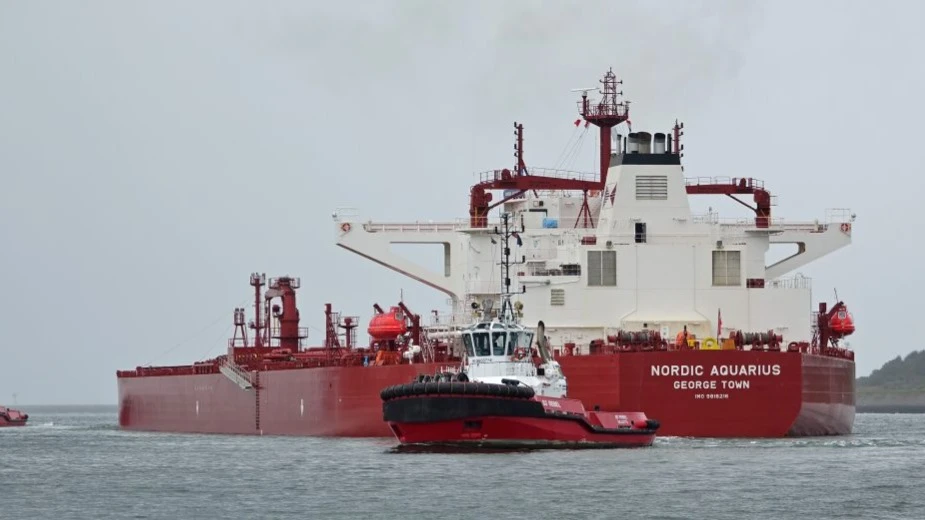
11.46 CET: Dozens of tankers in the Persian Gulf have started to change their routes in search of shelter, the WSJ reports. According to brokers, a loaded supertanker chartered by Shell and previously scheduled to pass through the Strait of Hormuz is now standing motionless in the Arabian Gulf. Another tanker bound for South Korea is moving through the strait at full speed. Two other Shell-chartered supertankers, also planning to pass through the Strait, are idling off the coast of Iraq.
Iran has not yet blocked the Strait of Hormuz, a narrow sea passage at the entrance to the Persian Gulf through which about a quarter of the world's offshore oil supply passes.
11.40 CET: Tehran is striking almost all US bases in the Persian Gulf except for one in Oman in response to a US-Israeli attack, the WSJ writes, citing sources. According to one of them, the US had not previously faced such a large-scale series of simultaneous strikes on its overseas bases, but Americans on the ground were prepared for the attacks.
On the eve of the attack, the U.S. moved additional air defense assets to bases in Jordan, Qatar, Bahrain, the UAE and Saudi Arabia. Trump said in a video message that the operation could result in U.S. military casualties.
11.35 CET: An armed conflict in one of the world's busiest air traffic regions threatens to seriously disrupt flights of major international airlines, Bloomberg writes. Amid the escalating situation, Gulf countries including Qatar, United Arab Emirates, Kuwait, United Arab Emirates and Bayhrain have closed airspace.Most airlines, including Turkish Airlines and Deutsche Lufthansa, suspended flights to the region. Some airplanes had to turn around in the air - for example, Emirates A380 airliner flying to San Francisco returned to Dubai airport.
11.05 CET: explosions have been heard in Dubai, the Emirates' commercial center, and the UAE capital Abu Dhabi, WSJ reports. This included an explosion heard in Dubai Marina, a densely populated residential area of Dubai popular with tourists.
The UAE says it has successfully intercepted several Iranian missiles. One person was killed as a result of falling debris.
10.47 CET: Bitcoin and other digital assets have fallen sharply amid the escalating situation in the Middle East. Bitcoin was losing more than 6 percent at the moment and traded at $63.2k on February 28. Etherium was down more than 8 percent, data from the Coinmarketcap portal showed.
Immediately after the news about the bombings in Iran, the market capitalization of digital assets decreased by a total of about $128 billion, Bloomberg writes with reference to CoinGecko.
10.40 CET: Gulf countries hosting US military bases have increased oil exports in recent weeks and developed contingency plans, fearing that strikes on Iran would disrupt oil markets, the WSJ writes.
Saudi Arabia, the world's biggest oil exporter, has activated an emergency plan to boost exports to the highest levels in nearly three years in case of supply disruptions, sources told the publication. The kingdom is also sending additional oil to overseas storage facilities. Neighboring states such as Kuwait and the UAE have also increased oil exports in recent weeks, sources said.
10.33 CET: Saturday's attacks on Iran are bigger than the June war, with the US apparently aiming for regime change in the country, says Bloomberg Economics analyst Dina Esfandiari: "Iran's response is likely to be massive. Tehran perceives the current moment as existential, as it is caught between internal tensions and an external threat. From their perspective, the attempt to de-escalate last time led to even greater threats. Today, they are likely to escalate by attacking regional bases, Israel and regional energy infrastructure."
10.21 CET: The markets' obvious reaction to the conflict in the Middle East is likely to be a reduction in risk appetite, says Michael Brown of Pepperstone Group. Once trading starts, investors will reduce their exposure to riskier assets like equities and move into Treasuries, gold, yen and Swiss francs, the analyst says.
10.12 CET: Iran has launched a missile attack on a US base in Bahrain, Bloomberg reports citing Iran's state-run Tasnim news agency. Explosions and sirens were heard in Bahrain, where the US Navy's Fifth Fleet is based, France 24 television channel reported earlier.
"All U.S. and Israeli assets and items of interest in the Middle East are now a legitimate target [of Iran]," an unnamed Iranian official told Al Jazeera TV. - "There are no red lines after this aggression, and anything is possible, including scenarios that were not previously considered.
10.05 CET: Trump made the decision to strike Iran after Thursday's briefing on the nuclear talks in Geneva, WSJ sources claim. They say Trump felt Iran was not taking the talks seriously and did not want to wait another week or so for the next round, as he did not expect Iran to change its mind about halting uranium enrichment. By Friday, the US president had decided that a military strike was the best course of action, the publication writes.
The talks in Geneva on Feb. 26 were indirect and took place at the Omani ambassador's residence in Geneva all day with a break, but did not result in a breakthrough. Axios wrote, citing a source, that the Americans were disappointed with what they heard from the Iranians at the meeting.
09.57 CET: Amid escalation in the Middle East, Wizz Air is suspending flights to Israel, Dubai, Abu Dhabi and Amman until March 7, France 24 reports. Lufthansa has also suspended flights to Tel Aviv, Beirut and Oman.
09.55 CET: Israeli Prime Minister Benjamin Netanyahu has delivered an address. The text has been published on his Telegram channel. He said the goal of the operation is to prevent Iran from acquiring nuclear weapons.
"For 47 years, the Ayatollah regime has been calling: "Death to Israel," "Death to America." It has shed our blood, killed many Americans and massacred its own people. This bloody terrorist regime must not be allowed to acquire nuclear weapons that will allow it to threaten all of humanity," he said.
09.50 CET: Democrats in the US House and Senate said they will force both chambers of the US Congress to vote next week on restricting Trump's ability to wage war in Iran, Bloomberg has noted. "Young people should not have to pay the ultimate price for regime change and a war that was not justified in any way for the American people," Democratic Senator Ruben Gallego wrote in X.
09.45 CET: The last major operation against Iran involving the US took place in June 2025. Israel first began attacking Iranian nuclear facilities, followed by the states on the night of June 22. Iran's nuclear infrastructure was then hit for the first time.
Nearly 70 years ago, the U.S. and Iran were partners in nuclear research. In 1957, they signed a civilian atom cooperation agreement, and 10 years later, the U.S. even supplied Iran with a 5-megawatt nuclear research reactor with highly enriched uranium.
Read more about Iran's nuclear program and its impact on other Middle Eastern countries in a text by Maxim Starchak, a research fellow at the Center for International and Defense Policy at Queens University. He wrote it for Oninvest just after the U.S. operation against Iran 2025.
09.40 CET: Oil traders are concerned about two key issues, Bloomberg writes. The first is whether oil infrastructure will suffer in the conflict. In the summer of 2025, the 12-day war between Israel and Iran, in which the US intervened, did not suffer. And the second is what Iran's response will be. Last time, Tehran did nothing significant to disrupt regional oil supplies or transportation, so oil prices stabilized fairly quickly after the initial spike, the agency reminds us. The coming hours and days will be critical to understand whether the summer scenario will be repeated or the situation is developing more dramatically, Bloomberg notes.
Oil traders are now turning their attention to the Strait of Hormuz, a narrow strategic passageway in the northern Persian Gulf through which about 25% of the world's offshore oil supplies pass. Tehran has previously threatened to close the strait in retaliation in the event of a U.S. attack, but given the devastating blow it would deal to its own exports, no real action has been taken, Bloomberg writes. At the same time, Iran and its allies in Yemen - the Houthis - have a practice of attacking regional shipping, the agency recalls.
Before today's attack, Tehran warned that its retaliatory strike could trigger a regional war involving Israel and the United States. In early February, Bloomberg Economics economists Ziyad Daoud, Becca Wasser and Dina Esfandiari analyzed how a possible U.S. military intervention could affect energy markets. Not all scenarios involve disruptions in energy supplies.
"There are many options for developments that would not lead to an oil shock. Tehran could limit itself to symbolic responses, or its capacity to respond could be partially suppressed," the analysts wrote. - Even intense hostilities could bypass oil infrastructure and shipping, preserving physical energy flows and limiting market reaction."
Why the Strait of Hormuz is critical, read in: What you need to know about the Strait of Hormuz - the world's most important oil transportation hub
09.35 CET: Traders are likely to buy up oil on Monday as a first reaction, leading to higher prices, Bloomberg writes. But the degree of sustainability of this trend will depend on the events of the next 24 hours and which regions will be involved in the conflict, the agency points out.
In trading on Friday, February 27, Brent crude jumped to more than $73 per barrel - a seven-month high, but this is not yet the price level that could indicate panic in the market, notes Bloomberg.
09.32 CET: What Trump said in his video address:
- The U.S. has launched a major operation against Iran;
- The goal is to eliminate threats from the Iranian regime;
- Iran can never possess nuclear weapons;
- We have repeatedly tried to make a deal with Iran;
- We will destroy Iran's missiles and navy;
- (addressing the people of Iran) When we are done, take the leadership in your own hands - it will belong to you.
09.27 CET: Iran said it fired dozens of ballistic missiles at Israel in response to this morning's attack, Bloomberg reports. Israel said its air defense system detected and intercepted them. Earlier, Israel closed its airspace to civil aviation. All schools in the country are closed.
09.25 CET: Iran's Persian Gulf neighbors risk being drawn into hostilities, threatening their image as "safe havens" that some of them have relied on to attract wealthy expats from East and West, Andrew Leber, an associate professor at Tulane University in the United States and a freelance fellow in the Middle East program at the Carnegie Endowment for the Middle East, warned in a commentary for The Wall Street Journal. Dubai, for example, the paper noted, has positioned itself as a place isolated from regional conflicts, but that image could crumble at any moment: "Any direct effects of conflict on Dubai, such as a drone attack or missile strike, would damage its reputation as a safe haven," he said.
09.15 CET: The Middle East is now home to the largest US contingent since 2003, Bloomberg writes: two aircraft carriers, fighter jets and refueling planes are stationed there, among other things. Trump has moved additional military forces to the region in preparation for a possible strike on Iran. There is no indication that the US plans to send ground troops to Iran, the agency notes.
09.10 CET: A US-Israeli operation threatens to unleash a wider regional conflict in one of the world's most economically sensitive regions, the WSJ notes. According to the publication's sources, the US is planning several days of intense attacks as part of the operation.
Updated
This article was AI-translated and verified by a human editor