US stocks soar, oil soars $103: markets after Trump softens stance on Iran
Markets took a positive view of Trump's statements about talks with Iran, despite Tehran denying information about contacts with Washington


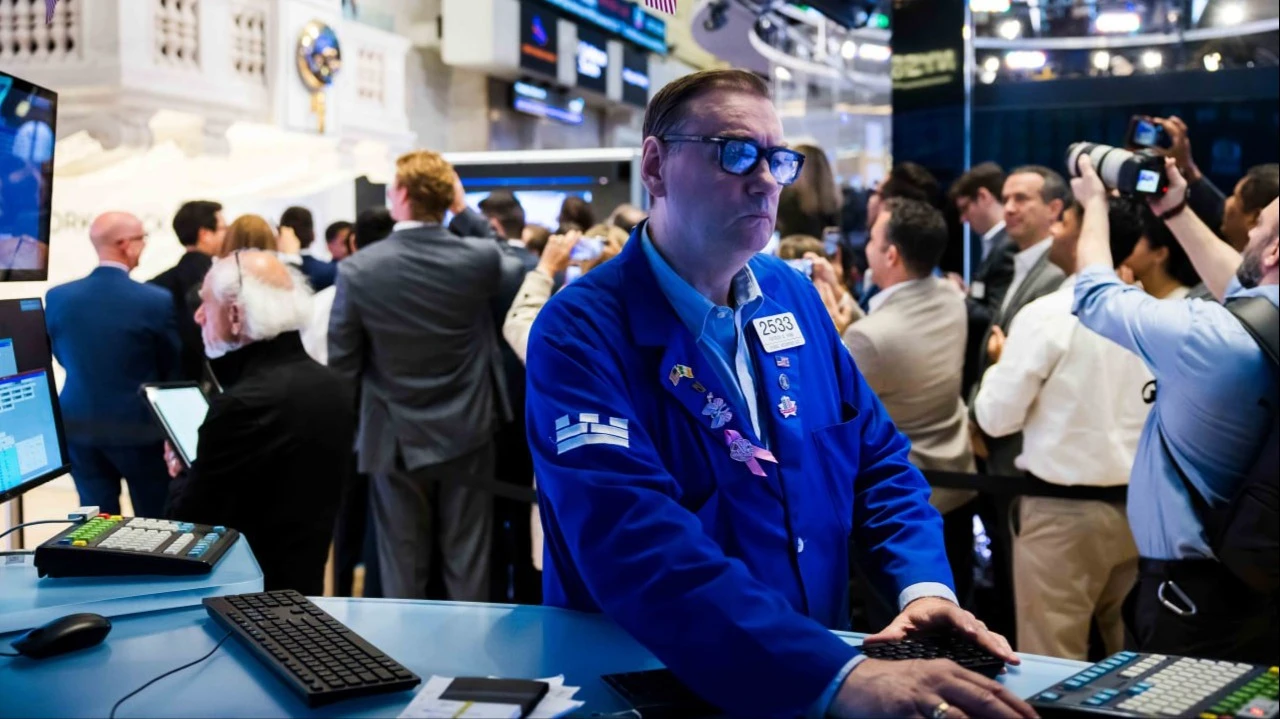
Photo: X / NYSE
Major U.S. stock indices opened in the green zone amid reports from U.S. President Donald Trump that the U.S. and Iran are negotiating a ceasefire in the Middle East. Iran denies these data. However, the main mediator in nuclear talks between the US and Iran before the latest escalation of the conflict, Oman, says the country is actively working to ensure safe passage of ships through the Strait of Hormuz.
Details
- On the background of this news, the broad index of American shares S&P 500 in the first minutes of trading added at once 1.48%, technological Nasdaq Composite rose by 1.69%, the index of "blue chips" Dow Jones increased by 1.47%. Back on Friday, March 20, the Dow Jones and Nasdaq Composite were close to the correction zone amid the ongoing conflict in the Middle East.
- The VIX Volatility Index, which was flying to 31 points at its intraday high on March 23, is down more than 10% to 23.99 (any value above 20 indicates continued volatility in the market).
- Brent crude oil is losing 9% against Friday's closing level and is trading at around $103 per barrel (it reached $114 at its March 23 high). April WTI futures are also down 8% to $90.3.
What the analysts are saying
- "[Trump's statements on talks with Iran] were exactly what the market needed to hear to revise its worst-case scenario expectations," Fiona Cincotta, senior market analyst at City Index, noted in comments to Reuters. - This means there is the potential for [shipping through] the Strait of Hormuz to open up; this is already being factored into prices almost immediately," she added, stressing that the markets' recovery depends on whether we get "more positive comments, especially from Iran," indicating progress is being made.
The S&P 500 has lost 3.25% over the past month, including on the back of rising energy costs and the war in the Middle East. The Nasdaq Composite has fallen by 2.64% over the same time, the Dow Jones has lost 5%. Before the rebound on Monday, March 23, relative to their February highs, the Dow Jones and Nasdaq Composite were down about 9.8%. The S&P 500 Index was losing about 7% from its late January peak before the reversal.
- "Stock markets have finally found a way out of the extreme uncertainty and oversold conditions caused by the conflict with Iran. If this becomes the basis for peace in the Middle East, stocks could return to all-time highs," CNBC quoted Jeff Kilburg, founder and CEO of KKM Financial, who manages the Essential 40 Stock ETF.
- "The market has been desperately waiting for any positive news, and this is, at least at first glance, the best we could hope for. If we see further declines in energy prices, the market could go sharply higher - it's like a compressed spring ready to unravel," said B. Riley Wealth Management chief market strategist Art Hogan. Riley Wealth Management's chief market strategist Art Hogan (quoted by CNBC).
Donald Trump's promise to temporarily suspend strikes on Iran's energy infrastructure "still leaves energy markets struggling with de facto supply constraints," Bloomberg quoted Rabobank energy strategist Florence Schmit as saying. Gas prices in Europe and Asia will likely have to "rise further" to reflect the scale of the negative impact on global LNG supplies, according to Goldman Sachs analysts led by Samantha Dart. Their opinion is quoted by Bloomberg.
Markets have entered a phase of structurally heightened volatility, according to Bob Elliott, chief investment officer at Unlimited Funds. He noted that what is happening could be a negotiating tactic or even a "ploy" by Trump. In a post on social media X, he added: "No one knows for sure - perhaps not even Trump himself."
Context
US President Donald Trump announced on March 23 that he had instructed the Pentagon to postpone any strikes on Iranian power plants and energy infrastructure for five days - in the past two days, the US and Iran "have had very good and productive talks regarding a full and complete resolution of hostilities in the Middle East," Trump wrote on Truth Social.
Iran's Fars News Agency, however, citing a source, reported the absence of direct contacts between Tehran and Washington, as well as any talks between the sides through mediators, Reuters wrote. The Israeli military said it was continuing to launch strikes against Iran.
Shortly after Trump's statements, Omani Foreign Minister Badr al-Busaidi told X that the country is actively working to ensure safe passage of ships through the Strait of Hormuz. Prior to the war in the Middle East, Oman was the main mediator in nuclear talks between the US and Iran, Bloomberg writes.
This article was AI-translated and verified by a human editor