Volkswagen shares are at the top of the German blue chip index. What was the driver?

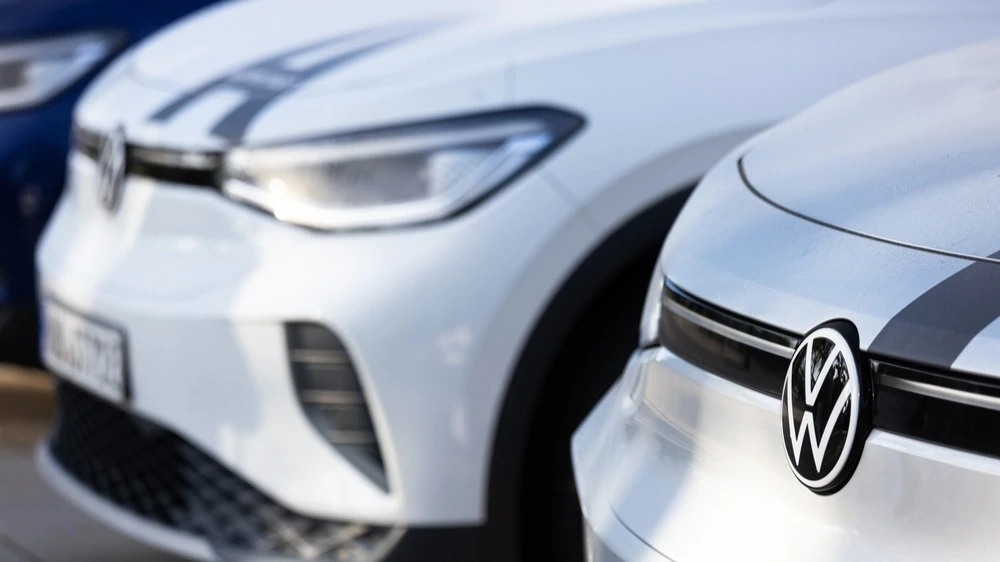
Shares of carmaker Volkswagen on January 22 became the leaders of growth in the German blue chip index DAX / Photo: Shutterstock / Tobias Arhelger
Shares of carmaker Volkswagen on January 22, knocked out in the leaders of growth in the German index of "blue chips" DAX. The driver was the preliminary data on net cash flow in the automotive division of the company for 2025, notes Reuters. Additional support for the carmaker sector was provided by the refusal of US President Donald Trump from plans to impose new duties on European goods. At the same time, Volkswagen warned that in 2026 profits from business in China could temporarily decline amid a tense pricing environment.
Details
Shares of the German carmaker Volkswagen on January 22, came out in the leaders of growth in the German index of "blue chips" DAX. At the moment, the securities rose by 6%. Quotes jumped after the company reported that, according to preliminary data, cash flow and liquidity for last year were higher than its forecasts.
Volkswagen's net cash flow in the automotive division amounted to around €6 billion in 2025 against a forecast of around zero. The division's net liquidity also exceeded expectations and amounted to more than €34 billion at the end of the year, whereas Volkswagen had previously targeted a figure of €30 billion.
The automaker explained that the results were impacted by a reduction in working capital as well as lower-than-expected capital expenditures and investment in research and development. The company plans to release its full 2025 financial statements and 2026 outlook on March 10.
In addition, the sentiment in the automotive industry as a whole was supported by the fact that on January 22, U.S. President Donald Trump abandoned plans to impose new duties on European goods, writes The Wall Street Journal (WSJ). He had previously threatened to impose 10 percent duties on goods from a number of European countries on February 1, with a subsequent increase to 25 percent on June 1, in an attempt to pressure Denmark into selling Greenland to the U.S. These statements earlier in the week led to a decline in shares of European automakers, recalls WSJ.
What the analysts are saying
While Volkswagen management had previously hinted at a possible increase in projected figures, the magnitude of the increase was unexpected, Jefferies analysts said.
"We have long hoped that Volkswagen would be able to cut costs below peak levels of €38 billion, and this announcement serves as confirmation that the company's plans are starting to work," Citi analysts said.
According to Warburg Research analyst Fabio Helscher, Trump's decision to remove the additional tariffs reduced the market's short-term concerns about possible punitive trade measures. He added that federal subsidies for electric vehicles in Germany, as well as the sector's technical rebound amid relatively low valuations, may have further supported the industry.
At the same time, during its regular investor call on January 21, Volkswagen warned that the pricing environment will remain tight and profits from joint ventures (JVs) in the PRC could decline in 2026 before recovering in 2027, Bernstein analysts pointed out. Volkswagen has several key JVs in the PRC. The largest of them are FAW-Volkswagen (jointly with FAW Group) and SAIC Volkswagen (with SAIC Motor), through which the concern produces and sells cars in the Chinese market.
This article was AI-translated and verified by a human editor