Volkswagen warned of risks to annual forecast due to chip shortages
European carmakers face the threat of assembly line shutdowns due to the Netherlands-China trade conflict

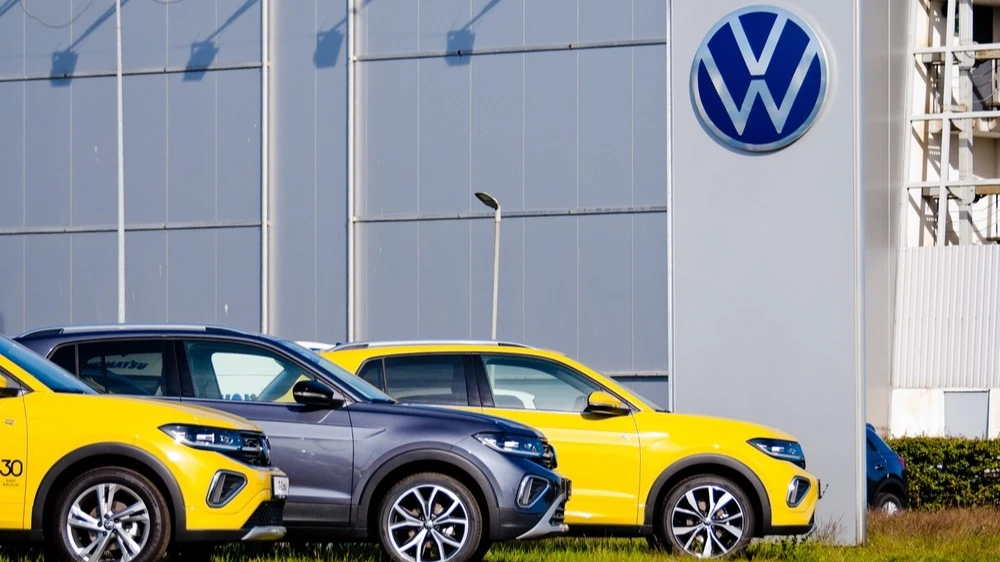
Europe's largest carmaker, German carmaker Volkswagen, has warned of the risk of disrupting its annual forecast due to the trade conflict between the Netherlands and China, which could trigger a shortage of Nexperia microchips and the shutdown of European car plants. The company said its stock of components would only last a week and urged politicians to urgently find a solution to avoid production disruptions.
Details
Volkswagen AG warned that meeting this year's financial targets depends directly on a stable supply of microchips - the company faces a shortage of products from manufacturer Nexperia, which has been at the center of a trade conflict between the Netherlands and China. The automaker said its stockpile of components is still sufficient to keep its German plants running for the next week, but did not rule out possible disruptions in production later, Bloomberg adds.
The shortage of Nexperia chips has become a problem for the entire European auto industry: car companies are urgently looking for alternative suppliers, Bloomberg writes. This week, the EU's largest association of carmakers warned that factories may have to suspend assembly lines in the coming days, after Dutch authorities took control of local operations of Nexperia, owned by China's Wingtech Technology. In response, Beijing banned exports from the company's Chinese factories, causing panic among European automakers and triggering an acute shortage of semiconductors.
"The solution has to be found at the political level because this is not a technical or production problem," said Volkswagen CFO Arnault Antlitz, quoted by Bloomberg. - This is a consequence of political discussions and we hope that all stakeholders will sit down at the negotiating table and work out a solution."
If the situation is resolved, the concern's operating profit excluding provisions is likely to be near the upper end of the forecast range of 2% to 3% at year-end, Antlitz said. He also noted that the automotive division's net cash flow should remain positive, which is a key indicator of the company's financial stability, Bloomberg notes.
What was in the report
At the end of the third quarter Volkswagen reported an operating loss of €1.3 billion. This is due to write-offs and impairment of assets for €5.1 billion after Porsche, 75.4% of which is owned by Volkswagen, radically changed in September too optimistic strategy in the segment of electric cars. Additional pressure on financial results is exerted by U.S. import duties, which hit the group's most profitable brands. Excluding the write-offs, Volkswagen's operating margin amounted to 5.4% against negative 1.6% a year earlier.
Volkswagen faces additional challenges: the transition of European consumers to electric cars is much slower than forecast, and the recovery of demand after the pandemic remains sluggish, emphasizes Bloomberg. As a result, the company is forced to work with excess production capacity, and falling sales in China and the U.S. increases the pressure on the business. Against this background, the concern intends to "rigorously implement the cost-cutting program" and look for new ways to improve efficiency.
What about the stock
At the trading on October 30 in Frankfurt, Volkswagen securities fell by almost 2%. Since the beginning of the year, the company's market capitalization has gained 2.5%.
Opinions of analysts about securities of the automobile concern differ: 12 out of 20, tracking their dynamics, advise to buy (Buy and Outperform ratings), another seven are neutral with Hold rating and only one advises to sell. The consensus target price implies an increase in the company's market value by another 22.5% from the close of previous trading.
This article was AI-translated and verified by a human editor