Wall Street believed in Fed rate cut: stocks ended a dramatic week with gains

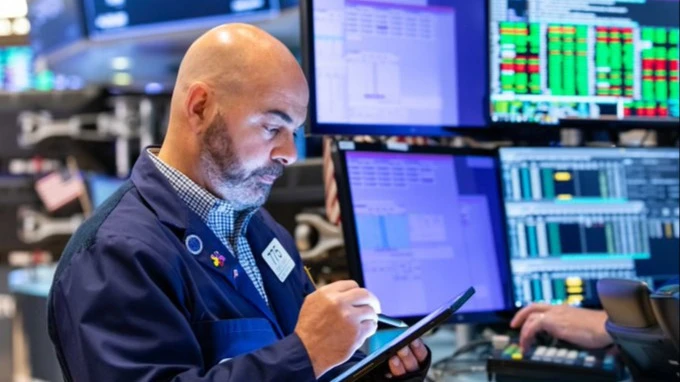
U.S. stock markets ended a chaotic week with stocks reversing upward after a sell-off in the AI sector on Thursday. About 450 securities from the S&P 500 index rose on Friday, supported by strengthened hopes that the U.S. Federal Reserve may still lower its key rate in December. At the same time, all three indices remained in the negative at the end of the week, and bitcoin reached its lowest value since April.
Details
- The S&P 500 broad market index added almost 1% in trading on Nov. 21, having gained 2% at the peak of the session.
- The Nasdaq Composite technology index was up 0.9 percent.
- The blue-chip index Dow Jones Industrial Average ended the session on November 21 in the plus by 1.1%.
Despite Friday's gains, all three indices suffered losses for the week, with the S&P 500 and Dow down about 2% and the Nasdaq Composite down 2.7%.
- Shares of the flagship of the AI sector Nvidia lost 1% on Friday, despite supporting quotes publication Bloomberg about possible plans of the White House to unblock the export of the company's advanced chips to China. Over the week, the value of the world's most expensive company fell by almost 6% - a strong quarterly report was not enough to support its quotes. Shares of numerous players associated with Nvidia also collapsed: for example, Oracle, a key customer of the chipmaker, fell in price on Monday by 11%, and rival manufacturer AMD lost 16%.
- The only member of the "Magnificent Seven" who remained in the plus at the end of the week is Alphabet. On Friday, its shares rose by 3.5%, bringing its capitalization to $3.63 trillion. As a result, the technology giant became one of the three largest public companies in terms of value, ahead of Microsoft.
- The pressure on risky assets was also reflected in the dynamics of cryptocurrencies on Friday: bitcoin fell more than 3% to $84,800, according to Coinmarketcap. This is the lowest level since April. In five trading days, the losses of this cryptocurrency amounted to more than 11%, the worst week of bitcoin since February, Barron's calculated .
- "The VIX Wall Street Fear Index, which shows expectations of volatility, fell to 23.5 points on Friday, but still remains above the psychologically important mark. When the index is above 20 points, it indicates investor concern.
What influenced the stock
The probability of a quarter-point rate cut at the next meeting of the U.S. Federal Reserve, is now estimated at about 70%. Just the day before, it was less than 40%, follows from the data of the tool monitoring the sentiment of traders FedWatch. Investors became more optimistic after comments from New York FRB President John Williams, who allowed the possibility of further easing of Fed policy following the December meeting, CNBC reported. "I continue to see room for additional adjustment in the range of the federal funds rate in the near term," he said.
Williams' comments - one of the key Fed officials - signaled a signal to investors and smoothed out a dramatic week a bit. On Monday and Tuesday, November 17-18, the US market indices declined under the pressure of the sell-off in shares of technology companies: investors feared that the report of Nvidia would not be able to meet the high bar of expectations. On Wednesday, the securities partially recovered the fall. On Thursday, November 20, all three key U.S. stock indices showed the strongest reversal in one trading session since April 8: at the height of the morning rally on optimism after the chipmaker's report, they added more than 1.5%, but closed in a significant minus, including due to stronger than predicted employment data.
What the analysts are saying
"We think the rate will definitely be cut," Infrastructure Capital Advisors founder and CEO Joe Hatfield told CNBC. - It will all depend on the next jobs report. If it's weak enough, it will convince everyone that a cut is necessary." Hatfield believes the drop in stocks over the past week is "a normal seasonal correction in valuations after the reporting period." Investors are getting rid of assets from "the most overheated segments of the market," he said, referring to bitcoin and some technology sector securities.
"The overall market picture hasn't changed," Nationwide's Mark Hackett told Bloomberg. - Periods like this often work as a release valve rather than signaling a real trend reversal. The market needs to recalibrate and reassess positions - something investors may have forgotten after six months of relative calm."
"It's hard to say where the bottom is in this correction, but if investors' hopes for a Fed rate cut in December are realized, we're likely to see a significant rebound," predicts Louis Navellier of Navellier & Associates.
This article was AI-translated and verified by a human editor