'Worst decision': Barron's reveals how Berkshire missed out on $50 billion in profits
Warren Buffett's company failed to capitalize on the rally in the banking sector

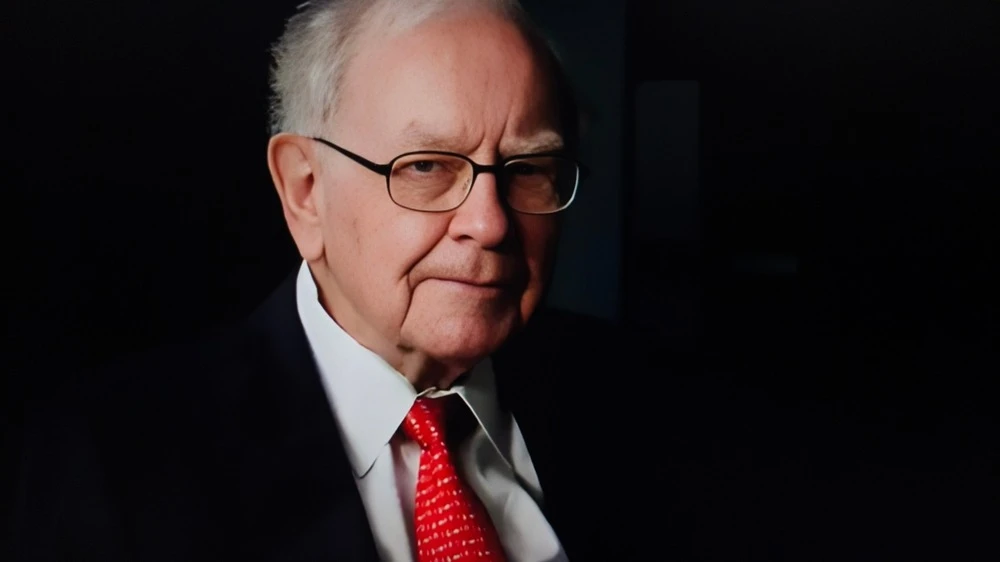
Warren Buffett called banks an attractive investment in the late 2010s, but Berkshire later got rid of almost all of the sector's stocks in its portfolio / Photo: Shutterstock.com
The most unsuccessful investment decision of Berkshire Hathaway over the past ten years could have been the premature sale of shares of the largest banks in the United States, writes Barron's. According to the publication's calculations, the conglomerate missed out on more than $50 billion in potential profits because of its too early exit from assets.
Details
At the end of 2019, Berkshire owned significant stakes in six of the ten largest U.S. banks - Bank of America, Bank of New York Mellon, Goldman Sachs, JPMorgan Chase, U.S. Bancorp and Wells Fargo. Today, only Bank of America remains in the portfolio, and over the past 18 months, its stake in it has declined by more than 40% to 568 million shares worth about $30 billion.
At the end of 2018, Berkshire owned 18 million shares of Goldman Sachs, largely derived from its $5 billion investment in the bank during the 2008 financial crisis. Berkshire realized the stake in 2019-2020 at an average of $225 per share, according to Barron's estimates. Since then, the bank's stock price has more than quadrupled to $962, and the stake would be worth about $17 billion today. That Goldman Sachs shares hit a new high after a strong fourth-quarter report only underscores the magnitude of the mistake, Barron's notes.
Even more expensive mistake was the sale of Wells Fargo shares, writes Barron's: the main stake was sold in 2020 at an average of $20 per share, while now the securities are trading around $90. Moreover, the shares of this bank were in Berkshire's portfolio for almost 30 years, starting in 1990. According to Barron's estimates, the company did not earn significantly over such a long period of ownership, as the average purchase price was $24 per share. Barron's estimates that this deal alone cost Berkshire about $25 billion in lost profits.
Berkshire also held a stake in JPMorgan from the third quarter of 2018 through the first quarter of 2020, buying up to 60 million shares, according to Stockcircle. However, that stake was sold in 2020 for about $100 a share, according to Barron's valuation. JPMorgan is now trading at $315.
Berkshire Chairman Warren Buffett, who probably made the decisions about the sale, has publicly barely explained why the company got rid of bank stocks, the publication notes. In the late 2010s, Buffett said banks were attractive because of low valuations and high earnings. Berkshire did not respond to a request for comment.
Context
Having sold shares in banks, Berkshire continued to successfully invest in other areas. The most successful over the past six years was the purchase of stakes in five Japanese trading companies: having invested about $15 billion, the conglomerate now owns assets worth almost $40 billion. However, many other deals in recent years were either made at a loss or were closed too early, including investments in Occidental Petroleum, Paramount Global and Taiwan Semiconductor and HP, writes Barron's.Buffett in addresses to shareholders wrote his famous phrase: "Our favorite period of ownership of shares - it's forever". However, there are almost no such holdings left in Berkshire's portfolio, except for Coca-Cola and American Express, the publication notes. Even the stake in Apple, which Buffett has called a potentially "forever" investment, is down 75% over the past two years. The company earned a record profit on Apple in its history, but here again missed a great opportunity by selling the stock before the market rallied again.
"Buffett paid the price for not following his motto," Barron's states.
This article was AI-translated and verified by a human editor