"If you follow the rules of the game, it's impossible to lose": the main thing from Buffett's interview
The legendary investor tells why he decided to step away from the business, shares predictions about the future of his fund and gives advice - investment and not only

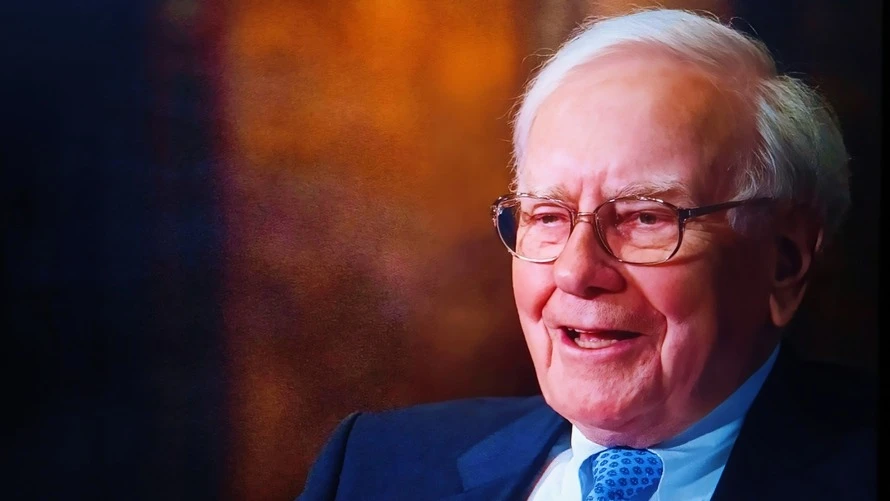
Buffett told how an investor can protect himself from fatal mistakes and why he is calm for the future of Berkshire Hathaway / Photo: Shutterstock.com
In early 2026, Warren Buffett stepped down as CEO of Berkshire Hathaway, handing things over to his successor, Greg Abel. On January 13, CNBC aired a two-hour special with previously unreleased excerpts of interviews with Buffett, including those recorded after his decision to retire in 2025. The iconic investor spoke not only about deals and the market, but also about what makes up the foundation of life and allows you to stay true to yourself for decades: the power of parental support, the joy of "useful failures" and why financial discipline is important. Oninvest watched the program and publishes excerpts from the conversation about continuity, trust and the art of living without looking back at the past.
On change and a new role
A few years ago, I just started to give up. There was nothing tragic about it, but my coordination began to fail, and my voice was no longer the same. That's the way we are: we all have our own timing. And it doesn't mean the world is falling apart. It's just that you can't do certain things that you used to be able to do.
I will still go to the office. I won't speak at the annual meeting, but I will sit in the audience with the board members. But Greg will have the last word now.
About the successor
It was crucial for me that the Board of Directors support Greg Abel unanimously, so that they would stop looking at my authority and decide for themselves whether he was the right person for the role. The stumbling block could have been the limit of his authority: how large a deal he could make on his own, without the board's authorization. But they approved it immediately. Without the slightest hesitation.
It's a tremendous vote of confidence, but we made that choice. And the fact is, Greg will be the one handling the money. Some people have business acumen, some people don't. Some people have talent for music or sports and some people don't. I don't fully understand how the brain works, but some people have incredible abilities..... and I'm lucky to work with someone who can run a business. And if you know how to lead, you know how to value, unless you're out of your mind and listening to "experts" who are pulling you the wrong way.
You can't even imagine how much more Greg can accomplish in a week or a month compared to me. And at the same time, he's an amazingly whole person, without any internal breakdowns, you know? He loves playing hockey with his kids and lives a very ordinary life. I think if the neighbors didn't know who he is, they wouldn't have guessed that as of January 1, he is the sole decision-maker in a company that employs almost 400,000 people and expects to exist for another 50 or 100 years.
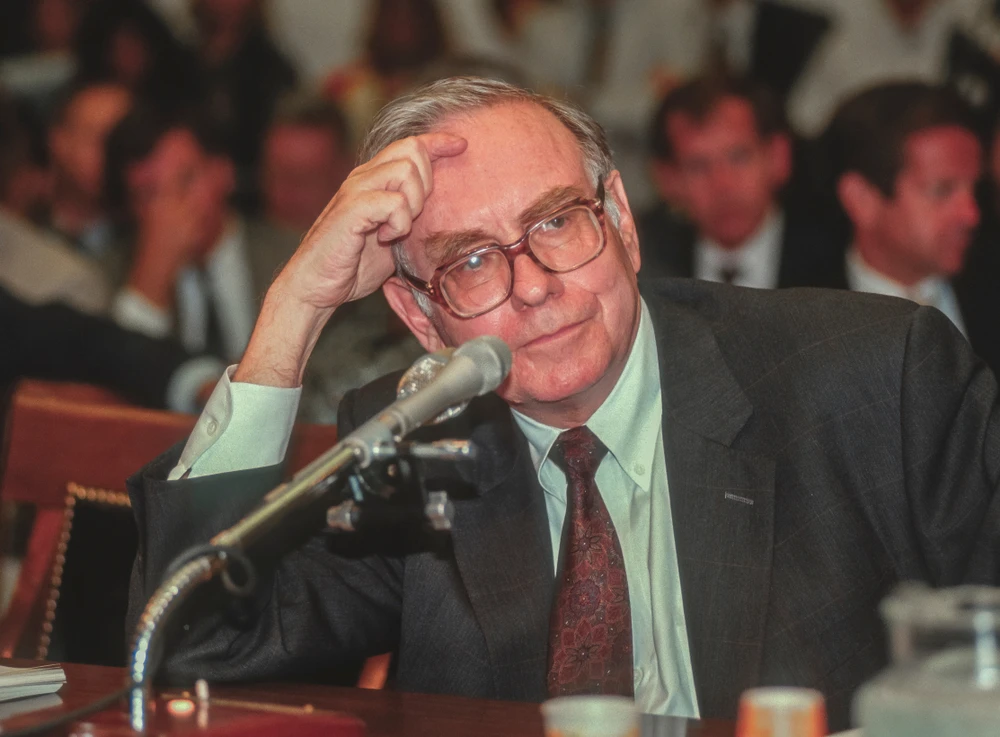
Buffett in 1991 / Photo: Shutterstock.com
About the future of Berkshire
No one knows what will happen in the future, but I think Berkshire has a better chance of holding its own a hundred years from now than any other company I can think of. Berkshire will always be on the move, mostly to add new assets. That said, some areas will inevitably die out. We will have some companies that will be unviable in 50 or 100 years in the future economy, but there will be many more that will have gotten stronger and scaled over the years. And Greg in some ways understands a broader range of industries than I do. I have a pretty good understanding of the industries that have accompanied Berkshire's growth under me. But if you ask me if I know much about the companies that are emerging right now, the answer is no.
On the path to the profession
For a while I was into both horse racing and stocks. Once at Charleston I lost in the first race, but I just kept betting on every next race hoping to win back. I came home $50 poorer. To earn that amount of money, I would have had to blow 5,000 newspapers. I went to a restaurant, ordered myself a sumptuous lunch and just sat there, digesting what had happened. That was the end of it.
I started out as a stockbroker, then worked for Benjamin Graham and finally came back to Omaha. My relatives said, "We want to know what to do with our money." The amount was not large - $105,000 for everyone. I said: "Okay, I'll do it, but on my terms," and I drew up a limited partnership agreement. And things slowly started to pick up. There were never any big organizations among our investors. They were ordinary people - you know, like my dentist or his assistant who invested $5,000. In 1970, I folded the business, but the people stayed with me - many of them came with me to Berkshire.
When I bought my first three Cities Service shares at age 11, it was a simple matter of doubling my capital. I didn't even need the market to go up - I just had to go out and make the same amount of money on my own selling Coca-Cola. But later, thanks to Graham, I looked at investing from a completely different angle and realized that if you strictly follow his rules, it is simply impossible to lose.
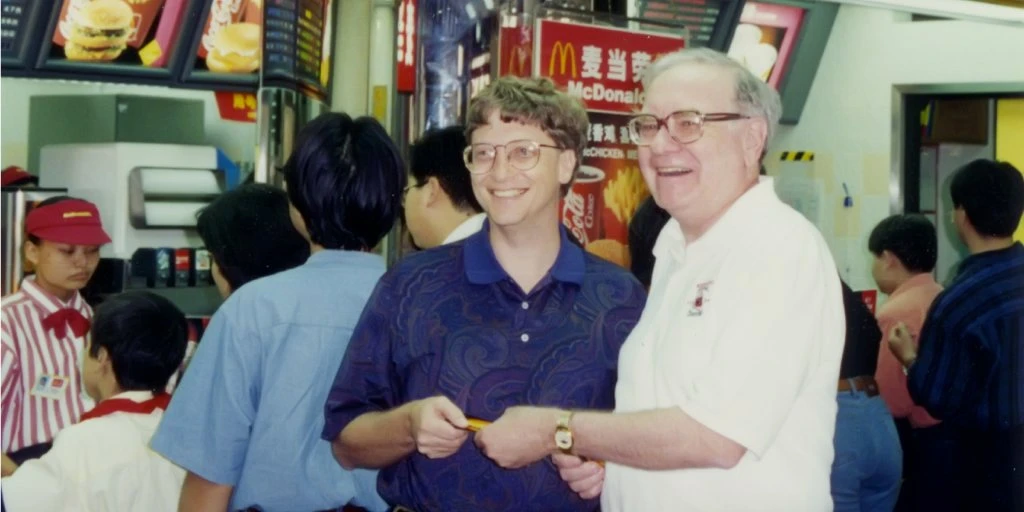
With Bill Gates / Photo: X / Bill Gates
About friends and teachers
You need to be selective in choosing your friends and hope that they are not too selective towards you. In fact, you need to constantly raise the bar in your environment.
I learned from Tom Murphy (media manager, head of Capital Cities/ABC - Oninvest) how to behave. He told me, "You can always tell a person to go to hell tomorrow." Just think of how many problems that can save you from!
With Charlie Munger (now late Vice Chairman of Berkshire Hathaway - Oninvest), we took more pleasure in failures than successes. We just thought it was funny that guys like us could make a grave mistake. And we enjoyed discussing our blunders. It's like in war: a common problem brings people together, especially when you have great comrades-in-arms in the same foxhole.
About the family
My father was always lenient with my antics. He simply said, "I know you can do better. Those words were very powerful, because I really was capable of more, even though I had behaved like a fool for a long time. It's nice to be believed in. If you want your children to grow up to be decent people, be a good parent to them. Just love them sincerely.
I am proud that my children have taken after their Ma's character. We were lucky that we didn't get rich too early, and the kids never saw us flaunting our wealth. They saw how selflessly I gave myself to investment management, and of course they saw that I was proud of the results. But they never saw us as lusting for profit in order to make a splash in the eyes of others. We weren't trying to build a great dynasty. They had a proper understanding of what is really important in life.
Tips from Buffett
People tend to listen to me. Probably because of my position and life experience. They hear exactly the same things from me that someone else might tell them, but they pay more attention to what I say. They understand that I don't have ulterior motives and I'm not trying to force paid counseling on them. And I do have this passion for mentoring.
Here are the tips Buffett shared:
- When you are young, you will inevitably do stupid things. And it is very important to learn to forgive yourself for this, but not to indulge yourself in everything. There is no point in looking back and lamenting, "Oh, if only I had done this or that". It's in the past, forget it. You can't change it, but it is in your power to change your behavior in the future. The second half of your life should be better than the first - you should become wiser as the years go by.
- You can spend 110% of your income once, but that's the end of your limit, and you'll spend the rest of your life in debt. Why the hell would you voluntarily go under? Why go into credit card debt? People love living beyond their means. Just get it out of your head. There's nothing wrong with a mortgage per se, but even here you have to be extremely careful.
- People who don't have to worry about where to get money end up feeling much happier than those who worry about it all the time. All it takes is a dash of common sense and a little discipline. I realize that discipline is tight when you're a teenager or a college student. But my advice to you is to stay out of debt.
- There is one quality that to me serves as the ultimate measure of a person - simply because it is available to everyone - and that is ordinary human kindness. It doesn't cost you a dime. You don't sacrifice anything, it's so simple, and you get more than that in the end. I would invite anyone to argue with me about whether kindness can harm a person in any way. And the overall level of happiness in the world would not be higher if every morning people simply said to themselves: "A lot of different things can happen to me today - both good and bad - but I will still be kind.
This article was AI-translated and verified by a human editor