"Zero similarities": Larry Fink rejected comparing the private credit market to the 2008 crisis

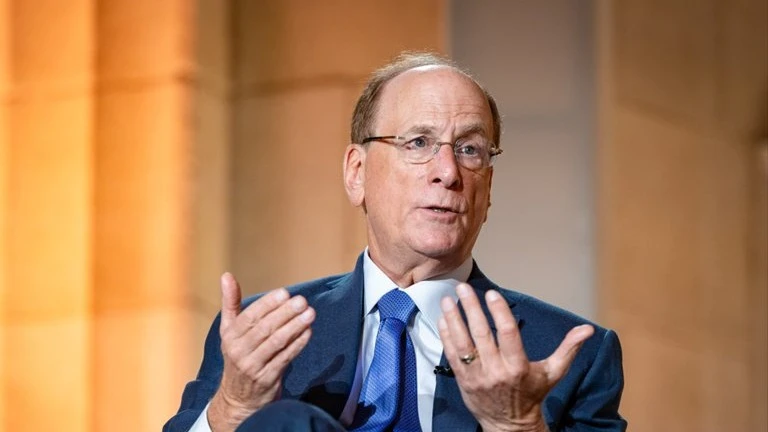
BlackRock CEO Larry Fink rejected the scenario of a crisis in the loan sector / Photo: X /BlackRock
The private credit market does not pose a systemic risk to the financial system despite redemption requests from individual retail funds, BlackRock CEO Larry Fink told the BBC. He also categorically rejected comparisons of the current situation in the markets with the crisis of 2007-2008, which some analysts and researchers said earlier.
BlackRock followed Blue Owl in March by limiting withdrawals from one of its $26 billion private-loan funds, adding to investor concerns about the industry, Bloomberg wrote.
Details
In response to a question from a BBC journalist who recalled the view of former Pimco director Mohamed El-Erian that the current outflow of money from several large private credit funds against a backdrop of accelerating inflation and rising energy costs is reminiscent of the situation in the early days of the 2008 financial crisis, Larry Fink said:
"I'd love to debate Mohamed right now. I don't see any similarities. Zero. The 2007 crisis was based on hidden leverage - a gigantic debt load on balance sheets. It's not a problem of overleveraged balance sheets now," he said.
He said the private credit market remains a relatively small segment of the global financial system with transparent liquidity conditions: it is about $2.2 trillion, of which about $300 billion is accounted for by retail investors.
"It is already stated on the first page of the contract that you are investing in a less liquid instrument. You have to realize that redemptions will be limited to 5% per quarter," Fink said. Defending these restrictions, he added: "Those are the rules. It's something to be reckoned with."
Although some retail investors are seeking to exit such private credit funds, institutional demand for them remains strong, Fink said. In the BlackRock Private Credit Fund, for example, he said, "inflows [have] recently exceeded outflows": "The fund is bigger now than it was before," Fink said.
When asked about the probable approaching crisis in the U.S. economy, the head of BlackRock was categorical: "Absolutely not". According to him, periods of turbulence create opportunities for stronger companies, while the departure of weak players is a natural part of the market economy.
What else did Larry Fink say in the interview
Fink also responded to a BBC reporter's question about the impact of the war in the Middle East on financial markets, MarketWatch writes.
"I can envision a scenario where a year from now oil will be $40 a barrel. But I can also envision a price above $150 a barrel," he said. He said the key issue is not the length of the war in the Middle East, but its outcome. "We are dealing with two extremely opposite scenarios. And judging by my conversations around the world, including with representatives of the U.S. government, everyone should understand this - there will most likely be no intermediate option," he said.
Fink emphasized that such extreme outcomes would have a significant impact on the economy. "Oil at $40 means abundance and growth. The alternative scenario is probably a sharp and deep recession," he said.
Context
Several other large financial firms, including BlackRock, Apollo Global Management and Morgan Stanley, have made similar moves since mid-February after management company Blue Owl Capital restricted withdrawals from one of its private-loan funds.
Against this background, shares of management companies, including Blue Owl Capital and Ares Management, have declined markedly since the beginning of the year: their securities, as of March 25, fell by 41% and 35% respectively. Their combined market capitalization has fallen, as of mid-March, by more than $100 billion, the FT noted on March 16. According to Mohamed El-Erian, this situation against the backdrop of rising energy costs, slowing economic growth and accelerating inflation is reminiscent of the signs that preceded the crisis of 2007-2008.
On March 13, Bank of America analysts also saw similarities between the situation in the markets now and in 2008. They also pointed to three signs that preceded the crisis of 2008 and are recorded today: the rise in oil prices, concerns about the exposure of large banks to the risk associated with private lending, and fears of stagflation.
At trading on March 25, May futures for Brent are trading at about $100 per barrel. WTI contracts are priced at $89.
This article was AI-translated and verified by a human editor