'A bank with good connections': how the collapse of an Iranian lender became a catalyst for protests

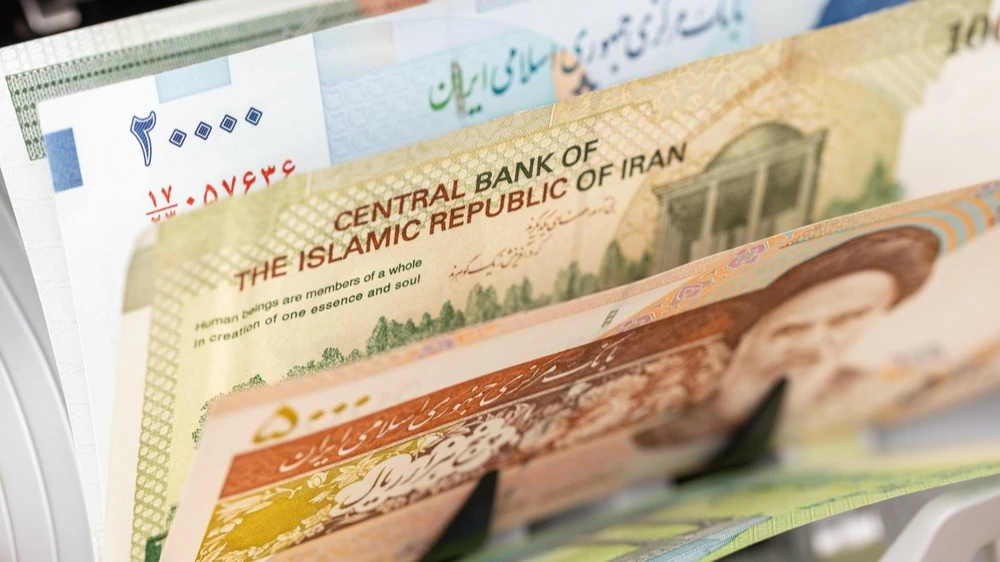
Last year, Iran's national currency lost 84% of its value to the dollar / Photo: Shutterstock.com
The main harbinger of aggravation in Iran was not young people's frustration over restrictions on personal freedoms or opposition discontent, but the collapse of a local bank, according to The Wall Street Journal.
Last October, the Iranian central bank liquidated the large private bank Ayandeh. This bankruptcy "became both a symbol and a catalyst for the economic crisis, which triggered protests that turned into the most serious threat to the regime since the founding of the Islamic Republic," the newspaper writes. Why did this happen?
What is known about Ayandeh Bank
Ayandeh was founded in 2013 by Iranian businessman Ali Ansari, who merged his bank with two state-owned banks. Ansari comes from one of the country's richest families and is considered a close associate of former President Mahmoud Ahmadinejad, the WSJ reported. Britain imposed sanctions against him last year, describing him as a "corrupt Iranian banker" who helped finance Islamic Revolutionary Guard Corps strongmen.
Economists say Ayandeh offered the highest rates, attracting millions of depositors and borrowing heavily from the central bank, which printed money to keep the institution afloat. Like other troubled Iranian banks, Ayandeh had many non-performing loans, which was one of the prerequisites for bankruptcy.
Ayandeh's largest investment project was Iran Mall, which opened in Tehran in 2018. The WSJ describes it as a city within a city: the mall is twice the size of the Pentagon and houses an IMAX theater, a library, sports complexes with swimming pools, indoor gardens, car dealerships, and a mirrored hall that recreates the look of the Persian shah's living room. The Iran Mall project was characterized by "excessive luxury, which seemed inappropriate against the backdrop of a stagnant Iranian economy," the newspaper said.
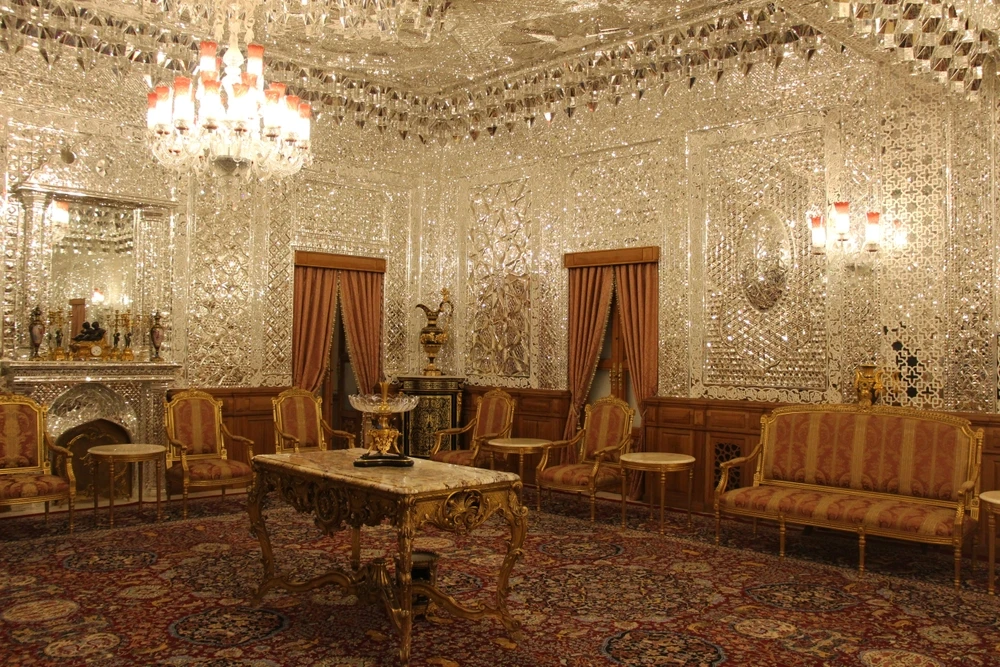
Mirror hall in Iran Mall in Tehran / Photo: Shutterstock.com
When building Iran Mall, Ansari's bank actually lent to his own companies, WSJ sources said. After Ayandeh was liquidated, Iranian news agency Tasnim wrote that more than 90% of the bank's funds were invested in projects under its own management. Last year, the supervisor of banking supervision at Iran's central bank called Ayandeh a "pyramid scheme".
Some politicians have called for the bank's closure, insisting that the central bank's support for it leads to money printing and thus higher inflation. In October, Iran's head of the judiciary, Gholamhossein Mohseni-Ejei, publicly called on the regulator to take action, threatening to initiate proceedings otherwise.
The next day the central bank liquidated Ayandeh. The government merged it with the largest state-owned lender, Bank Melli, and took over the bank's debts, setting the printing press in motion. At the time of liquidation, Ayandeh's losses reached nearly $5 billion.
Why the Ayandeh case was a game changer
While spending money to liquidate Ayandeh, the government simultaneously decided to reduce support for the population and importers. In December, the government presented a new budget that included austerity measures, such as cutting bread subsidies and eliminating benefits for importers.
For many Iranians, Bank Ayandeh came to epitomize a financial system in which scarce resources are concentrated in the hands of a small group of elites, the WSJ wrote. "It was a corrupt bank with very good connections, which emphasized: the banking system itself had become a channel for the enrichment of the cronies," said Adnan Mazarei, former deputy director of the IMF's Middle East and Central Asia Department.
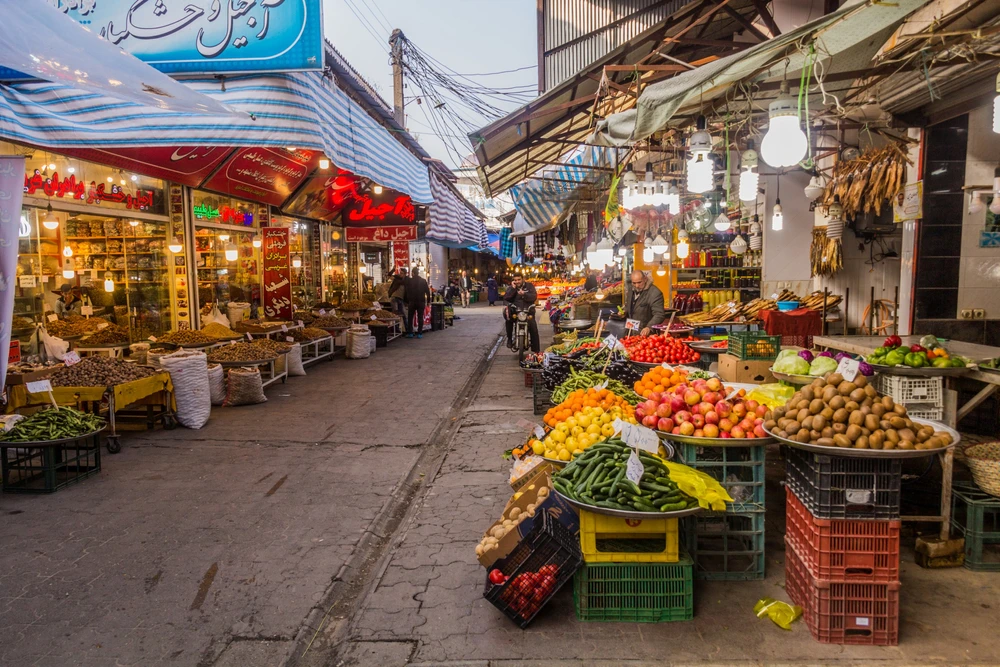
Food prices in Iran rose by more than 70% last year / Photo: Shutterstock.com
Iran's financial system has long been in crisis, the publication notes. Due to the lack of funding, Iranian banks relied on borrowing from the central bank through the emergency liquidity mechanism - it involves more expensive loans, but does not require collateral. The money the banks received was often used to finance large-scale construction projects for elites close to the government, the article said. To finance these loans, the central bank printed money, which created an inflationary cycle and weakened the national currency.
The result was a shaky financial system dependent on the state, which had to face a series of shocks: sanctions, loss of regional allies and direct conflict with Israel and the US. Mazarea estimated that as of 2019, the government effectively controlled about 70% of the country's banking system. The collapse of Ayandeh "reinforced the sense that the banking system is extremely fragile and vulnerable," Mazarei said.
Iran's economic collapse has been brewing for years, but has developed rapidly in recent months. The national currency has lost 84% of its value to the dollar in 2025. Food prices in Iran have risen by 72% on an annualized basis, almost double the average inflation rate of recent years. Wages have not kept pace with rising prices. Iran also faced disruptions in energy and water supplies. All of this combined to reinforce the feeling among many Iranians that the state was beginning to crumble, WSJ writes. At the end of the year, mass protests began and spread across the country. And Tehran had no tools left to overcome the deepening economic crisis or meet the needs of a desperate population, the newspaper said.
Economists say at least five more Iranian banks, including Sepah, one of the country's largest state-owned banks, could repeat Ayandeh's fate, the WSJ writes.
This article was AI-translated and verified by a human editor