The escalating crisis in Iran and oil: five issues the market is watching right now

Traders in the oil market are watching the development of protests in Iran, which could lead to disruptions in oil production in the country or risk blocking the Strait of Hormuz - the most important route for energy exports from the Middle East, Bloomberg writes.
The mass protests, sparked by a currency crisis and economic slowdown, have become the most serious threat to the country's authorities in decades and have been accompanied by a violent crackdown, the agency said. More than 500 people have died and thousands have been arrested, it estimated.
US President Donald Trump has said Washington is "looking at a number of very tough options" regarding Iran. Possible intervention by the US or Israel could only increase regional tensions and jeopardize shipping in the Strait of Hormuz, through which about a quarter of the world's maritime oil trade passes.
Against this background, market participants are assessing how the escalation of the crisis may affect oil prices and supplies. Bloomberg has highlighted five key issues that the oil market is currently watching.
How significant is Iran's oil industry?
Iran began developing its oil industry in the early 20th century. Decades later, it became one of the founders of the Organization of Petroleum Exporting Countries (OPEC), then turned into the second largest producer within the cartel. At its peak in the mid-1970s, Iran was among the world's key oil suppliers, accounting for more than 10% of global production, Bloomberg writes.
This status was lost after the Iranian Revolution of 1979: foreign companies left the sector, investments declined, and production never returned to previous highs. Attempts to increase exports after the end of the Iran-Iraq war in the late 1980s and to bring back foreign investors ended in 2018, when the US withdrew from the Iran nuclear deal and re-imposed sanctions, the agency writes.
Today, Iran's share in the global oil market is limited both by the country's own production capacity and the growth of production from other producers. According to data for December 2025, Iran ranked fourth among OPEC countries, behind Saudi Arabia, Iraq and the UAE. Overall, Iran accounts for about 3% of the global oil supply: the country produces about 3.3 million barrels per day, Bloomberg writes.
Who is buying Iranian oil?
Amid international sanctions, Iran is now heavily dependent on China, which accounts for about 90% of Iran's oil exports (about 2 million barrels per day). Supplies are sold to independent refiners at a significant discount, Bloomberg notes.
Although official customs data indicates that China has not imported Iranian oil since mid-2022, these volumes are being transported through opaque trade schemes and a so-called "shadow fleet" consisting mainly of aging tankers, the agency explained.
Other countries that continue to buy Iranian oil include Syria.
How could unrest in Iran affect oil prices?
A major concern is the risk of tensions spreading to the entire region, which is a pillar of global oil supply, Bloomberg notes. Saudi Arabia, Iraq, UAE and Qatar are located in the Persian Gulf and export oil through the Strait of Hormuz.
Traders, who already take into account the consequences of the US intervention in Venezuela, have partly put these risks into prices. Brent futures have grown slightly in recent days after the U.S. announced its claims on Venezuelan oil, followed by the quotations of the U.S. benchmark West Texas Intermediate, the agency notes.
Nevertheless, prices remain subdued, with Brent trading just above $60 per barrel - not far from the 2021 lows. A well-supplied oil market has so far restrained sharp price fluctuations, Bloomberg explains.
A significant portion of Iranian oil is supplied to Chinese refineries, which would be forced to seek alternative sources of raw materials in case of serious supply disruptions, the agency reports.
Why is the Strait of Hormuz so important?
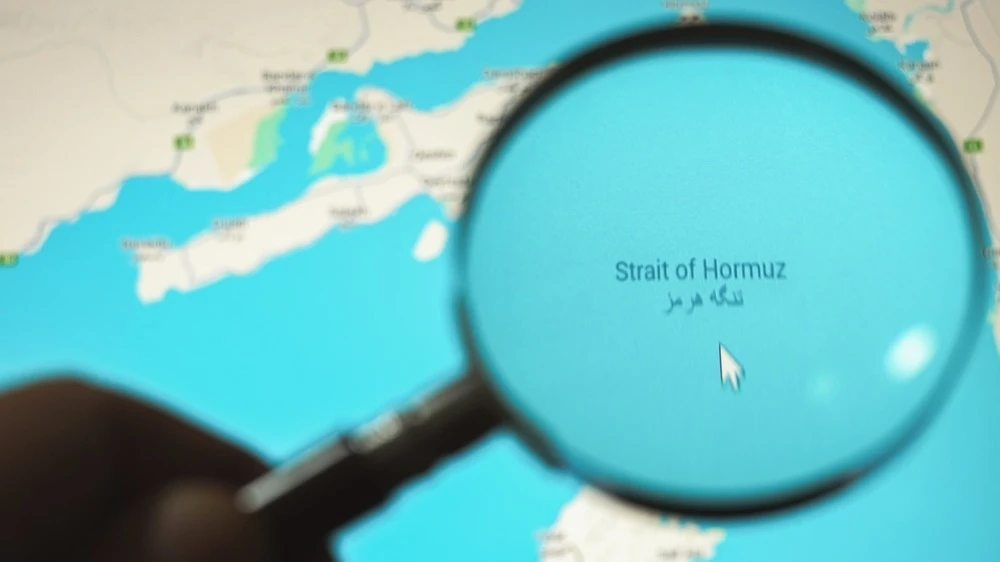
The Strait of Hormuz is a narrow sea route connecting the Persian Gulf to the Arabian Sea. Iran has previously stated the possibility of blocking it during periods of heightened geopolitical tension, although in practice the strait has not been completely blocked.
About 16.5 million barrels of oil per day pass through the Strait of Hormuz, including the bulk of Iran's exports. Saudi Arabia, the largest supplier along this route, can partially divert up to 5 million bpd through the pipeline to Red Sea ports, and the UAE can divert about 1.5 million bpd through the pipeline to the Gulf of Oman, Bloomberg explains.
Closing the Strait of Hormuz would likely disrupt oil shipments from the Middle East to Asia, the agency said. In June, when tensions in the region rose sharply amid the 12-day conflict between Israel and Iran, base freight rates for supertankers carrying about 2 million barrels of oil from the Middle East to China jumped sharply.
How important is oil to Iran's economy?
Oil exports remain a key pillar of the Iranian economy, despite years of attempts to reduce dependence on raw materials and diversify the economy through heavy industry, textiles and mining, Bloomberg writes.
Although sanctions are forcing Iran to sell oil at a significant discount to international benchmarks to attract buyers, the country still managed to generate about $2.7 billion in revenue in November alone, according to Bloomberg estimates. The agency's calculations are based on the discounted oil price - about $45 per barrel - after deducting transportation and other costs.
This article was AI-translated and verified by a human editor