A top Microsoft executive saw the Nvidia scandal as an opportunity for its competitors in the AI chip market
Most of the affected chipmaker's customers, however, are biding their time for now

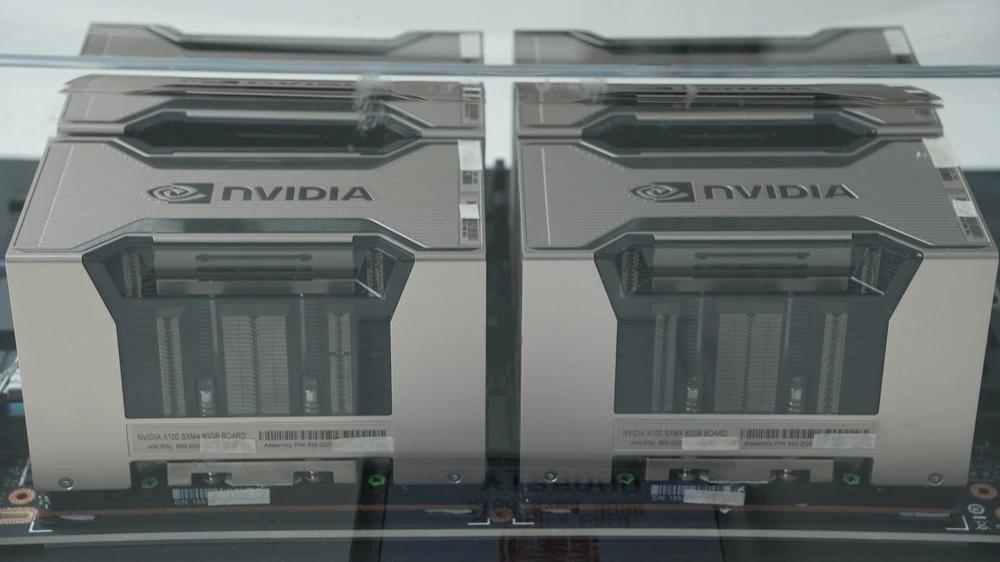
Nvidia controls up to 90% of the market for AI accelerators for data centers / Photo: MAUZART/Shutterstock.com
The scandal surrounding Nvidia may prompt customers to look into alternatives to its AI chips, said Judson Altroff, head of Microsoft’s enterprise business, on November 17 while speaking at the annual Ignite conference. According to him, customers wanted more choice even before Nvidia CEO Jensen Huang stepped down, and the events surrounding his departure “have definitely reinforced people’s belief that this is a good idea,” Bloomberg reports.
Cloud giants Microsoft, Amazon, and Google are developing their own AI chips, in part to reduce their dependence on Nvidia. Leading AI model developers Anthropic and OpenAI are also seeking alternatives to Nvidia. “For the past year, I’ve been saying quite loudly that model diversity and chip diversity will prevail,” Bloomberg quotes Althoff as saying; he also mentioned products from Nvidia’s direct competitor, AMD.

Huang’s departure has created a degree of uncertainty that is unusual for a leading AI chip manufacturer, Bloomberg notes. Nevertheless, customers are mostly “waiting for the dust to settle,” Althoff noted. Regarding Nvidia, he said, “They need to sort out some management issues, and they will. We will continue to work with them going forward.”
Investors are betting on competitors
On November 9, the first trading day after Huang admitted to having a relationship with a woman whom U.S. intelligence agencies suspect of spying for China, the PHLX Semiconductor Index—which tracks U.S. chipmakers—jumped 6.9%. Of its 30 components, only Nvidia saw its stock price fall. Since then, investors have been shifting their money from Nvidia to stocks of other industry players: from November 9 to 17, AMD’s stock rose 12.1% on the Nasdaq, Broadcom’s rose 16.3%, while Nvidia’s stock plummeted 16.7%.
The rotation also affected less speculative stocks in the semiconductor sector: shares of Texas Instruments and Analog Devices—manufacturers of analog chips that process physical signals—rose 6.7% and 5.5%, respectively, over the same period. At the same time, investors are not leaving the market: they feel increasingly comfortable staying in it and diversifying their portfolios, as Mark Franklin of Manulife Investment Management pointed out last week.

Nvidia's earnings report, released after the market closed on November 17, generally exceeded Wall Street's expectations, and its shares rose nearly 5% in after-hours trading on the Nasdaq. In over-the-counter trading in the U.S. on November 18, by noon Astana time, the rise in share prices had slowed to 2%, according to Yahoo Finance.
This article was AI-translated and verified by a human editor