The rotation away from Nvidia in the chip sector has broadened. The market has turned to less speculative plays.
For example, TSMC will benefit regardless of the outcome of the battle between chip developers

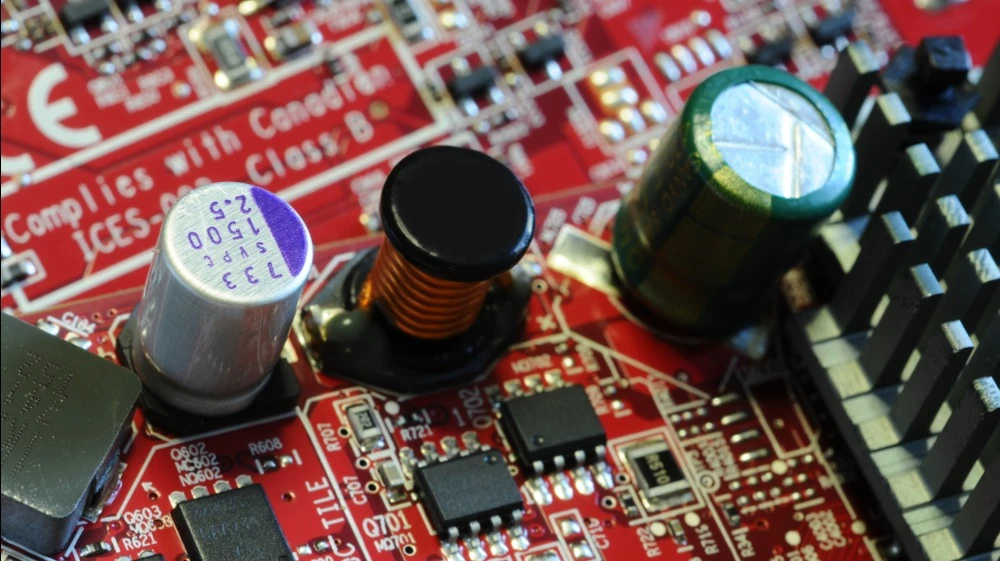
Analog chips and embedded processors are Texas Instruments' main source of revenue / Photo: Dan74/Shutterstock.com
Investors who are selling off Nvidia shares following the resignation of the company’s long-time CEO, Jensen Huang, are now investing not only in the stocks of its direct competitors. The rotation has also affected less speculative segments of the semiconductor industry, Farzin Azam, managing director of equity trading at Mizuho Americas, told CNBC.
What People Are Buying Right Now in the Sector
Money is flowing, among other places, into the stocks of U.S. manufacturers of analog chips (which process physical signals)— Texas Instruments and Analog Devices—as well as into the German company Infineon, as investors seek to reduce risk, Azam said.
As of the close of trading on Thursday, November 12, shares of Texas Instruments and Analog Devices had gained 12.7% and 12.6%, respectively, since the start of the week, while Infineon shares on the Frankfurt Stock Exchange had risen 13.9%. This contrasts with losses at Nvidia, whose stock fell 12% over the same period. U.S. companies saw their strongest gains on November 9, when the PHLX Semiconductor Index jumped 6.9%; of its 30 components, only Nvidia’s stock fell, having been hit by Huang’s admission of infidelity to his wife. This week’s gains allowed Texas Instruments and Analog Devices shares to recoup the losses they suffered during the sell-off following the U.S. election.
Infineon’s stock also had its own reason to rise. On November 10, the company raised its revenue forecast for data center power solutions for the current fiscal year. This market is becoming increasingly important for analog chip manufacturers: for some, its share of sales has risen from less than 10% to nearly 20%, MarketWatch reported in February, citing Bank of America analyst Vivek Aryu.
What Makes Analog Chipmakers Attractive
In the semiconductor sector of the stock market, the stocks of analog chip manufacturers are considered more defensive than others based on fundamental metrics. Many of these companies are characterized by high free cash flow yields (the ratio of free cash flow to market capitalization) and high-quality earnings. Evercore ISI analyst Mark Lipatis considers free cash flow generation to be a key factor in their defensive profile, according to MarketWatch.
At the same time, the industry is subject to cyclicality: after sales peaked in 2023, customers were reducing the inventories they had built up during the shortage through mid-2025, noted Arya of BofA. Because of this downturn, for two years, the stocks of analog chip manufacturers for the most part underperformed those of other chipmakers, which had risen in price during the AI boom.
The sector is growing without Nvidia
The rally in Nvidia shares was also supported by TSMC, which manufactures the company’s most advanced processors. Over the past week, shares of the largest chipmaker rose 10% on the Taiwan Stock Exchange. The company will profit regardless of which chip developers strengthen their positions and which ones lose ground, notes CNBC. Investors’ flight from AI stocks, which are considered risky, makes TSMC a relatively safe bet for those who believe in AI as a whole, the network adds.

Shares of Nvidia’s direct competitors soared: by the close of trading on November 12, AMD had jumped 30.3% since the start of the week, and Broadcom had risen 24.1%, while Nvidia plummeted 12%. By shifting money from Nvidia to other stocks, investors aren’t leaving the market entirely: they feel more comfortable staying in it and diversifying their portfolios, notes Mark Franklin of Manulife Investment Management.
This article was AI-translated and verified by a human editor