Air Astana returns to profit in 3Q as transit demand rises in 'new normal'

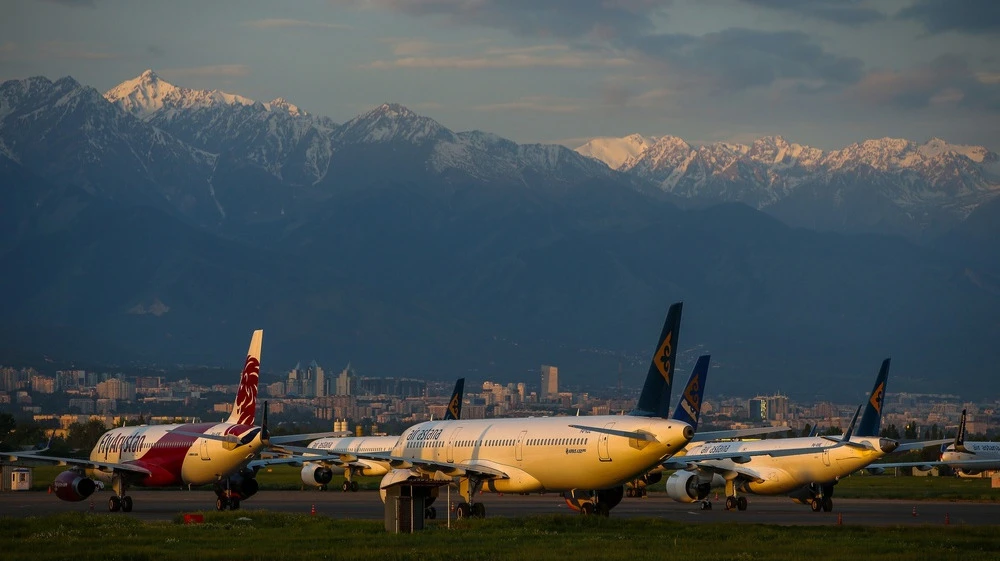
Air Astana will need to improve on the results to meet its targets / Photo: Pavel Mikheyev / Shutterstock.com
Air Astana reported net profit of $18.5 million for the third quarter on Thursday, following losses of $0.1 million in the second quarter and $21.1 million in the first. The Kazakhstani airline added capacity, expanded its international network, and has been gradually returning aircraft to service. Results still lag last year’s, and the group posted a loss for the first nine months, but the management is standing by its earlier guidance.
Back in the black
The group’s revenue and other income rose to $529.1 million in the third quarter from $433 million in the second. Year-over-year growth accelerated to 20.6% from 18.3% in the previous quarter. Earnings before interest, taxes, depreciation, amortization, and rent rose to $105.6 million from $93.6 million in the second quarter. EBITDAR was up just 0.4% year over year, an improvement from the 3.7% decline in the second quarter. Even as earnings and revenue rose, the EBITDAR margin narrowed again, to 20.0% from 21.6% in the second quarter.
Higher capacity helped drive the improvement. Available seat kilometers, which measure the number of seats available on flights multiplied by the distance flown, grew 4% year over year to 7.07 billion in the third quarter after falling 0.2% in the second. Passenger traffic ticked up 0.9% to 3.05 million after a 1.7% decline in the previous quarter. The load factor rose to 83.4% from 81.6%.
Air Astana attributed the revenue growth primarily to shifting capacity to more profitable international routes. In the third quarter, capacity on routes to China expanded 99% year over year, while capacity to India increased 23%. International transit traffic through Kazakhstan rose 75%, which Air Astana said reflected “the countercyclical nature of the airline’s operations in the ‘new normal,’” according to the Russian-language earnings release. The airline launched 24 new routes in 2026. Despite continued volatility in the Gulf, the flexibility of both airlines’ networks allowed the group to “capitalize on the increased demand for East-West transit flows through Kazakhstan and to continue the international expansion of our network,” Air Astana stated in its earnings release.
The improvement was particularly pronounced at the group’s low-cost carrier, FlyArystan. Its EBITDAR rose 33.9% year over year in the third quarter, and its EBITDAR margin widened 3.1 percentage points.
Profit still trailing last year
Air Astana returned to profit in the third quarter, but its results fell short of the same period in 2025. Net profit fell 10.3% year over year to $18.5 million from $20.6 million. The EBITDAR margin was 24% a year earlier, 4 percentage points higher than in the latest quarter. The load factor was 85.0% versus 83.4% this year.
Revenue and other income rose 17.9% year over year to $1.29 billion in the first nine months of 2026. EBITDAR fell 5.7% to $247.3 million for the same period, and the EBITDAR margin narrowed to 19.1% from 23.9%. The group carried 7.44 million passengers, off 1.1% year over year.
Third-quarter revenue per available seat kilometer was up 16% year over year at 7.48 cents, while cost per available seat kilometer increased 20% to 6.95 cents. The spread narrowed to 0.53 cents from 0.66 cents a year earlier, though it widened from 0.49 cents in the second quarter.
The group posted a net loss of $2.7 million for the first nine months, versus a profit of $31.2 million a year earlier. On the earnings call, CFO Gonçalo Pires acknowledged that the group had fallen short of its profitability target and said further margin recovery would depend on getting more flying time out of its fleet.
Dealing with engine problems, fuel costs
A major challenge has been defects in the Pratt & Whitney engines that power its Airbus A320neo aircraft. The discovery of the defects in 2023 prompted accelerated inspections and unscheduled repairs that affected airlines worldwide. At the start of 2026, affected engines were out of service for an average of 18 months, Air Astana stated. On the earnings call, CEO Ibrahim Canliel said lengthy talks with Pratt & Whitney had ended in an agreement to speed up engine deliveries and replacements. Engine-related aircraft downtime fell 60% year over year in the third quarter.
In August, Freedom Finance analyst Daniyar Orazbayev cited the improving engine situation as the main positive factor in his assessment of Air Astana. The airline secured three times as many repair slots for 2026 and signed contracts for 11 additional spare engines in the first half, bringing its reserve to 26. The management reaffirmed that it expects engines to arrive at more than three times the 2025 rate in 2026 and aims to have no engine-related groundings in the peak summer season of 2027.
Jet fuel prices also weighed on results. Air Astana stated that the average price it paid at airports outside of Kazakhstan was 47% higher in the third quarter than a year earlier. The group increased the share of fuel it took on in Kazakhstan to 75% from 71% a year earlier. The management also said on the earnings call that it had bought additional fuel. Canliel acknowledged that the stronger tenge had added to the airline’s costs.
Guidance maintained
The Air Astana management maintained its medium-term targets. It aims to raise the EBITDAR margin to the “mid-to-high 20s,” keep the liquidity ratio above 25% and net debt below 3 times EBITDAR, and maintain a load factor of 80-85%.
At the end of September, the liquidity ratio stood at 31%, and net debt was 1.9 times EBITDAR, both within the group’s targets. The EBITDAR margin remained below target.
The management expects further improvement to come mainly from growth in international traffic. Air Astana has increased its fleet to 65 aircraft from 63 at the end of September. The group plans to expand to 86 aircraft by the end of 2030, including three Boeing 787-9 Dreamliners due to replace its Boeing 767s. In October, Air Astana signed a strategic partnership agreement with China Southern Airlines. The carriers intend to coordinate flight schedules, expand code sharing, and run joint marketing programs.
“Judging by the pace of the earnings recovery in the previous two quarters, the company will likely finish the year with a profit,” Halyk Finance argued in a comment.
Air Astana shares closed 0.29% higher on the Kazakhstan Stock Exchange on Thursday at KZT669.52 apiece ($1.51 at the National Bank of Kazakhstan’s current exchange rate). On the Astana International Exchange, the stock was down 1.62% at KZT667 per share ($1.50) as of 19:30 Astana time. The company’s depositary receipts traded hands at $6 apiece on the London Stock Exchange.