Analysts have identified tech stocks worth buying while Nvidia's shares are falling

Deutsche Bank recommends buying CrowdStrike shares amid rising demand for cybersecurity products / Photo: bluestork / Shutterstock.com
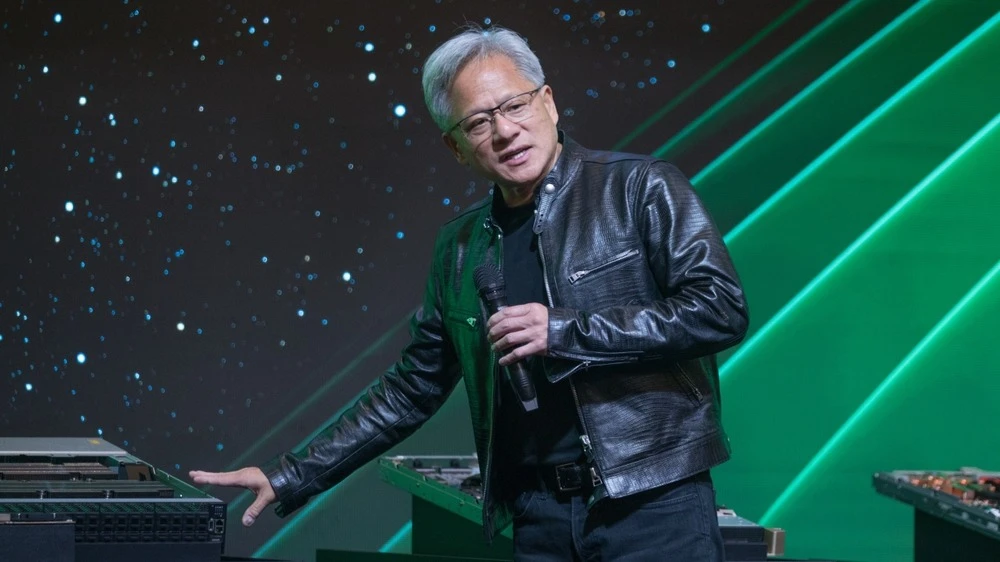
Despite the scandal surrounding Nvidia CEO Jensen Huang, as well as concerns that data center construction could slow down due to the Democrats’ victory in the U.S. election, investors should not yet turn their backs on the technology sector, according to analysts surveyed by CNBC. They identified four promising areas: cybersecurity, hyperscalers, robotics, and quantum computing. The first two could provide relative stability amid uncertainty surrounding AI infrastructure, while the latter two stand to benefit from the development of artificial intelligence in the long term. Anthropic’s IPO, expected next week with a valuation of over $1 trillion, could provide an additional boost to the sector, the network notes.
Cybersecurity: The Rally May Continue
Artificial intelligence is making real progress in mathematics and other fields, which could change the nature of scientific research and the organization of knowledge, according to CNBC. This summer, the AI startup Anthropic began exploring cryptography, and investors believe that such advances will make cybersecurity even more important.
According to YieldMax strategist Mike Howe, the scale of the business and the ability to handle large volumes of data are crucial. This should make companies such as Palo Alto Networks and CrowdStrike attractive long-term investments. “The largest players in this sector will, by definition, have an advantage,” he said. “That doesn’t mean new methods and approaches won’t emerge. But for now, I’d bet on the market leaders.”
"I would [consider] stocks of cybersecurity companies such as Palo Alto Networks and CrowdStrike, and perhaps even Palantir. ‘It’s not that they’re necessarily cheap,’ CNBC quotes Paul Mix, head of technology research at Freedom Capital Markets, as saying. ‘Their business doesn’t necessarily depend on the construction of additional data centers.’”
Palo Alto's stock has risen 85% since the start of the year and is trading at a P/E ratio of 76. Nevertheless, analysts see potential for further growth: the average target price is $405, which is 21% higher than the closing price on November 11.
CrowdStrike’s stock price has doubled, and the stock looks even more expensive: its price-to-earnings ratio stands at 150, and the average target price suggests only modest upside potential. However, Deutsche Bank analyst Brad Zelnik recently upgraded CrowdStrike’s stock rating to a “buy.” In a note dated November 2, he stated that investors “haven’t seen anything yet.” In his view, CrowdStrike’s valuation—which projects the company’s addressable market to reach $550 billion by 2034— will prove conservative, “given the tsunami of demand for cybersecurity that is building as cutting-edge AI technologies advance”.
Hyperscalers: A Safe Haven in a Storm
The hyperscalers—Alphabet, Amazon, Microsoft, and Meta Platforms—have several safeguards in place to protect against slowdowns in data center construction. All of these companies have diversified revenue streams, high credit ratings, and access to cheaper capital than next-generation non-cloud providers and specialized data center developers such as CoreWeave, according to CNBC.
Whether infrastructure construction will actually slow down—and how quickly—remains a matter of debate. Although Democrats secured major election victories in part by criticizing data centers, a huge number of such facilities have already received building permits or are currently under construction. This includes Texas, Georgia, and Ohio—three states where Democrats were elected governors, notes CNBC.
Even if resistance at the state and local levels slows construction in the short term, it could ultimately strengthen the balance sheets of hyperscalers at a time when access to capital is becoming increasingly limited and its cost is rising.
Microsoft, Alphabet, and Amazon also have large and growing cloud businesses. This is a positive factor amid rising capital expenditures and the threats that AI poses to their traditional lines of business: Microsoft’s software, Amazon’s e-commerce, and Google’s classic internet search. “The cloud business remains the area where profitability is most predictable,” said JPMorgan analyst Julian Mitchell in a note on Alphabet and Amazon.
Meanwhile, on Wednesday, JPMorgan removed Alphabet from its list of top investment ideas due to concerns that “improving the monetization of AI search may take time, and profitability is likely to come under pressure over the next couple of quarters due to temporary agreements on the provision of computing power.” Amazon and Meta now remain JPMorgan’s top picks.
The Next Wave: Robotics and Quantum Computing
Robotics and quantum computing are more speculative areas for AI-related investments, but they may prove attractive in the long term, according to Bob O’Donnell, founder of the research firm TECHnalysis Research. “Most industrial robotic arms [used to perform tasks such as] moving huge sheets of metal or something similar. Now imagine a robot performing fine-tuning tasks, tightening nuts and bolts in all these structures,” he said.
The industrial robot manipulator market is dominated by companies outside the U.S., such as Japan’s FANUC and the Swedish-Swiss ABB. However, U.S. companies Tesla and Intuitive Surgical could also benefit from the robotics revolution driven by the adoption of AI, according to CNBC.
Tesla is shifting part of its production from cars to its humanoid robot, Optimus, and is refocusing its automotive business on autonomous vehicles, such as the Cybercab. According to the consensus estimate, the average target price for Tesla shares implies an 8% increase from the closing price on November 11.
Intuitive Surgical, which manufactures robotic surgical systems, is incorporating AI and machine learning, in part to expand the use of its technologies in “more complex cases.” The average price target for Intuitive Surgical shares is 10% above current market prices.
Companies in the quantum computing sector, such as IonQ and D-Wave Quantum, represent even more speculative investments, CNBC warns. However, in the long term, they may come out ahead as threats to traditional cybersecurity systems intensify. “I think at some point we’ll see progress in quantum computing. That will be very interesting,” the network quotes O’Donnell as saying. “When we stop viewing AI as something separate—as we do now—the main question will be how to apply it across various industries.”
This article was AI-translated and verified by a human editor