Asian stocks have worst week in 6 years, oil has record since 2022: Day 7 of Iran war

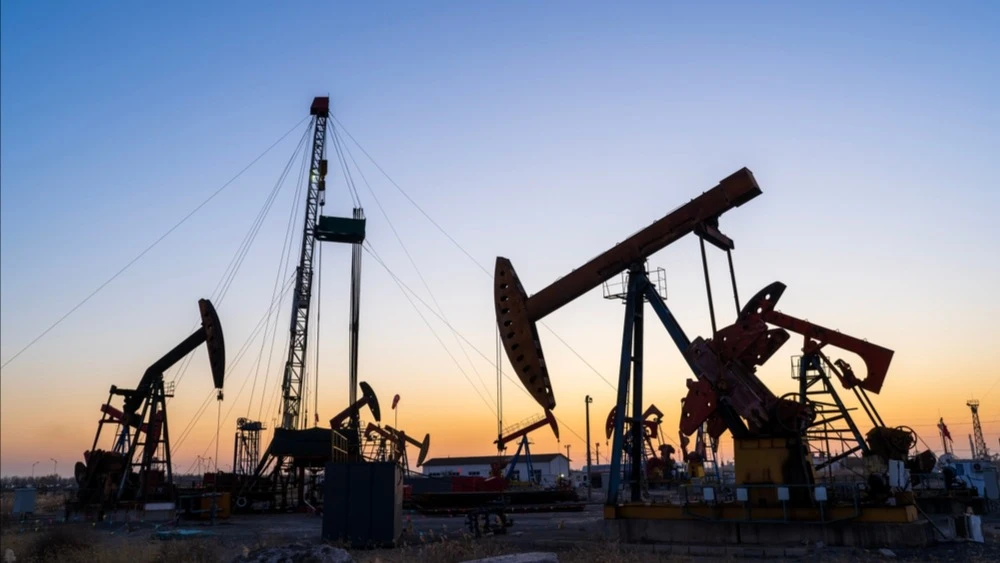
Photo: zhengzaishuru / Shutterstock
The escalation of the conflict in the Middle East continues for the seventh day. What is happening on the markets and what analysts say about it - in our review.
Oil market
- On March 6, oil prices are negative for the first time in the last six days, Reutetrs writes: Brent crude oil is trading down 0.41% at just over $85 per barrel; WTI is down 0.45% to $75.18. However, despite this drop, Brent is up 17% this week, Bloomberg calculates; WTI is up 19.2%, the sharpest weekly gain for the oil market since Russia launched a full-scale invasion of Ukraine in February 2022, Reuters notes.
- Against this background, the U.S. is considering the possibility of intervening in the futures market to curb the growth of oil prices. In particular, the source told Bloomberg, representatives of the U.S. administration discussed the possibility of involving the U.S. Treasury Department in the sale and purchase of energy futures. However, so far the White House has decided that the agency's ability to significantly influence the market is limited, said the source. Also, the U.S. authorities have not yet decided to use the strategic oil reserve, - under former U.S. President Joe Biden it was actively used, and now it is filled to about 60%, notes Bloomberg, emphasizing, however, that even a small release of oil from this reserve could calm the markets.
- Also, to ease supply constraints caused by the war in the Middle East, the US has granted an exception for India by allowing it to buy Russian oil until early April.
- "It's important to put the movement [in oil prices] in context: despite the nearly 20 percent jump in the cost of oil this month, it's only $3.4 above its average level over the past four years," IG analyst Tony Sycamore pointed out (quoted by Reuters).
- "With each passing day, the suspension of shipping in the Strait of Hormuz has two major impacts on the oil industry: the inability to store the 20 million barrels per day of production and the interruption of supply to the global market, which could lead to even higher global energy prices," said Priyanka Sachdeva, senior market analyst at Phillip Nova, in turn (quoted by Reuters).
- China continues negotiations with Iran on ensuring safe passage of ships carrying crude oil and Qatari liquefied natural gas through the Strait of Hormuz, Reuters reports citing sources. China receives about 45% of its oil from the Middle East region.
Stock market
- Major stock indices in Asia are approaching the sharpest weekly decline in six years, notes Reuters. It is expected that the broad index MSCI, which tracks the shares of large and medium-sized companies in developed and developing countries in the Asia-Pacific region excluding Japan (MSCI International All country Asia Pacific ex Japan) for the week to lose about 6%, which will be for him the sharpest weekly decline since March 2020. In trading on March 6, this index adds, however, 2.54%. Japanese Nikkei at the time of publication on March 6 in the plus by 0.6%, but at the end of the week, the index is likely to decline by 5.5%, while South Korea's Kospi may show the largest weekly decline in six years - by 10.5%, indicates Reuters; in trading on Friday, March 6, the index adds a symbolic 0.02%.
- As compared to other Asian markets, Chinese markets performed best amid the conflict in the Middle East, Bloomberg noted. This week, Chinese shares fell by about 1% on the domestic market, while on Asian markets the decline exceeded 6%. The yuan also posted the smallest decline against the U.S. dollar among major Asian currencies. Chinese stock markets can serve as a "safe haven for global investors seeking diversification amid global political instability," said Marko Sun, chief China financial markets analyst at MUFG Bank (quoted by Bloomberg). The reason for this could be a number of factors, the agency notes, among them Bloomberg calls economic support from the authorities, provided at the National People's Congress.
- Traders have begun to factor into their bets tighter expectations about the monetary policies of major central banks, fearing a renewed rise in inflation if the surge in energy prices continues, Reuters writes. "The field of possible outcomes [of the war in the Middle East] has widened to include both the possibility of an extremely constructive resolution to the conflict and an extremely destructive one," said Dalip Singh, chief economist at PGIM Fixed Income. - Markets are forced to evaluate much more 'severe' options, with very little reliable information about the probability of each of them," he added (quoted by Reuters).
Foreign exchange market
- The U.S. dollar was one of the few "winners" this week in the markets amid volatile dynamics, which at times dragged down both stocks, bonds and even precious metals, which are traditionally considered protective assets. The dollar's rise paused on Friday, March 6, but despite this, the U.S. currency is still on track for a weekly gain of nearly 1.5%, Reuters points out, noting that demand for safe haven assets and lower expectations for U.S. interest rate easing are contributing to this.
The material is supplemented
This article was AI-translated and verified by a human editor