"Bond king" allowed an "extreme" scenario for the US. How does he change his portfolio?

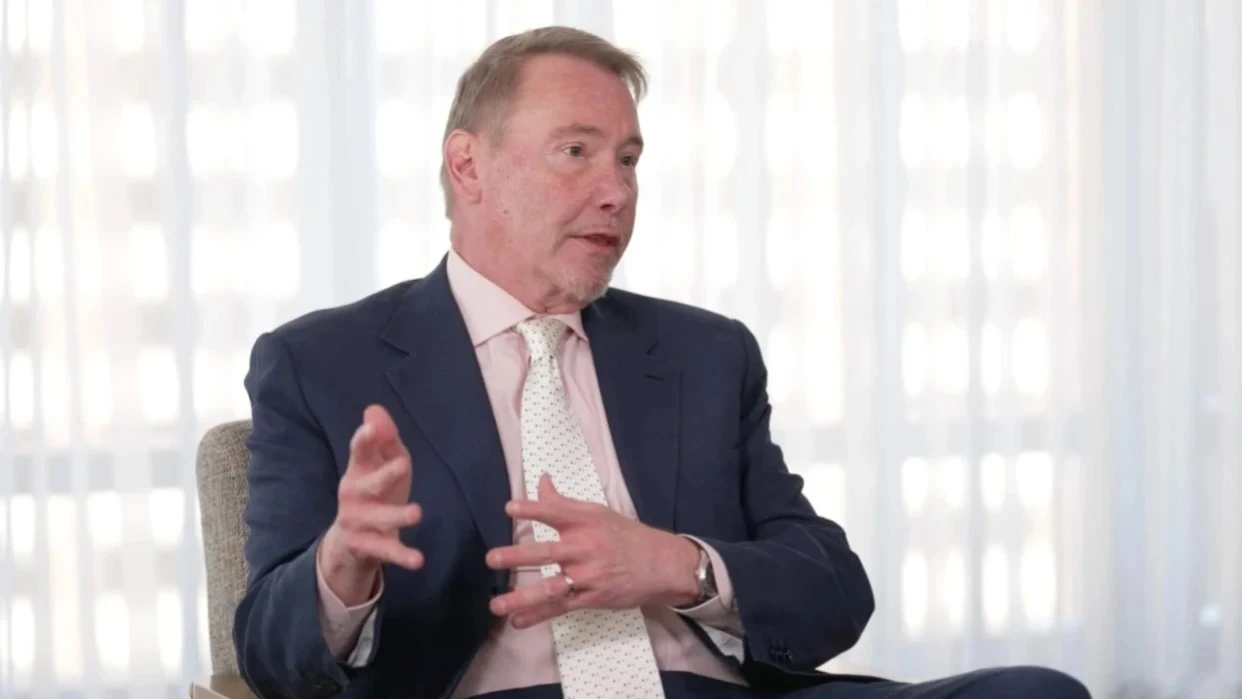
DoubleLine Capital founder Jeffrey Gundlach, known as the "bond king," is rearranging positions in his portfolios in case of an "extreme" scenario in which the U.S. could go for a debt restructuring in response to a potential recession, Bloomberg writes.
The U.S. may at some point forcibly replace holders' high-coupon bonds with paper with lower payments across the yield curve, Gundlach said in an interview with Bloomberg Television. He acknowledged that the likelihood of that happening is low. Nevertheless, to prepare for such a development, the bond manager has replaced Treasury bonds with high rates in a number of portfolios, including the flagship portfolio, with bonds with the lowest coupons and the same maturity.
Mechanism for possible restructuring
Investors are concerned about the possibility that the U.S. government, in an effort to reduce interest payments in a severe economic downturn, may unilaterally reduce coupons on all outstanding debt. For example, lowering the rate from 4% to 1% without changing the maturity - Gundlach called this "the most effective way to postpone the problem until later."
The U.S. is the world's largest government bond market, and restructuring U.S. debt would have a ripple effect on the entire global economy, Bloomberg writes. Talks about a technical default have already been heard during periods of government shutdown, but Gandlach's scenario is something much more radical.
"I think they will instead restructure existing debt obligations if possible," he said. If the government does so, he said, bond prices will collapse and the government "will not be allowed to borrow money for generations to come - which is essentially the solution to our debt addiction."
How likely it is
Gundlach, whose company DoubleLine manages nearly $100 billion in assets, has long warned of a looming U.S. debt crisis. He acknowledged that restructuring of the current government debt is unlikely.
"I'm not saying there's even a 30 percent chance," he said, "but what if they say, 'You know what? Our interest expense is now $3 trillion. We had a recession. Rates have gone up. We're now issuing 30-year bonds at 6 percent. We can't afford that. We're sinking.'"
Context
U.S. government debt is more than $31 trillion, exceeding the economy's annual output, although default remains a highly unlikely event, Bloomberg notes. According to credit default swap quotes tracked by Bloomberg, the market estimates the probability of such an outcome within five years at less than 1%.
Nevertheless, the question of how the U.S. will deal with the growing debt load is actively discussed by investors, the agency writes. Last year, a hot topic on Wall Street was the discussion about the so-called "Mar-a-Lago Agreement" - a strategy in which the US could force some foreign creditors to exchange their treasuries for ultra-long-term securities. Last month, former Treasury Secretary Henry Paulson urged authorities to develop a contingency plan for a possible collapse in demand for Treasury bonds.
This article was AI-translated and verified by a human editor