Burberry reported sales growth in China. Is everything so rosy in this market?
Sales in the region that includes China rose 3% after falling 5%

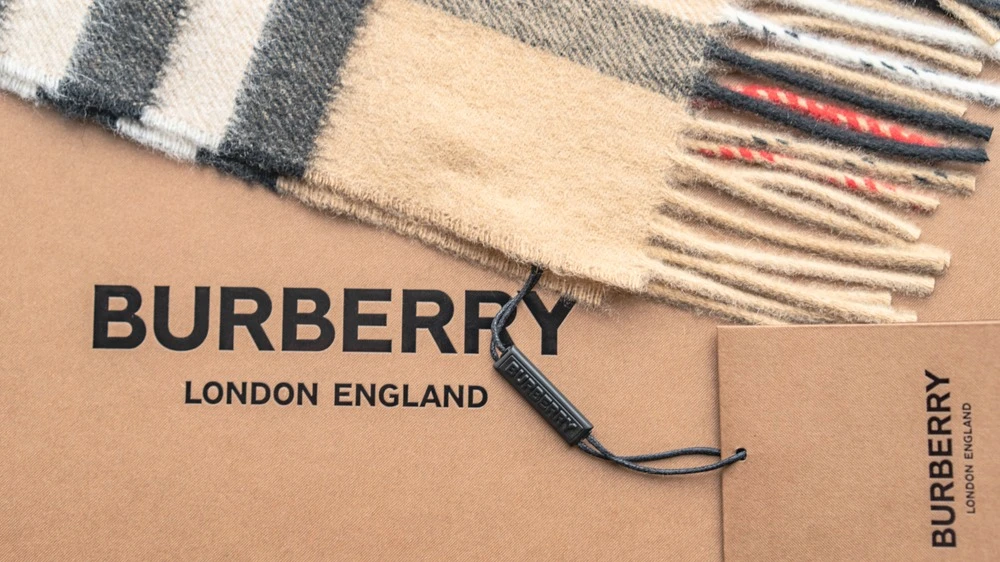
Burberry's results showed the first signs of recovery after a major business restructuring: the company improved sales dynamics and profitability in the past quarter, and key markets started to show signs of stabilization. However, uncertainty in China and cooling consumer demand in the country could be risk factors.
Details
The British fashion house Burberry reported an increase in sales for the second quarter ended in September, which, among other things, contributed to the dynamics in the Chinese market. This indicates that the business recovery plan, implemented by CEO Joshua Shulman, is beginning to yield results, Bloomberg writes.
Burberry's global comparable sales rose 2% in the second quarter ended September after a 1% decline a quarter earlier. Sales were higher than analysts expected (their forecast was for a 1% increase, WSJ writes ). According to Shulman, the company moved into positive territory for the first time in two years.
Sales in the region, which includes China, rose 3% in the last three months - after falling 5% in the previous quarter. Burberry said the outerwear category "performed better than the market" in all regions in the period. Comparable sales were broadly flat in the first half of the year. However, they were down 1% in China and 2% in Asia Pacific (excluding China). The Americas grew by 3% and EMEIA (Europe, Middle East, India and Africa) by 1%.
Adjusted operating profit for the first half of the year amounted to 19 million pounds ($25 million) against a loss of 41 million pounds a year earlier. The figure exceeded the forecast of analysts, who expected 12 million pounds, WSJ writes.
Revenue for the six months fell 5% year-on-year to 1.03 billion pounds ($1.35 billion), in line with analysts' expectations cited by the newspaper.
The company also indicated that its restructuring costs in the first half of the year amounted to 37 million pounds and were mainly due to staff cuts. In May, Burberry announced plans to cut around a fifth of its workforce in an attempt to drastically reduce costs.
Burberry shares added 7.8 percent in London trading.
What's going on at Burberry
Faced with falling sales amid weak demand in China, which has plagued the entire luxury sector, Burberry launched a cost-cutting program last November.
"While a little more time has passed and more work needs to be done, we already have confirmation that [the] Burberry Forward program is the right strategic path to restore brand relevance and create value," said CEO Joshua Shulman.
Burberry is one of the latest luxury companies to release its financial results. There are already early signs that demand for high-end goods in China is beginning to recover, Bloomberg notes. LVMH Holding announced this week that it is ready to open new Louis Vuitton and Dior boutiques in Beijing and Shanghai.
What the analysts are saying
"All items [of the cost-cutting program] have been accomplished and its implementation is on track. We believe Burberry's strategic plan is sustainable. While patience is required, the potential benefits still outweigh the risks," Citigroup analyst Thomas Chauvet was quoted by Bloomberg as saying by Citigroup analyst Thomas Chauvet.
Luca Solca, a luxury sector analyst at Bernstein, said both comparable sales and operating profit were slightly above expectations, WWD writes.
"We see Burberry moving in the right direction - slowly but surely. This is a trend we expect to continue - the damage from aggressive discounting is behind us and the new strategy is gradually taking on a completed look in the Fall/Winter collections. Given the market's strong demand for brands' self-recovery stories, we believe this should be received positively," he wrote.
Burberry shares are up 38% since the beginning of the year. Of the 18 analysts covering them, eight advise buy, seven advise hold and three advise sell. The average target price for the company's securities implies their growth of only 1.6%.
Is it all so clear-cut?
The situation surrounding China's biggest shopping festival, Double 11, is a good indication of the state of the country's consumer market right now, CNBC writes. Total sales across all platforms reached 1.695 trillion yuan (about $238 billion) this year, but growth has slowed to 14.2% year-on-year from 26.6% a year ago. Amid a slowing economy and a projected decline in retail sales growth to 2.8% in October (from 3% in September), Chinese consumers have noticeably tightened their approach to spending: they have become "more rational" and are willing to pay only for "real value," according to research firm Syntun. Companies, in turn, are trying to stretch demand through longer promotional periods and are increasingly refusing to disclose the traditional GMV figure so as not to demonstrate a slowdown. At the same time, Beijing is trying to stimulate consumption, but it does so in a point-by-point manner - mainly through subsidies for electronics and household appliances, avoiding direct payments to the population.
This article was AI-translated and verified by a human editor