Crypto market has lost nearly $500 billion, Roubini warns of new risk

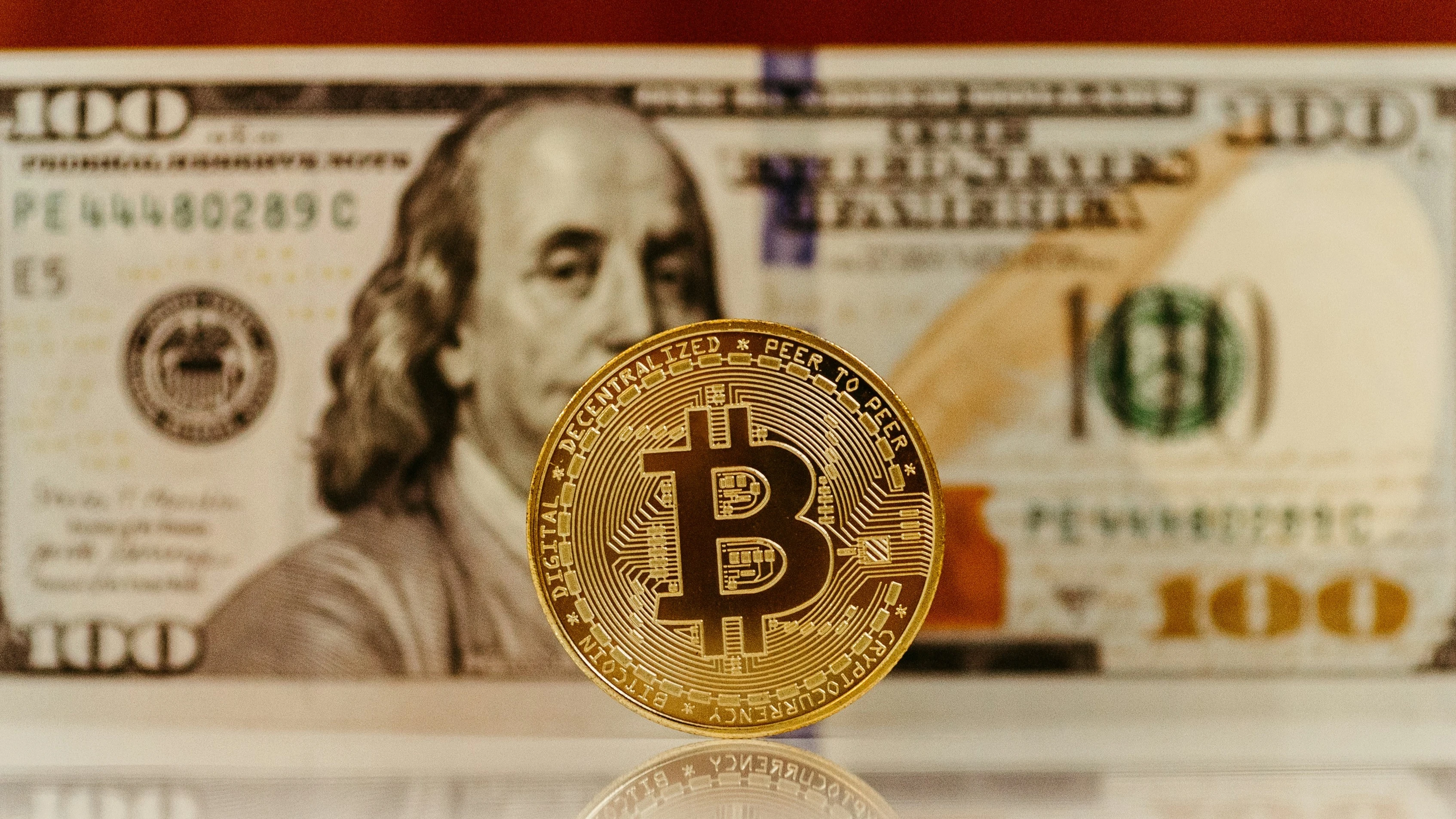
Crypto market participants expected bitcoin to become "digital gold", but its price has fallen by almost 40% from its peak reached in October 2025. Photo: Jonathan Borba / Unsplash
In less than a week, the cryptocurrency market lost $467.6 billion - bitcoin fell the most, Bloomberg reported. Expectations that bitcoin would become "digital gold" after US President Donald Trump promised to ease regulation have not materialized. But further liberalization of the market carries a new threat. Nouriel Roubini, professor emeritus at New York University's Stern School of Business, writes about this in a piece for Project Syndicate.
Unfulfilled expectations
A year ago, the most pro-cryptocurrency president in U.S. history had just returned to power after playing along with gullible retail crypto investors and receiving huge financial backing from semi-corrupt cryptocurrency market insiders. The "second coming" Donald Trump was supposed to be a new dawn for cryptocurrency, prompting various concerned evangelists to predict that bitcoin would become "digital gold" and reach a price of at least $200k by the end of 2025.
As promised, Trump has effectively deregulated much of the crypto market. He also signed the GENIUS Act, lobbied for the CLARITY Act, and personally profited from questionable domestic and foreign crypto deals. He's also promoted his own worthless memcoin, pardoned crypto fraudsters who were allegedly helping terrorist organizations, and hosted private dinners for crypto-insiders at the White House.
In addition, cryptocurrencies were expected to benefit from various macroeconomic and geopolitical risks - such as rising debt and budget deficits in the U.S. and other developed economies, depreciation of the dollar and other fiat currencies, new trade wars, and rising tensions between the U.S. and Iran, China, and many other countries. Indeed, heightened risks help explain why gold is up more than 60% in 2025.
However, the "digital gold" has fallen in price by 6% in 2025. As of this writing, bitcoin is down 35% from its October peak(bitcoin was worth just over $76,000 on the morning of February 4, down almost 40% from its October 6 peak - ed.) and is trading below the level it was at when Trump was elected, while memcoins $TRUMP and $MELANIA have lost 95% of their value. Every time gold has risen sharply in response to trade or geopolitical turmoil over the past year, bitcoin has fallen just as sharply. Instead of a protective asset, it has become a tool for building risk, showing a strong correlation with other risky assets such as speculative stocks.
Calling bitcoin or any other crypto instrument a "currency" has always been meaningless. It's not a unit of account, it's not a scalable means of payment, and it's not a stable means of savings. Even though El Salvador has recognized bitcoin as legal tender, it accounts for less than 5% of transactions in payment for goods and services. Cryptocurrency is not even an asset, as it has no cash flow, no function, and no industrial or real-world application (unlike gold and silver).
Seventeen years after the launch of bitcoin, the only and truly "killer app" in the crypto world remains the stablecoin - a digital version of the good old fiat money that the financial and banking system "digitized" many years ago. Whether digital money and financial services should run on blockchain or on the traditional double-entry banking system remains an open question. However, 95% of blockchain money and digital services are blockchain in name only: they are private rather than public, centralized rather than decentralized, based on a system of permission rather than free admission. They are validated by a small group of trusted validators (as in traditional digital finance and banking) rather than by decentralized participants in jurisdictions without the rule of law.
The new risk is in the liberalization of regulation
Truly decentralized finance will never be able to scale. No serious government - including the Trump administration - will allow complete anonymity of monetary and financial transactions, as this would be a gift to criminals, terrorists, rogue states, non-state actors, human traffickers, fraudsters of all kinds, and tax evaders.
In addition, since digital wallets and regulated exchanges are required to comply with standard anti-money laundering and customer identification (AML/KYC) rules, it is not obvious that transaction costs are lower in private blockchains - especially now that traditional financial registries have improved with real-time settlement and faster clearing tools. The future of money and payments is a gradual evolution, not the revolution promised by cryptocurrencies. Another fall of bitcoin and other cryptocurrencies only emphasizes the extremely high volatility of this pseudo-asset class.
As for the GENIUS Act, which paved the way for another disastrous experiment in free banking - similar to the one that ended miserably in the 19th century - it may well go down in history as the "Reckless Idiot Act." Under the law, stablecoins are not regulated as highly specialized banks (that is, deposits and payments are not separated from riskier lending and investment operations), nor do they have access to the lender of last resort or deposit insurance functions that central banks provide.
Consequently, it is enough for a few unscrupulous participants in pseudo-libertarian US states to mis-invest their funds or place deposits with institutions such as Silicon Valley Bank to cause panic and bank failures. As in the 19th century, the current US approach, thanks to Trump's self-interest and ignorance, as well as the corrupt lobbying of the crypto industry, is a recipe for financial and economic instability.
The recent fight between traditional banks and the crypto industry around the CLARITY Act(concerning the regulation of stablecoins, which the crypto industry wants to weaken - ed) is another example of Trump not understanding the basics of money circulation and finance. It's not that banks want to maintain a near monopoly position in making payments. In a partial reserve system, banks participate in both payments and credit creation by turning short-term deposits into long-term loans. This means that they provide a very valuable semi-public good.
Obviously, short-term deposits don't earn interest, as they almost equate to cash. Yet the crypto industry insists on being able to charge interest on stablecoins - either directly or through exchanges - which would undermine the foundations of the banking system we all rely on. Consequently, we must either radically change the financial system by separating payments and credit creation (through highly specialized banks for payments and new credit funds for lending), or prohibit stablecoins from paying interest and taking functions away from banks.
It's a matter of political and financial stability, and few issues are as serious and sensitive. Jamie Dimon, head of JPMorgan Chase, is rightly sounding the alarm over the changes the crypto industry is demanding, while Coinbase's Brian Armstrong couldn't be more wrong to flippantly ignore such concerns. If Trump has advisors who aren't bought by cryptocurrencies, one hopes they can explain to him how the banking system works before he allows his personal interests to destroy its foundations. Treasury Secretary Scott Bessent, are you listening?
Copyright: Project Syndicate, 2026.
www.project-syndicate.org
This article was AI-translated and verified by a human editor