Dollar rise after escalation with Iran may be short-lived - analysts
Since March 2, the dollar has strengthened by about 1.5%

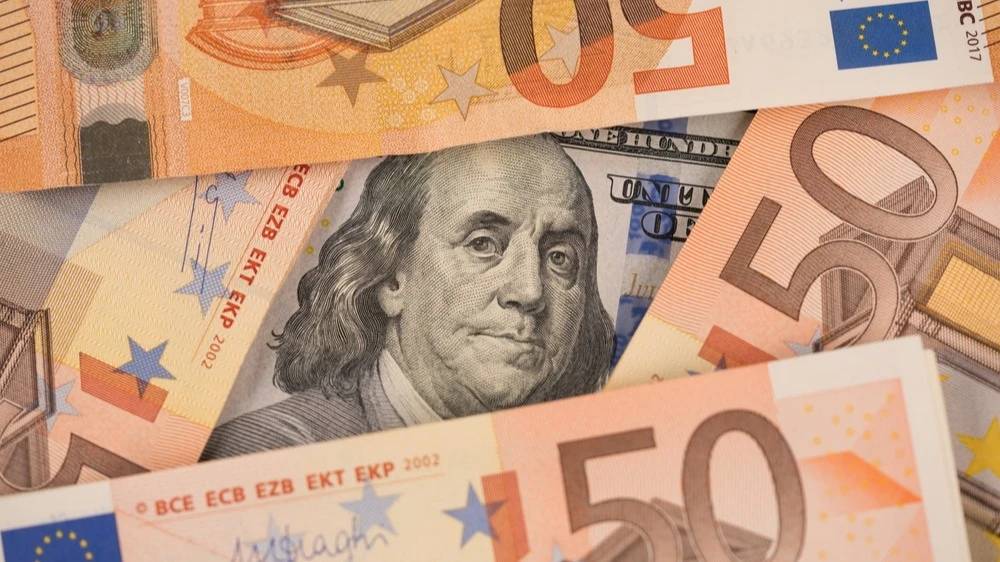
Reuters: strengthening of the dollar amid the war may be short-term / Photo: Iryna Mylinska / Shutterstock
The dollar's recovery since the start of the war in the Middle East may be short-lived due to lingering doubts about the status of U.S. assets as a safe haven, according to currency strategists polled by Reuters. At the start of the war, the U.S. currency posted its best two-day gain in recent memory, adding about 1.5 percent, but had already turned to declines on Wednesday, March 4.
Details
The median forecast of 60 analysts polled by Reuters in a monthly survey, which was conducted almost entirely after the conflict began, generally foresees further weakening of the dollar. Analysts expect the dollar to fall about 2 percent against the euro to $1.18 by the end of March. It is then expected to strengthen to $1.19 within three months and to $1.2 after six months. These estimates are virtually unchanged from last month, the agency notes.
Forecasts for the year ahead reflect heightened uncertainty, Reuters notes. While the median forecast calls for the euro to strengthen to $1.21 a year from now, the range of estimates is about 18 cents, one of the widest in Reuters polls since October.
When asked how positioning will change by the end of March, about half of currency strategists - 21 out of 45 - said that no significant changes are expected or that the volume of short positions on the dollar will even increase. At the same time, 19 respondents believe that net short positions will decrease, and only five predict a reversal to net long positions.
"We have not changed our stance. We still expect volatile, uneven performance of the euro-dollar pair and other dollar crosses this year," said Jane Foley, head of currency strategy at Rabobank. - But is the dollar as safe as it used to be? Probably not. Otherwise we wouldn't have been having this discussion for the last year and a half," she added.
"The uncertainty about how the U.S. economy and especially the labor market will develop is enormous. The range of possible scenarios is huge. And it is this uncertainty that has kept the euro-dollar pair in a relatively narrow trading range so far," said Dan Tobon, head of G10 FX at Citi. He is one of the few analysts going against the consensus and expecting the U.S. currency to strengthen.
What's happening to the dollar
Since December last year, traders have been holding short positions on the dollar, that is, betting on its weakening. Since Monday, March 2, the dollar has strengthened by about 1.5%, largely due to the closure of short positions, while the catalyst for the movement was a sharp rise in oil prices, notes Reuters.
However, on March 4, the dollar showed the sharpest decline in almost a month after the New York Times reported that Iranian representatives offered to discuss the terms of ending the war with the U.S. and Israel. Against this background, the Bloomberg Dollar Spot index (an index of the dollar exchange rate against a basket of major world currencies according to Bloomberg) weakened by 0.4%, although then partially recovered the fall, notes Bloomberg.
The dollar's strengthening does not look like a classic "flight to defensive assets," given that market participants were taking significant short positions in the U.S. currency before the war began on Saturday, February 28, Reuters notes.
"Two weeks ago, we indicated that our capital flows data had begun to show signals of reduced leverage, perhaps in part related to risks around the US and Iran. Further closing of such positions on Monday was therefore not unexpected," JPMorgan currency strategists wrote. "If dollar short positions are more broadly closed and return to neutral, this could provide additional support for the currency within 1.5-2% of current levels, but much will depend on the trajectory of a new conflict," they added.
This article was AI-translated and verified by a human editor