European Commission tells banks how to apply payment sanctions to Russians with residence permits

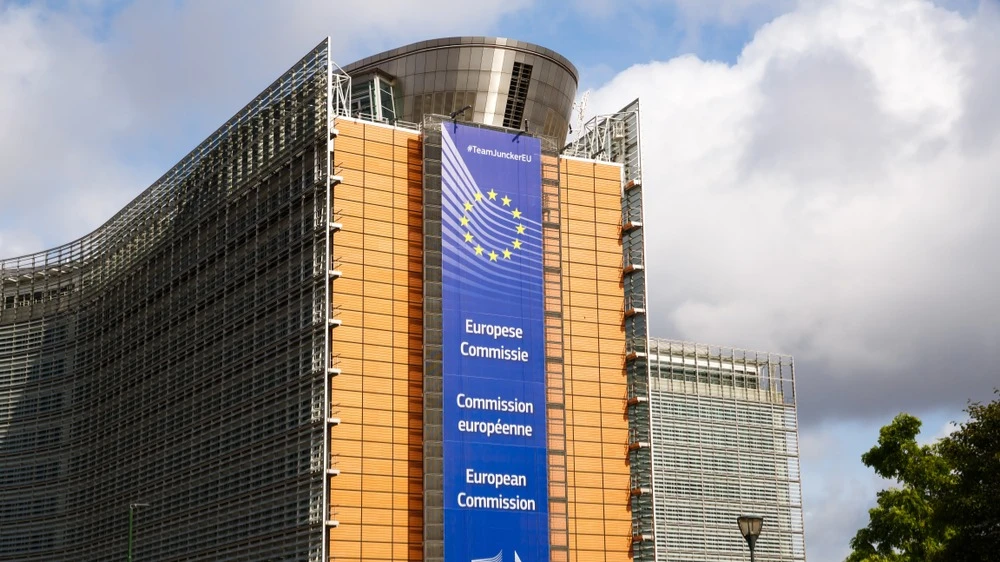
The European Commission has removed a legal conflict: banks must consider national D visas as proof of EU residency. Photo: ruzanna / Shutterstock
The European Commission (EC) has put an end to a long-standing dispute between banks and fintech start-ups with Russian clients residing in the EU. Officials have issued a clarification: Russian citizenship alone is not grounds for closing an account.
"Visa" relaxation: what has changed?
In the fall of 2025, citizens of Russia and Belarus with the right of long-term stay in the EU countries faced mass blocking of their cards and accounts. As a rule, these restrictions affected those who were waiting for the renewal of their residence permit and residence permit cards, as well as holders of national visas of type D - these include work, student, family reunification and humanitarian visas. Revolut and Wise customers complained most often about the blocking.
Fintechs argued that their position was based on compliance with the sanctions regime. Formally, at that time, EU documents gave the right to hold a European bank account to holders of residence or residence cards in any of the EU countries. Holders of D visas were not included in the lists. Now banks have no grounds to refuse them. The only condition specified in the EC clarifications is that holders of such visas must complete all registration procedures at the place of residence. For those who live in the EU on the basis of residence permit or residence permit, the conditions have not changed: the validity period of the payment instrument (e.g. card or wallet) - must coincide with the period of residence permit. "Exempted" from restrictions, Russians, as before, are not entitled to issue an additional card to a family member or employee if the latter resides in Russia.
Financial institutions are not obliged to immediately close accounts, block wallets and cards and terminate existing contracts with those who have lost their EU residence permit. For example, with Russians whose visa has expired. But banks and fintechs are obliged to immediately deprive such a client of the services prohibited to him, the EC explains.
If the execution of a payment transaction using such an instrument requires a service that is itself prohibited (e.g., acquiring payment transactions), the transaction should be blocked not because the instrument is invalid, but because the underlying service enabling its execution is prohibited
Will it save Russians the trouble?
Lawyers and financial consultants interviewed by Oninvest differed in their assessments of the European Commission's clarifications. FTL Advisers partner Igor Kuznets believes that this is not a technical addition to the sanctions documents, but an attempt to fix institutional boundaries.
The regulator seeks to stop the "domino effect" in the banking sector, where excessive compliance has begun to undermine the fundamental principles of legal certainty for those legally integrated into the European economy. It seems that sanctions are designed to restrict capital flows, not to turn basic financial rights into a privilege.
The expert calls the key achievement of the document the recognition of national D-type visas as the unconditional equivalent of a residence permit for banking purposes. Russian citizenship ceases to be an automatic trigger for blocking services if a person has a confirmed right to long-term residence, Kuznets believes.
The clarifications create a "legal corridor" for those who have been held hostage by delays in the issuance of residence permits and permanent residence permits: standard transactions - crediting transfers and cash withdrawals - remain legal regardless of the presence of a valid residence permit or permanent residence permit card. If the residence permit is up for renewal, the bank has no right to freeze the account "just in case", but on cards and tokens the position remained tough: their expiration date will now be synchronized with the term of the migration document. "In short, the bank can deny digital comfort, but not the right to physically take away their funds," concludes Kuznets.
Will all this work in practice? Financial consultant Natalia Smirnova is sure that the banks will have the last word. There are European banks that have taken a stricter stance towards Russians, regardless of residence permit or permanent residence: they do not open accounts for persons with a Russian passport or place of birth, do not withdraw €100,000 limits or terminate service agreements without lengthy explanations. Such banks are likely to maintain strict compliance. And those that "think nothing of themselves" in terms of sanctions restrictions will retain a softer policy.
Banking compliance is not tied to immigration law and comes solely from an assessment of risks to the financial institution, agrees French lawyer Yulia Koroleva:
Legal remedies in such situations are limited: regulators can check the correctness of procedures, but cannot oblige a bank to serve a particular client.
The clarifications should help avoid unjustified refusals based on citizenship and encourage banks to substantiate their decisions in the context of sanctions, but do not eliminate the risks completely, the practical application in any case will depend on local regulators and banks' internal policies, said Zoya Golovanova, senior associate in the banking department of GSL Law and Consulting.
Banks bear the burden of constantly verifying that all legal requirements continue to be met: the client has not overstayed the residence permit, is not using the account to circumvent sanctions, and so on.
The costs of such compliance may significantly exceed the bank's profits earned at the expense of the Russian client, not to mention the risk of fines in case of an oversight.
When it comes to penalties for non-compliance with sanctions, European banks have learned their lesson well. In 2015, the U.S. accused European banks of providing services to organizations associated with Iran, Libya, Sudan, Myanmar and Syria. Deutsche Bank was fined $258 million, Credit Agricole $800 million, Unicredit and Societe Generale $1.3 billion each, and BNP Paribas $9 billion.
This article was AI-translated and verified by a human editor