Hanging deals, stop-start meetings, lost revenue: business in Dubai during the war
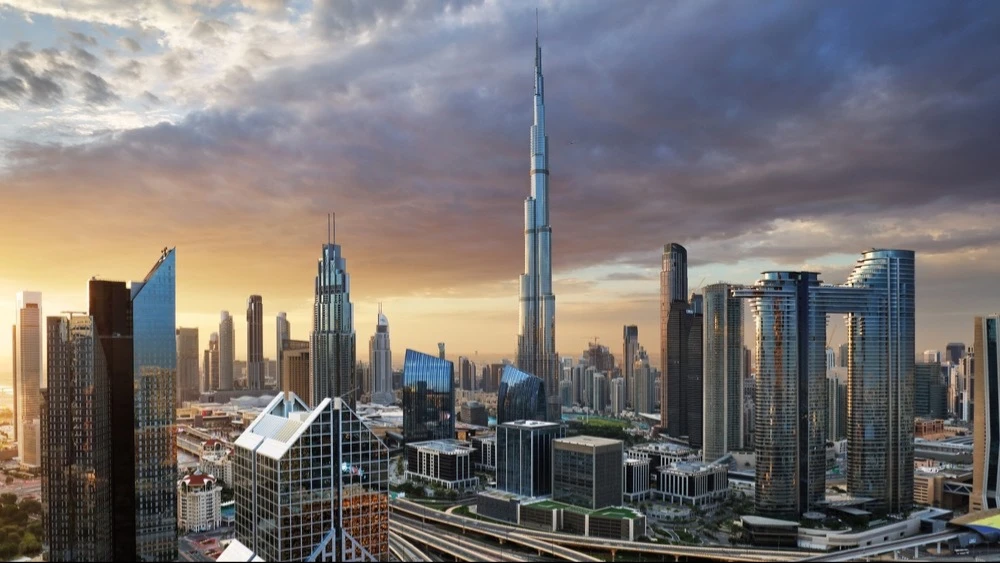
The war in the Middle East has changed the way businesses operate in Dubai. Photo: TTstudio / Shutterstock.com
For the last 10 years, the UAE has been the undisputed financial center of the Middle East and the place where projects from Russia and CIS countries are being developed. Dubai's government policy to attract investors has become a role model - other Gulf countries have actively copied the fintech and crypto-regulation of their tiny but insanely successful neighbor.
But with the outbreak of war in the Middle East, everything changed. How the conflict is changing business life in the UAE, wrote venture capitalist Pavel Myasnikov, having spoken to Russian-speaking funders and managers in person.
Business in the Middle East
There are many businesses in the Middle East with roots in Russia, Ukraine and CIS countries. As of the end of 2025, more than 13.5 thousand Russian companies alone were registered in the UAE, and more than 2 thousand new businesses received licenses last year.
Dubai has rightly become the main point of attraction for funders in this country. DIFC - an international financial center with a separate jurisdiction and law - provides favorable conditions for registering a business: quick opening of a legal entity, preferential tax regime, English law and the opportunity to open an account for international payments. These advantages have made the region one of the key locations for business relocation. Especially after 2022.
In addition to the well-known Telegram, many other companies are registered and do business in the region. Among them, unicorns with roots in the CIS - Tabby and Xpanceo. Tabby, a fintech company developing the Buy Now, Pay Later product, was founded in 2019 by Daniil Barkalov and Hosam Arab. In its latest round of investment raising in October 2025, it had a valuation of $4.5 billion. Xpanceo is a developer of smart contact lenses. The company, founded in 2019 by Ukrainian Valentin Volkov and Russian Roman Axelrod, became a unicorn in July 2025 with a $1.35 billion valuation.
Other major brands with CIS roots, such as Dodo Pizza, are also present in the region, as well as many family offices, investment funds, fintech and crypto startups.
Since the beginning of the war in the Middle East, the UAE has come under attack - Iran has been shelling the territory of this country. Drones and missiles attacked the airport, residential neighborhoods and the seaport of Dubai. On March 13, debris damaged a building in the city's financial center after a drone attack.
Goldman Sachs, Citigroup and Standard Chartered have limited the work of their offices in Dubai. One of the world's largest cryptocurrency conferences, Token2049, which was to be held in April, has been postponed until 2027. TON developers canceled their Gateway conference in Dubai this year.
Now, against the backdrop of military escalation, the main question is what happens to the business of companies in the UAE? There is no single answer to this question: someone keeps only a legal entity here, and someone else has built a laboratory, an office and attracted a team.
Fintech is resilient, infrastructure is not
The first thing to know about organizing a business in the UAE is that for most technology startups, the Emirates remained a place of legal entity registration, not physical presence, even before the war. The only reason to come in person remained large conferences.
Therefore, large fintech companies are now largely untroubled at the business model level.
However, many businesses are tied to physical infrastructure. And here already - at the level of operations support - problems certainly arise. In particular, the strikes on three Amazon data centers in the Middle East brought the work of Comfi, a large credit fintech founded by Uzbek natives, to a halt for more than a week.
Companies with a physical presence in the UAE are exposed to greater risks.
For example, the founders of Xpanceo built physical research infrastructure in the UAE, and after 2022 moved the headquarters to Dubai. At the time, Dubai seemed like a place where you could build a business without regard to geopolitics. And at first, it was. But today, their lab for developing smart contact lenses is in a city that's being hit by missiles and drones. So far, as Roman Axelrod has written, "during the missile attacks on the country, the biggest challenge has been convincing colleagues to leave the lab and work from home."
The biggest difficulties are experienced by companies operating in the consumer and logistics segments. For example, Dodo Pizza in Dubai has already lost 15% of its revenue on tourist traffic in dine-in restaurants, and the losses continue to grow, said Ivan Pyadyshev, CEO of Dodo Pizza in the MENA region.
According to him, a combination of several factors led to this: "Ramadan is a time when restaurants with strong dine-in(i.e. those that depend mainly on customers eating on the spot - ed.) sag. And on top of that, the outflow of tourist traffic at this time makes itself felt."
He said that in the first weeks after the conflict started in the region, "of course, there was a slight panic in the market and many companies and residents tried to buy everything indiscriminately."
Pyadyshev added that Dodo has prepared substantial stocks, and therefore the company is provided with everything necessary for uninterrupted work for at least 3-4 months.
It is a very difficult time for tourist-oriented businesses, and many people I've talked to personally are considering options of conservation for a while or exit, but I think it's hard to predict anything right now.... I am sure that the whole region has a huge margin of safety in terms of investment and the main thing is the desire of business to develop further. The UAE is actually a unique country that will do everything possible for its residents and investors.
In the investment sector, perhaps, the strongest effect of the conflict is felt by real estate investors. Goldman Sachs analysts have calculated that the volume of real estate transactions in the UAE for the first 12 days of March decreased by 37% in annual terms and by 49%. Some properties are already being offered with large discounts - with prices down 12-15%, writes Reuters.
These stories are not only important in and of themselves. For a new investor or founder choosing a jurisdiction, they become a signal: a physical presence in the region carries risks that were not previously taken into account. And while the answer to the question of whether to go to Dubai used to be affirmative almost always, now it requires a separate justification.
When considering a region to invest in emerging markets, I myself chose between the alternatives: the Middle East, Africa or Latin America. In the context of 2024-2025, the Middle East offered more advantages than Africa or Latin America because of access to more institutional capital. Now, however, the geopolitical situation has changed dramatically, which significantly shifts the focus toward Latin America on a combination of factors.
Long-term implications
Saudi and US capital share the lead in venture capital investments in the Middle East market. According to the Wamda platform, investors from Saudi Arabia participated in 227 deals in 2025. Among foreigners, Americans were the most active, closing 114 deals. This is more than investors from the UK, the Netherlands, France, Germany and China combined. But it is foreign capital that is most sensitive to geopolitical shocks.
The uncertainty and risks in the region result in "hung" or canceled deals and investments, said Denis Polulyakhov, co-founder of Liqvid, a platform for private equity asset managers. At the same time, investors have a growing demand for external strategies - they are looking for opportunities outside the MENA region, where there are fewer risks, he added.
Polulyakhov characterized the current situation as "a phase of expectation and reassessment of risks, which began to take shape a year ago and has now only intensified".
Dubai has not ceased to be a financial center. Banks have temporarily closed offices but have not left the country. DIFC remains one of the largest fintech hubs, and VARA - the Virtual Assets Regulatory Authority - is one of the few regulators with a well-established cryptocurrency licensing system. That won't disappear in a month of missile strikes.
At the same time, competition within the region for investors is not going anywhere. Saudi Arabia is building its ecosystem - organizing large-scale conferences like the LEAP technology conference, promoting venture initiatives and regulatory tools through SAMA. Bahrain is positioning itself as a low-cost testbed. Qatar is developing its QFC financial center with full foreign ownership and zero corporate taxes
For CIS founders, this changes the focus. Dubai used to give regulatory comfort, banks and offline networking in one place. Now offline networking is almost non-existent until 2027, and international capital has taken a pause. Dubai has not lost, but its monopoly on the "best place in the region" has become less obvious.
This article was AI-translated and verified by a human editor