Highlights of the week: Anthropic record, new "trillionaires", Blue Origin failure
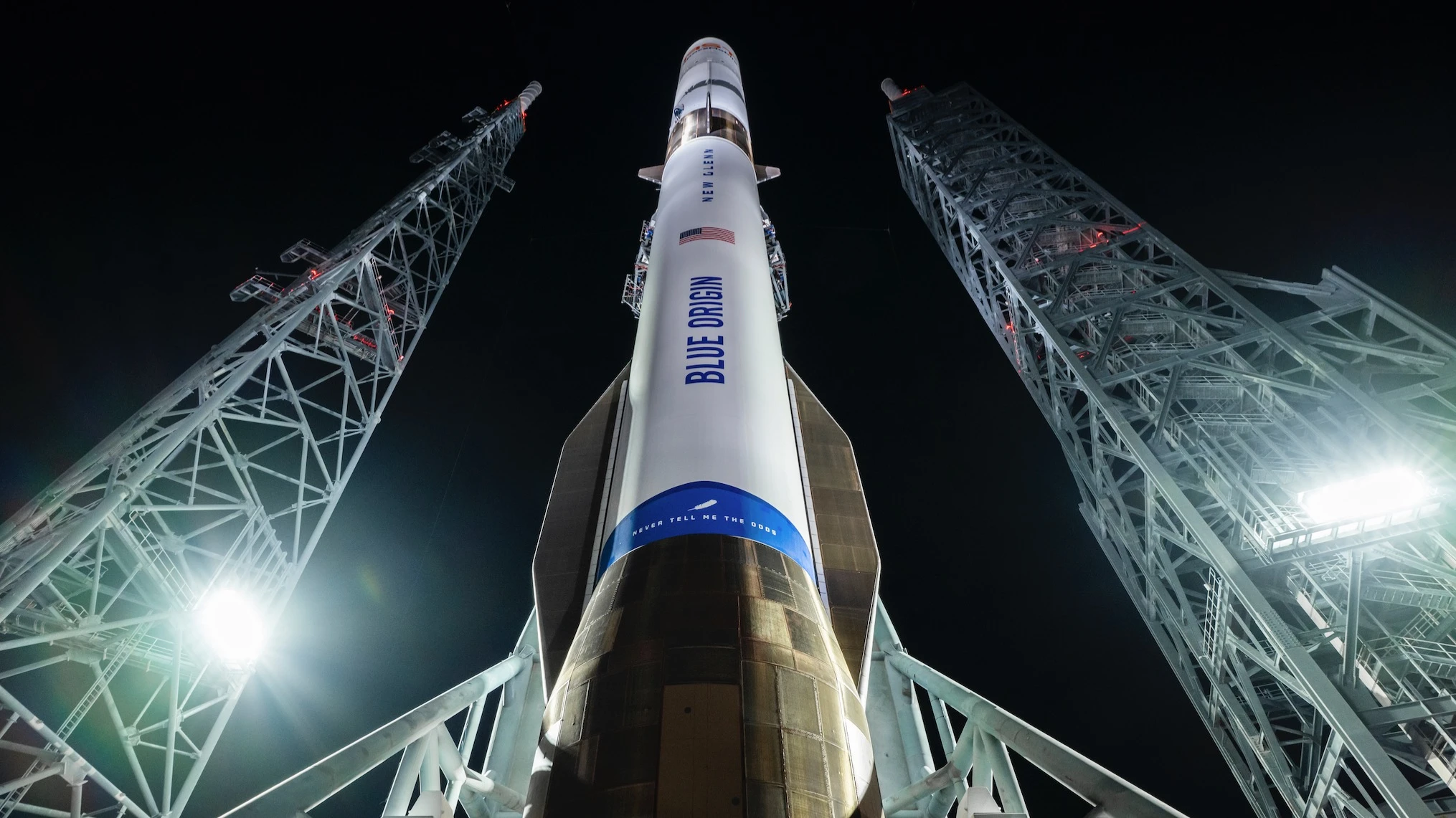
Blue Origin expects to use New Glenn (pictured) to launch Amazon's commercial satellites into orbit and to send its own cargo module to the moon. On Ma 28, the rocket exploded during ground testing. Photo: Blue Origin
Developer Anthropic has become the world's most valuable AI startup. Micron and SK Hynix capitalization exceeded $1 trillion - thanks to the hype around AI and record demand for memory chips. Blue Origin's heavy rocket exploded during testing. Ferrari unveiled its first all-electric car. The main events from Ma 25 to 29 - in our review.
Anthropic is the most expensive AI startup in the world
Anthropic has announced it has raised $65 billion in a new round of funding, valuing the company at $965 billion. It is now officially the most expensive AI startup in the world, back in February investors were valuing it at $380 billion.
The new investment round is led by Altimeter Capital, Dragoneer, Greenoaks and Sequoia Capital, and includes $15 billion in previously announced investments from hyperscalers, including $5 billion from Amazon.
Anthropic's competitor, OpenAI, has a valuation of $852 billion at the end of its latest round in March.
The rise in Anthropic's value was fueled by the excitement around AI coding. The company reported that its annual revenue hit the $47 billion mark in May, with revenue for the whole of last year totaling $10 billion.
At the same time, the startup presented a new version of its AI model - Claude Opus 4.8. It knows how to doubt and is less likely to give unconfirmed answers.
What else is there to read about it?
- After the closing of the round, Bloomberg recorded the largest single addition to its billionaires rating in the history of calculations. For more details, see "All Anthropic founders simultaneously joined the richest 500 billionaires".
SpaceX has lowered its target valuation for its IPO to $1.8 trillion
Elon Musk's SpaceX is now targeting a valuation of at least $1.8 trillion for its IPO, although back in April it expected to be above $2 trillion. According to Bloomberg, the company lowered its target valuation after consulting with financial advisors and investors. At the same time, SpaceX still plans to raise about $80 billion.
Amid the upcoming IPO, Wall Street is discussing a possible merger of Tesla and SpaceX after the stock offering. Tesla is now valued at about $1.6 trillion and SpaceX at $1.25 trillion after a merger with xAI, potentially making Musk the head of two of the top ten most valuable companies in the U.S. The companies are already tightly integrated with each other, and Wedbush analyst Dan Ives believes a full merger is possible next year.
What else is there to read about it?
- What exactly Elon Musk plans to "sell" to market players - in the article "Betting on a monopoly in space and a premium for faith: what the IPO SpaceX means for investors".
- SpaceX IPO may also affect the company's competitors, primarily Rocket Lab. Does it make sense for investors to bet on it? Read "Rocket Lab vs SpaceX: Is it worth investing in Elon Musk's mid-cap competitor now?".
Blue Origin rocket explosion causes space company stocks to plunge
A New Glenn heavy rocket from Blue Origin, one of SpaceX's competitors, exploded late Thursday night during ground testing at a launch pad in Florida. Company founder Jeff Bezos said no one was injured, and Blue Origin has already begun assessing the cause of the accident and rebuilding damaged infrastructure.
The company planned to use New Glenn to launch commercial satellites from Amazon and other companies into orbit and to send its own cargo landing module to the moon. The rocket explosion occurred a few days after Blue Origin was awarded a $188 million contract by NASA to deliver rovers to the lunar surface.
The incident, among other things, led to a fall in the securities of space companies on Friday, May 29: shares of AST SpaceMobile, which uses Blue Origin rockets to deliver its vehicles into orbit, collapsed by 14.8%, Voyager Technologies - by 4.33%, Rocket Lab - by 3%, Intuitive Machines - by 4.1%.
Oil price could jump to $160
Top managers of two American oil and gas giants - ExxonMobil and Chevron - believe that the situation on the global oil market may worsen.
After months of supply disruptions from the Middle East, oil inventories are approaching unprecedented lows, ExxonMobil Senior Vice President Neil Chapman said at a conference in New York. He said most estimated models show the price of a barrel of Brent could jump to $150 to $160. Soon, reduced supplies from the Middle East could fully affect oil quotations and lead to an increase in oil prices in June-July, Chevron head Mike Wirth added.
The warnings came amid new incidents in the region. On the night of Ma. 28, the U.S. military attacked Iran by shooting down four attack drones for defensive purposes and hitting a ground control center that threatened the passage of ships through the Strait of Hormuz. And Iran said it retaliated against a U.S. airbase without specifying its location.
Investment bank Piper Sandler has warned that the Strait of Hormuz could remain virtually closed for several more months. This means that oil prices could reach new highs as early as this summer.
On Friday, July Brent crude futures were at $92.
SK Hynix and Micron have joined the "trillionaire club". All thanks to the AI boom
The capitalization of the American chip manufacturer Micron on May 26 exceeded $1 trillion for the first time, on that day its shares rose in price by almost 20%. For them it was the best trading session since November 2011. The reason was an increase in the target price of the company's securities from UBS. The bank tripled it - from $535 to $1625, saying that Micron may enter into new long-term agreements with customers to supply chips at partially fixed prices, and they are now at the maximum.
Bloomberg wrote on May 28 that Ma has been the third most profitable company in the S&P 500 index this year, but at the same time its stock is one of the most undervalued in the market.
On May 27, the capitalization of South Korean SK Hynix also exceeded the $1 trillion mark, and its securities have grown in value by 1000% over the year. The reason for the growth is the same: demand for chips to work with AI. Now it is the third company from Asia to join the "trillionaires' club" - we are talking about issuers whose capitalization exceeds $1 trillion. TSMC and Samsung Electronics are already in it.
What else is there to read about it?
- To learn how investor confidence in AI development led to historic market growth, read"'It's Crazy': Chipmaker Stocks Break Dotcom Era Records. Will the rally continue?"
- Shares of cloud data platform developer Snowflake jumped 36.5% on Thursday, May 28. Details - in the material "Snowflake recorded the best day in its history. HSBC thinks it's not the limit".
Dell reported record revenue
Dell Technologies reported record revenue of $43.8 billion for the first quarter of fiscal 2027 on Ma. 28. This is plus 88% in annualized terms. The figure exceeded analysts' forecasts by almost 24%.
Diluted EPS was $4.86, up 214% from a year earlier. Analysts expected EPS to be $2.94. The difference between the actual figure and analysts' consensus forecast was the largest in at least the last five years.
The company said it received $24.4 billion in AI-related orders and recorded $16.1 billion in AI server revenue.
Dell expects its revenue to be $44-45 billion in the second quarter of its fiscal year, a 49% year-over-year increase. It also raised its AI server revenue forecast for fiscal 2027 to $60 billion, it said in its filing. The earlier forecast was $50 billion.
On Ma 29, the company's shares rose nearly 33%, and it has gained 234.4% since the beginning of the year. US President Donald Trump became its shareholder in the first quarter of this year.
Ferrari has revealed its first electric car. It asked fans not to buy it
Ferrari on May 25 unveiled its first all-electric car - Luce - with a design by LoveFrom studio of former Apple vice president of industrial design Jony Ive. The price of the electric car is €550 thousand.
Its exterior echoes Apple's minimalist design, and the interior has physical controls and buttons in addition to a touchpad, the Financial Times wrote.
When selling an electric car Ferrari, contrary to tradition, is not going to give priority to its regular customers. The Italian company's commercial director Enrico Galliera asked conservative fans of the brand not to buy a new car: "I always tell my gasoline car fans when I meet them: please don't buy [Luce]," the FT quoted him as saying.
The market met the novelty cold: Ferrari's shares on the next day, May 26, lost in price 5.3% at the auction in New York, in Ma - 8.4%.
What else is there to read about it?
- More about the design and characteristics of the new car - in the material "Ferrari showed an electric car with a controversial design from the creator of the iPhone. What's with the stock".
- What arguments in favor of the novelty are given on Wall Street - in the material "Customers will come": analysts defended the first electric car Ferrari after the fall of its shares".
Ely Lilly spent $4 billion on vaccine developers
The American company Eli Lilly, known for weight loss and diabetes drugs, will buy three vaccine developers - Curevo, LimmaTech Biologics and Vaccine Company. This was announced by Eli Lilly itself on Ma 26.
It will spend almost $4 billion on this. The purpose of the purchases is to expand its own portfolio of drugs against infectious diseases.
Curevo is developing a vaccine to prevent shingles in adults, while LimmaTech Biologics is developing vaccines against treatment-resistant bacterial infections, including Staphylococcus aureus, gonorrhea and infections caused by Chlamydia trachomatis. Vaccine Company, in turn, is developing a vaccine against Epstein-Barr virus.
What else is there to read about it?
- Details of the deals and their valuation on Wall Street - in the material "Eli Lilly will invest almost $4 billion in the purchase of three vaccine developers. Why would she do that?"
A well-known investor turned out to be a Nebius shareholder
On Ma 27, it became known that the Situational Awareness fund of well-known AI investor Leopold Aschenbrenner is a shareholder of Nebius, founded by Arkady Volozh. The share of the fund is 5.6%.
Aschenbrenner was a researcher at OpenAI and then went into marketplace investing, his focus is on companies that can be beneficiaries of AI development.
His fund also has stakes in CoreWeave and IREN.
This article was AI-translated and verified by a human editor