Where to invest $1,000 right now: Four stocks for 3Q26

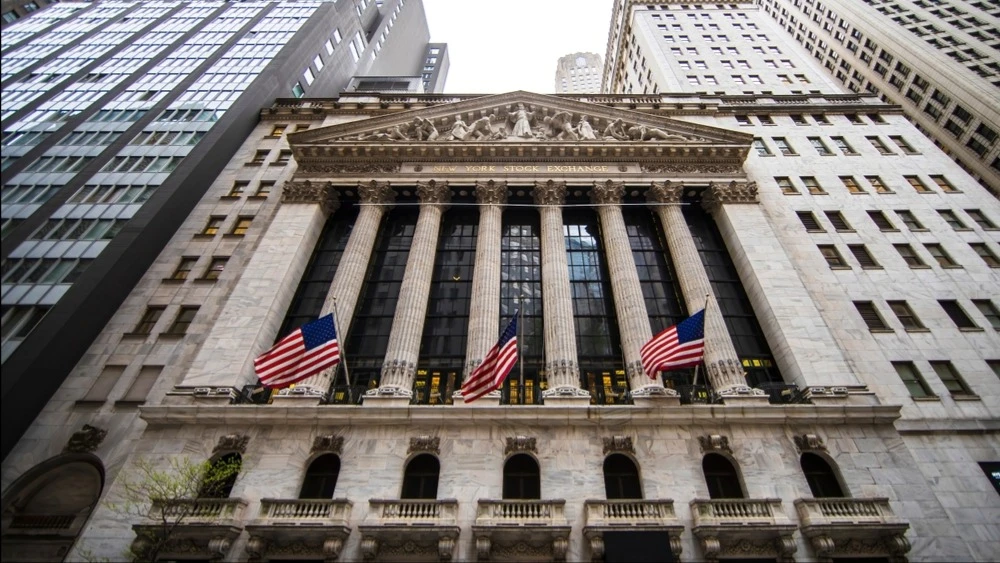
Freedom Broker's base case sees the S&P 500 ending 2026 at 8,000 points, implying about 5.5% upside / Photo: Karolis Kavolelis / Shutterstock.com
The end of the first quarter and most of the second quarter were dominated by external shocks as a rising geopolitical risk premium in oil prices, a jump in inflation expectations, and hawkish rhetoric from the Fed weighed on market sentiment.
Yet U.S. stocks remained resilient and recovered swiftly. Investors expect productivity gains to help companies to cope with inflationary pressures, while the ongoing AI investment boom should continue to support demand for risk assets. At the same time, the geopolitical backdrop and commodity markets only began to stabilize toward the end of the second quarter, with oil falling below $80 per barrel and investors again discussing the possibility of a resumption in disinflation.
Freedom Broker's base case assumes the Fed will leave interest rates unchanged in 2026, S&P 500 firms will grow earnings by 22.8%, and the index will reach 8,000 points by the end of the year, around 5.5% above its current level. But there is an important caveat: around 80% of earnings growth is expected to come from just two sectors – technology (around 60%) and energy (around 20%). As a result, the AI investment cycle, the primary driver of earnings growth, remains both the market's biggest support and its biggest risk.
With $1,000, investors can build a small diversified portfolio. Below are four of the most attractive ideas from Freedom Broker's latest strategy outlook for the third quarter of this year, spanning different sectors of the economy, most of them outside of tech.
IDT: A telecom with a growing fintech business
IDT Corporation is an unusual combination. Its telecommunications business continues to generate steady cash flow, while its higher-margin businesses are driving growth. Alongside its legacy telecom operations, the company is expanding three fast-growing businesses: National Retail Solutions (NRS), a payments ecosystem for independent retailers; BOSS Money, an international money transfer service; and net2phone, a cloud communications platform for businesses.
The company is steadily reshaping its business. At NRS, the focus has shifted from expanding the number of payment terminals to increasing monetization per connected location. At BOSS Money, the strategy centers on boosting profitability as cash transfers through agents are increasingly replaced by digital channels. At net2phone, the company is investing in AI solutions that create the potential for revenue growth and margin expansion over the medium term.
All three businesses are improving profitability, while the stable cash flow generated by the legacy telecom business gives the company a rare combination of growth and quality for the sector. This strategy is also reflected in the company's own long-term priorities, which emphasize expanding these higher-margin businesses while using its Traditional Communications operations as a source of cash generation.
Freedom Broker has a target price of $75 per share on IDT, implying 20% upside from the Tuesday closing price.
Digital Realty: A REIT for the AI boom
Digital Realty Trust is a real estate investment trust (REIT) that owns data centers, rather than office buildings or shopping malls. The company operates more than 300 facilities across more than 55 metropolitan areas, serving major cloud providers, telecommunications companies, and financial institutions. Like other REITs, Digital Realty distributes most of its earnings to shareholders through dividends.
The investment thesis is straightforward: the AI boom is driving demand for data center capacity, while limited supply supports pricing power. The company's results reinforce that view. In the first quarter, new bookings reached $423 million, the order book grew 26% year over year to $1.03 billion, and the company raised its 2026 rental rate growth outlook. Another 1.2 gigawatts of capacity is under development, with more than 60% already preleased. Those projects are expected to generate returns of around 11.4%, above the company's cost of capital, meaning they should create additional value for shareholders.
Freedom Broker has a target price of $223 per share on Digital Realty, implying around 30% upside from the stock's Tuesday closing price. According to MarketWatch data, Wall Street is also upbeat on the stock. It has 25 "buy" calls from analysts ("buy" and "overweight") versus nine "hold" ratings.
Northwest Natural: 70 years of dividend growth
Shares of Northwest Natural Holding are the defensive component of the portfolio. The regulated utility provides natural gas, water, and wastewater services across the U.S. Pacific Northwest and Texas. Because rates are set by regulators, the business generates stable and predictable revenue, although its growth potential is limited. Its main growth driver is a $2.6-2.9 billion investment program through 2030, which is expected to deliver 6-8% annual rate base growth.
The main attraction for long-term investors is the dividend. The company has increased its dividend for 70 consecutive years, targets a payout ratio of 55-65%, and offers a dividend yield of around 4%. This is not a stock for rapid returns, but rather for stable income regardless of market conditions.
Freedom Broker has a target price of $57 per share, implying around 13% upside. Wall Street has three "buy" calls on the stock versus two "hold" ratings and one "sell" recommendation.
Carnival: Lower fuel costs provide additional tailwind
Carnival is the world's largest cruise operator, accounting for around 36% of the industry's revenue and 42% of passengers.
Its latest quarter was a record one: revenue reached $6.7 billion, adjusted EBITDA totaled $1.58 billion, and adjusted earnings came in at $0.41 per share, exceeding market expectations. Despite the strong results, the stock fell around 6% after the earnings because of a cautious guidance for the next quarter.
However, analysts believe the market reaction was excessive. Pressure on Mediterranean itineraries stemming from the conflict in the Middle East proved temporary and did not result in lower pricing. Meanwhile, the fundamentals remain strong: customer deposits reached $9 billion, 93% of the company's 2026 cruise capacity has already been booked at higher prices, and demand for 2027 exceeds last year's levels.
Lower fuel prices provide an additional tailwind. Carnival does not hedge its fuel costs, meaning cheaper oil directly boosts earnings: a 10% decline in fuel prices increases the company's net income by around $100 million through the end of the year. The company is also reducing its debt burden and plans to buy back shares under its $2.5 billion buyback program, of which more than $450 million has already been used, while continuing to pay dividends.
According to the company, its fleet has become more fuel efficient, with fuel consumption per available lower berth down 5.6% year over year and 27% versus 2019. At the same time, the company is reducing leverage, continuing its share buyback program – having already bought back more than $450 million under its $2.5 billion authorization – and paying dividends.
Freedom Broker has a target price of $35 per share, implying 32% upside. According to MarketWatch data, Wall Street has 26 "buy" calls on the stock versus six "hold" ratings.
Risks
Freedom Broker analysts assign a 70% probability to their base case while flagging two key risks.
The first is inflation. If price growth remains persistently above expectations, the Fed may keep monetary policy restrictive for longer, putting pressure on the broader U.S. stock market. The second risk is AI investment. If companies fail to justify their massive AI spending through higher earnings, stocks linked to the theme could come under pressure, including Digital Realty, for which AI remains a key growth driver.
At the same time, each of the abovementioned four stocks is supported by its own investment thesis. IDT is betting on business transformation, Digital Realty on rising demand for data centers, Northwest Natural on the stability of its regulated utility business, and Carnival on robust cruise demand and lower fuel prices. Together, they can form a diversified portfolio that not only benefits from a favorable market environment but also has upside from each company's individual growth drivers.
More detailed commentary from Freedom Broker analysts and investors on these and other third-quarter ideas can be found on the Freedom On Air YouTube channel and Telegram channel.
This text is for informational purposes only and does not constitute personalized investment advice.