Howard Marks: why won't AI help investors find the new Steve Jobs?
Oaktree founder doubts AI will give investors an edge if everyone uses it

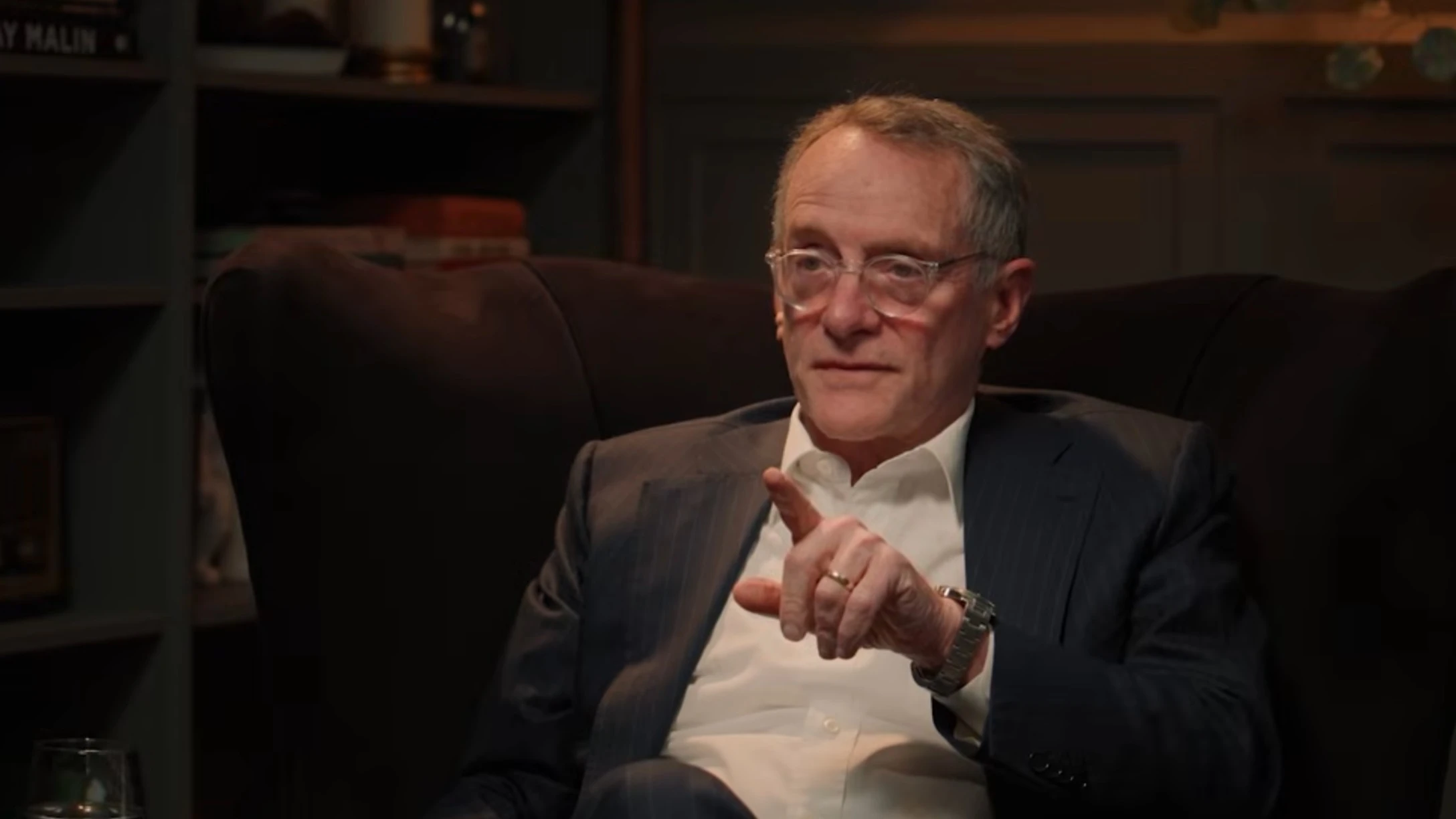
Marks has revised his skepticism of AI, but isn't ready to predict the future of the sector / Screenshot by People by WTF
In the next decade, success in the investment business will depend not on the depth of AI adoption, but on understanding its capabilities, implications and limitations, according to billionaire Howard Marks, co-founder of Oaktree Capital. For a market that has already made AI a major topic, his thesis could be uncomfortable: if strong models become available to everyone, they could turn the search for "alpha" not into a source of advantage, but into a machine of average results.
On the People by WTF podcast, Howard Marks parses where there's still room for investors in this race: how AI disciplines analysis but doesn't guarantee superiority, why it won't help find the new Amazon, and that the AI infrastructure boom alone doesn't yet make the sector a good deal.
The Average Yield Trap
The main threat of AI to the investor is the total averaging of results, Marks believes. AI tools can "discipline" analysis: reduce the influence of greed, fear, optimism and pessimism, work with data and historical patterns more consistently than humans, but in theory they will all offer the same strategy because they have comparable intelligence and similar knowledge, Marks says.
"No one implements AI out of boredom, right? It's being used to get rich. And true success in investing comes from excelling, not from being an average performer. But then how do you acquire that excellence?"

Second-level thinking
Marks believes that to outperform the market, an investor still needs second-level thinking - the ability not just to differ from the consensus, but to be more accurate than it.
"The people you compete with in the investment arena are also smart, educated, literate, computer savvy, very motivated. They're pretty darn good. Most of the time they are as close to the right answer as they can get at all. So if you think consensus is the closest to the right answer that the majority can get, and you say to Claude: "I only need non-consensus thinking", then it is highly likely that he will make a mistake. And that's not a good thing."

AI is a mirror of the past
AI, Marks says, has another limitation: an algorithm can systematize accumulated experience, but it is not able to radically go beyond the accumulated experience to see future market leaders at the idea stage. AI acts as a "mirror of the past," while the world is changed by anomalies and personalities not found in training samples, the investor emphasizes.
"Can AI examine five business plans and determine which one will be the future of Amazon? Can it talk to five CEOs and figure out which one is Steve Jobs? This goes far beyond just recognizing patterns. I bet he can't."

Investing remains a complex puzzle that can't be solved once and for all, Marks says. And AI is strong where you can recognize patterns and apply them in a disciplined way. In investing, Marks says, there are no absolute laws, and future events depend on human psychology, among other things. Therefore, technology can help in analysis, but it does not relieve the investor of the main task - to solve this puzzle better than others.
"Virtual cranes" in the AI sector
Marks admits that, thanks to his interaction with artificial intelligence, he has revised his skepticism and even co-authored a memo with Claude titled "AI Flying Forward." That said, he says user experience doesn't allow him to draw any conclusion about the future of the sector. He can identify a boom in the construction industry, for example - by the number of cranes in a city. And today he sees such "virtual cranes" in the AI sector: there is a large-scale construction of infrastructure for AI.
"This is an area of the economy that's booming right now, and I need people who know more about AI than I do to tell me whether it's going to end up crashing. The question is whether all of this - or part of this construction - is unjustified. I don't think anyone can say that for sure. One thing we do know for sure is that we're in a boom zone right now."

For the investor, Marks says, the danger is that an average level of understanding of AI doesn't provide an advantage. Almost everyone is excited about the technology right now, but if an investor doesn't understand it as deeply as everyone else, his or her results will also be average. This risk is amplified by high expectations. Marks warns that if the market is already expecting too much from AI, money can be lost even on an important technology - not because it is useless, but because its actual results will not justify the optimism built into the price.
This article was AI-translated and verified by a human editor