Huang Is Gone, Competitors Are Gaining Ground: Why a JPMorgan Strategist Still Believes in Nvidia
Strategist Michael Cembalest believes Nvidia shares are attractive to long-term investors, despite the existing risks

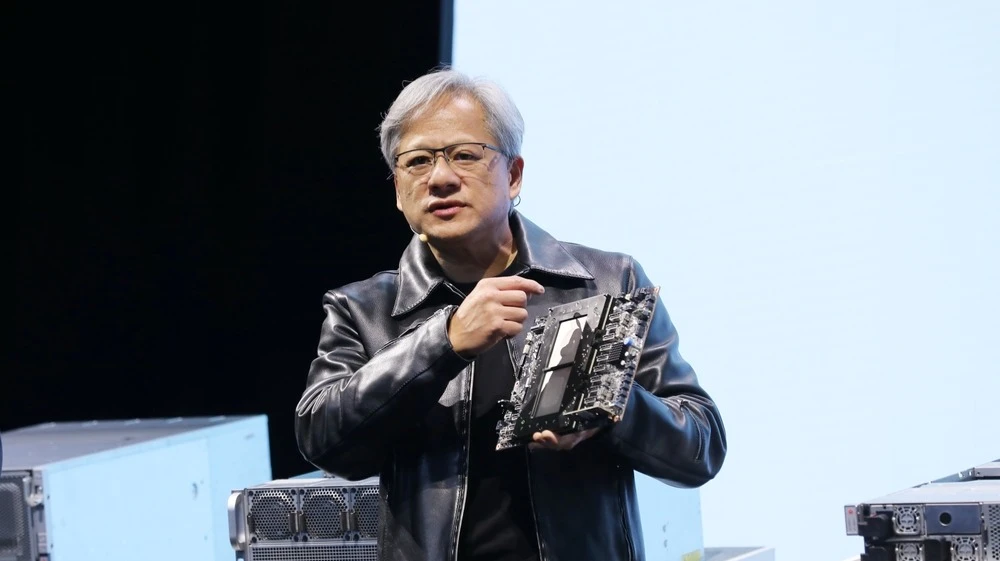
Nvidia is unlikely to lose its market position anytime soon, despite Jensen Huang's departure. Photo: glen photo/Shutterstock
Nvidia is unlikely to lose its market position anytime soon, despite Jensen Huang’s departure as CEO, writes JPMorgan strategist Michael Cimbalest in a new note. He expects the company to maintain high profitability for some time to come. This, combined with the decline in its stock price, makes its shares attractive to long-term investors, the strategist believes. However, he urges investors not to overlook the potential risks.
What risks does JPMorgan see with Nvidia?
Among the risks investors should consider, a JPMorgan strategist highlights intensifying competition: in his view, it could pose no less of a threat to Nvidia than a change in leadership. The largest AI developers are opting for solutions from AMD, Google, Broadcom, and Amazon: according to JPMorgan’s estimates, these companies account for more than 70% of the computing power for which agreements have already been reached. Nvidia’s share is only 28%, even though in 2024–2025 the company generated 80–90% of total revenue in the AI chip market.
Nvidia considered the high energy efficiency of its processors and the CUDA software platform to be its main advantages. According to the company, these factors made it unprofitable for customers to switch to competitors’ hardware. However, the situation is now changing. According to a JPMorgan strategist, one of the leading AI developers reported that just a year ago, it would have taken them six to twelve months to run their models on AMD processors. Now, using its own AI model, the company can accomplish this task in just three days.
Competitors are also closing the gap in terms of performance: according to experts cited in a JPMorgan note, AMD’s processor ranked first in terms of AI query processing speed, while Google’s TPUs offer a more favorable speed-to-cost ratio for computations. However, Cembalest acknowledges that the release of the new generation of Nvidia Rubin Ultra processors in 2027 could change the situation.
Chinese developers of open-source AI models remain one of Nvidia’s key markets, notes a JPMorgan strategist. Under Huang’s leadership, the company opposed the tightening of U.S. restrictions on chip shipments to China. However, Chinese companies do not necessarily need to import processors into the country: they can access them remotely through data centers abroad, primarily in Southeast Asia. According to a forecast by the Institute for Progress, by the end of 2027, such access will account for 32% of the computing power available to China.
Now the U.S. intends to restrict this use of American chips as well, the strategist writes. The House of Representatives has already approved a bill that, if passed, would prohibit Chinese companies from remotely accessing processors subject to export restrictions. If these measures prove effective, Chinese companies will have an additional incentive to develop their own processors, notes Cembalest.
Why JPMorgan Recommends Investing in Nvidia
Despite these risks, the strategist considers Nvidia’s stock attractive to long-term investors. After falling 32% from its all-time high, the stock appears significantly cheaper than the shares of other major AI companies based on valuation multiples, especially when taking into account expected earnings growth rates.
The strategist backs up his assessment with Nvidia’s financial results. From 2023 to 2025, its operating margin was 66%. The company continues to earn significantly more than it spends on capital expenditures. The situation is different for the largest cloud companies: AI development costs are rising rapidly, and they are increasingly turning to loans to finance them.
A JPMorgan strategist expects Nvidia to be able to maintain such strong financial performance for some time to come, as the development, testing, and production of new processors take a long time. Demand for Nvidia’s hardware remains high: the cost of renting computing power—even on older models of its processors—continues to rise.
This article was AI-translated and verified by a human editor