'I was a fool to give free money': Musk took the stand in court against OpenAI

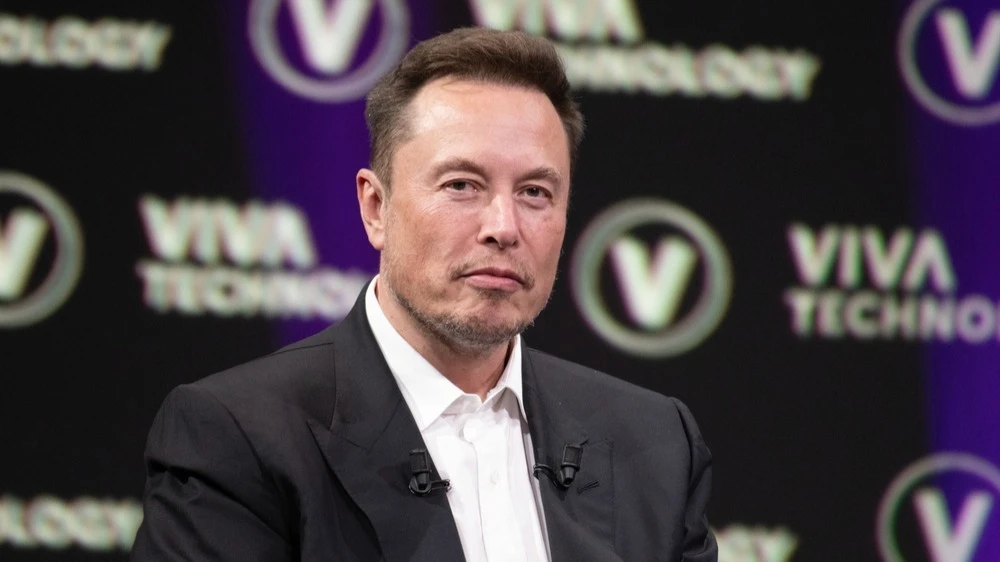
Musk described the evolution of his relationship with OpenAI in several stages, from "enthusiastic support" to "conviction that the organization was being plundered" / Photo: Frederic Legrand - COMEO / Shutterstock.com
The world's richest man, Elon Musk, has claimed in court that the co-founders of OpenAI, who became defendants in his lawsuit, effectively used his investment as "free money" to create a startup now valued at more than $800 billion.
"I gave them $38 million, essentially free financing, which they used to create a for-profit company with a capitalization of $800 billion," said Musk, who appeared in court for the second day in a row on April 29 and was cross-examined(quoted in The Verge). In his words, he ended up being "a fool for giving free money."
Musk described his relationship with OpenAI as "enthusiastic support" in the first phase, "uncertainty" in the second phase, and in the third phase, "convinced they were stealing from a nonprofit organization." The billionaire said he transferred $5 million each quarter to OpenAI and paid an additional $3 million a year in office rent. Musk said he transferred the money even when he was "a little worried" but trusted OpenAI co-founder Sam Altman's promises that the organization would retain its nonprofit status.
OpenAI attorney William Savitt said in court that Musk "wanted to turn OpenAI into a full-fledged for-profit company and gain absolute control of it," but the other co-founders "refused to hand over the keys to artificial intelligence to one person."
Musk presented his version: according to him, brainstorming sessions did consider the idea of creating a for-profit organization, but its activities should not significantly exceed those of a non-profit organization. Musk said that since he was the one providing a substantial part of the capital, he wanted to get a controlling stake and sole decision-making rights at the first stages. Over time, as new investors came on board, Musk's stake in OpenAI, he argued, should have decreased and ceased to be controlling.
Altman initially supported Musk, the billionaire claims. But then, according to his version, Altman turned against him other founders - Greg Brockman, who is also a defendant, and Ilya Sutzkever (left OpenAI in 2024). The Tesla CEO showed in court a letter he received from Sutzkever in 2017, in which he expressed "serious concerns" about Musk's proposed ownership structure.
"I was under the impression that they reneged on what we had previously agreed to," Musk said.
According to court filings, Musk made his last quarterly payment of $5 million in May 2017, and stopped paying rent in 2020, The Verge reports. In 2018, Musk resigned from OpenAI's board of directors. The following year, Microsoft invested the first $1 billion in the startup, followed by another $12 billion. Musk said in court that Microsoft reacted "quite negatively" to the investment - there was no way the investment could be considered a "donation" or "charitable assistance" to a nonprofit organization because of its size. Musk claims that the defendants in his lawsuit enriched themselves by abandoning altruistic principles and turning the startup into a for-profit company that receives billions of dollars from Microsoft, Bloomberg writes.
Musk also rejected one of OpenAI's key arguments - that he went to court too late. "I would have sued sooner if I had realized earlier that they had looted the charity's money," he said. Musk said that despite his concerns about Altman and Brockman, he didn't believe for a long time that they would go on a "looting spree." "Having a premonition that someone might steal your car is not the same as thinking that someone has already stolen your car," Musk stated.
Context
Elon Musk, who helped create OpenAI, is being sued in 2024, a year after launching his own AI company, xAI. He claims he was "purposefully manipulated" and "misled" into donating $38 million to OpenAI under the promise that the organization would put the interests of humanity above profit and remain a nonprofit.
The defendants deny the allegations. OpenAI and Altman have claimed that the real purpose of the lawsuit is to hurt xAI's biggest competitor. For OpenAI, the stakes in this lawsuit are "existential," Bloomberg writes: Musk is demanding that Altman and Brockman be removed as CEO and president of the company and that the restructuring of OpenAI into a for-profit company, completed in October 2025, be reversed. That restructuring left the OpenAI Foundation with an approximate 26% stake in the commercial portion of OpenAI and Microsoft with an approximate 27% stake. If Musk wins, OpenAI's ambitious plans to launch one of the largest IPOs of the year are in jeopardy.
This article was AI-translated and verified by a human editor