War threatens to bring Middle East oil and gas production to a complete halt, Qatar says
Oil price could rise to $150, says country's energy minister

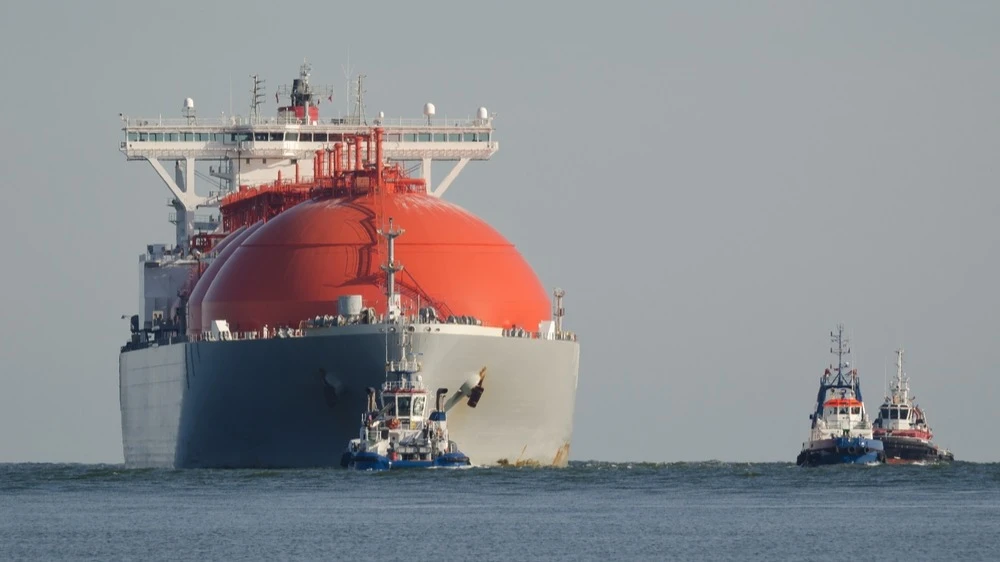
Oil and gas exports from the Persian Gulf could come to a halt in the coming days / Photo: Wojciech Wrzesien / Shutterstock
Within weeks, all energy exporters in the Persian Gulf could halt production if the US war with Iran, which is shaking the entire region, does not stop immediately, Qatar's Energy Minister Saad Al Kaabi has warned. The war could "bring down the economies of the world," the official said in an interview with Financial Time.
Details
Even if the war ends immediately, it will take Qatar "weeks to months" to return to a normal supply cycle after an Iranian drone strike on its largest liquefied natural gas (LNG) plant, Al Kaabi said. He predicted that in the coming days, all other oil and gas exporters in the region will declare force majeure, as Qatar, the world's second-largest LNG producer, did on March 3.
"It could crash the world's economies. If the war lasts a few weeks, it will affect global GDP growth. Energy prices will rise everywhere. There will be a shortage of some goods, and a chain reaction will start: enterprises will not be able to provide supplies," he said.
While Qatar's offshore production has not been affected, the onshore impact is still being assessed, the minister added. It is also unclear how long it will take to recover, he noted....
Although Qatar exports only a small portion of its gas to Europe, the energy minister said the continent would still feel serious repercussions, with Asian buyers outbidding Europeans for available gas volumes, and other Gulf countries may not be able to fulfill their contractual obligations.
He added that a $30 billion project to expand production at Qatar's largest gas field from 77 million to 126 million tons a year by 2027 - will also be postponed. The first phase of production was scheduled to start up in the third quarter of this year.
"It will definitely delay all our expansion plans. If we go back to work in a week, the effect will probably be minimal; if in a month or two, the situation will be different," Saad Al Kaabi said. LNG production in Qatar will not resume until there is a complete cessation of hostilities, he said.
Once operations resume, he said, there will be major logistical challenges - in addition to the need to rebuild the equipment that cools and compresses the gas, turning it into a liquid for transportation.
"Our vessels are now scattered all over the world," Saad Al Kaabi said, adding that only six or seven tankers from Qatar's 128-ship fleet are nearby. - Each vessel comes up about once every day or two, and six or seven can be loaded at the same time," he explained, explaining why it will take time to restore normal operations.
What's going to happen to prices?
The Qatari minister predicted oil prices could rise to $150 a barrel within two to three weeks if tankers and other merchant ships are unable to pass through the Strait of Hormuz, a key maritime trade route through which about a fifth of the world's oil and gas passes. Iran effectively cut it off after the war began.
Al Kaabi's forecast is 68% higher than current prices for Brent crude oil. It rose in price by more than 4% on March 6 and exceeded $89 per barrel.
The minister also suggested that gas prices could rise to $40 per million British thermal units (about €117 per MW⋅h) - almost four times the pre-war level.
Context
Shipping through the Strait of Hormuz has come to a virtual standstill since the US and Israel launched an attack on Iran on February 28. At least ten ships have been damaged, insurance premiums have skyrocketed, and shipowners are not willing to risk their vessels and crews, the FT notes.
U.S. President Donald Trump and Israeli officials warned on March 3 that the war could last several weeks. Trump said the same day that the U.S. Navy would escort ships through the strait and offered to provide additional insurance to shipping companies. However, he did not provide details, and no executive orders had been issued by the time this text was published.
This article was AI-translated and verified by a human editor