Kazakhstan's tenge has become an unexpected safe haven during the war. What awaits it?

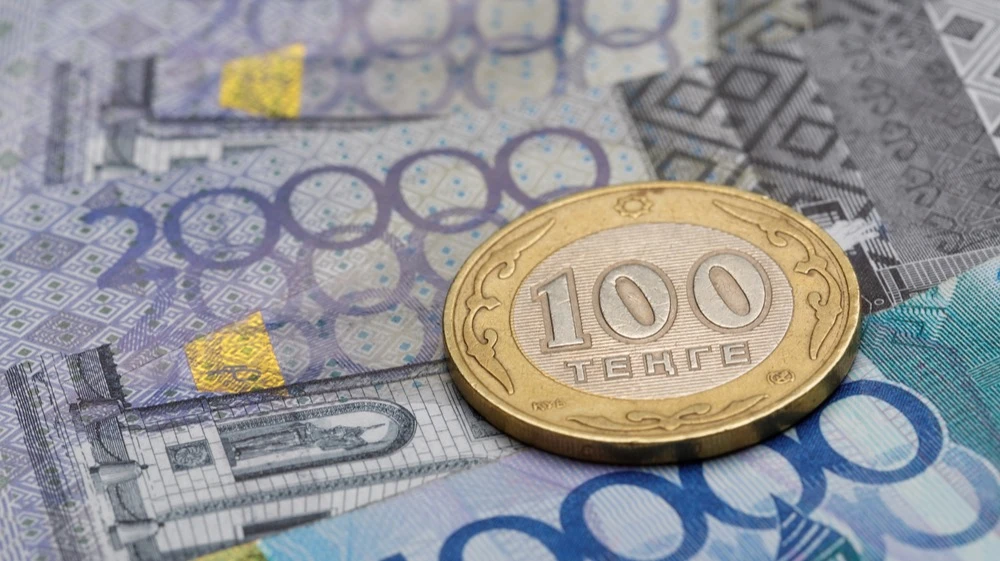
After the start of the war in Iran, oil rose in price and the tenge strengthened against the dollar. Photo: Gaukhar Yerk / Shutterstock.com
With the outbreak of war in the Middle East and the closure of the Strait of Hormuz, Brent crude oil rose from around $75 at its peak to almost $120 and fell below $100. The situation in the markets also remains highly volatile. In such a situation Deutsche Bank on March 20 called tenge an attractive currency for capital preservation.
How does the war in Iran affect Kazakhstan's national currency and what will happen to the tenge exchange rate next?
Quiet Harbor
Deutsche Bank in a note dated March 20 (available at Oninvest) called Kazakhstan one of "unexpected safe harbors" during the market storm because of the war in Iran, along with Uzbekistan. The bank's analysts called Tenge and Uzbek Sum "attractive currencies for capital preservation in the current unstable market situation", although they consider the current level of Kazakhstan's currency to be highly overvalued.
Both tenge and sum are less exposed to volatility and changes in market sentiment due to low dependence on foreign investors and large currency reserves of Kazakhstan and Uzbekistan. Their exchange rate is supported by a balanced current account and high interest rates above 6%, Deutsche Bank notes.
At the same time tenge, wrote analysts of the bank, showed the best dynamics among currencies of emerging markets. Disruptions in oil and gas supplies from the Middle East and rising oil prices have an immediate positive effect on Kazakhstan's current account, Deutsche Bank adds.
What affects the tenge exchange rate
Since the beginning of the war in the Middle East, Kazakhstan's currency has strengthened from almost 498 tenge to 481.9 tenge per dollar on KASE (from February 27 to March 20).
Historically, the Tenge exchange rate has been strongly linked to oil prices - in 2025, sales of oil and oil products contributed about half of Kazakhstan's total export revenues.
Economist and author of the Telegram channel Finmentor Arman Batayev explained the mechanism of influence on the currency as follows: "When oil is expensive, Kazakhstan receives more dollar proceeds from exports, and part of it is sold on the domestic market, supporting the tenge.
But, according to him, other factors are now increasingly influencing the exchange rate. Among them is the budget rule, which is based on the cut-off price of oil at $41.4 per barrel. If it costs more than this price, "surplus" revenues from its sale go to the National Fund.
In addition, the National Bank of Kazakhstan is monthly active on the currency market - it sells dollars from the National Fund for transfers to the budget. Also, the regulator buys gold from gold miners and "mirrors" these transactions by selling dollars on the currency market. In February, for example, it sold $400 mln from the National Fund - 6% of the total trading volume, plus "mirrored" the currency in the equivalent of KZT350 bln in gold purchase transactions. In addition, exporters are subject to the requirement of compulsory sale of part of foreign currency proceeds - last month they received $284 mln.
The National Bank of Kazakhstan will report on operations on the currency market in March, that is, after the beginning of the war in Iran, in April. Earlier the regulator said that the tenge rate in the short term will depend on expectations of market participants, quarterly tax payments and geopolitical situation.
What's happening to the course now
Expensive oil leads to strengthening of national currency, but uncertainty on the markets due to the war with Iran increases "nervousness". Exchange rate of Kazakhstan currency since the beginning of the conflict in Iran on KASE fluctuated in the range from 503.9 to 476.6 tenge per dollar, that is the difference was more than 5%.
According to financial analyst Andrei Chebotarev, further volatility of the tenge may be spurred by sharp movements in the cost of oil, as well as transfers from the National Fund and the sale of foreign currency earnings of exporters.
General Director of DAMU Capital Management Murat Kastayev believes that the current support of tenge is temporary. In the short term, the inflow of petrodollars strengthens the exchange rate. But in case of a protracted conflict the effect may change: high cost of oil will lead to slowdown of world economy and inflation growth. These factors can weaken the demand for oil, which, in turn, will negatively affect Kazakhstan's exports and its budget revenues.
According to him, oil prices could fall in a matter of days (for example, if the war ends and the Strait of Hormuz is opened), but it would take months for economic growth to recover.
Now, according to Iranian Foreign Minister Abbas Araqchi, the Islamic Republic has authorized passage through the strait to China, Russia, India, Iraq and Pakistan.
Kastayev also draws attention to the risks of too strong a tenge exchange rate. According to him, significant appreciation reduces the competitiveness of Kazakh exporters and stimulates imports, worsening the trade balance.
What the National Bank is ready for
Head of the National Bank of Kazakhstan Timur Suleimenov said at a briefing on March 6 that in case of sharp volatility on the currency market, the regulator will "apply response measures." "Sharp speculative movements we will dampen, we will use interventions," he added.
Kastayev believes that the intervention of the National Bank should be limited, but admits that it has informal guidelines. "Although the official corridors the regulator does not announce, according to our estimates, the National Bank will not allow the dollar to weaken below KZT450 and its strengthening above KZT550," - said the analyst.
Separately, Kastaev mentioned the prime rate, which currently stands at 18%. In his opinion, the oil factor may indirectly affect the upcoming decisions of the regulator. If high fuel prices will accelerate global inflation, and Kazakhstan will "feel" it through import prices and the acceleration of inflation in the country, the rate will be raised in the 2-3 quarter of this year, he believes.
Inflation in Kazakhstan remains high - 12.3% by the end of 2025. In February, the indicator in annual terms slightly decreased to 11.7%.
The next rate meeting will be held on April 24. According to previous reports of the regulator, it does not plan to consider its reduction earlier than the second half of 2026.
An important factor for inflation is the rate of tenge to ruble. Deutsche Bank notes that the Kazakh currency has also strengthened against the Russian currency. Since the Russian Federation provides about 30% of imports in Kazakhstan, the strengthening of the tenge will be a disinflationary factor and in the short term will balance the impact of the war in Iran on inflation, the bank said in its materials.
Forecasts: wide corridor and high uncertainty
Analysts' rate estimates for the coming months vary markedly, but all point to a high level of uncertainty.
Batayev expects the tenge to be in the range of KZT470-510 per dollar, depending on various scenarios of conflict development in the Middle East.
Chebotarev forecasts the rate in the next 3-6 months in the corridor of 480-520 tenge per dollar with increased intraday volatility.
Kastayev admits that in case of further growth of oil price (above $105 per barrel) the rate may reach KZT450-460 per dollar. In case of its price decrease to the levels, preceding the conflict in Iran, the rate may return to the range of 520-540 tenge per dollar.
This article was AI-translated and verified by a human editor