Wartime currencies: four beneficiaries of the commodity shock from the Iran conflict

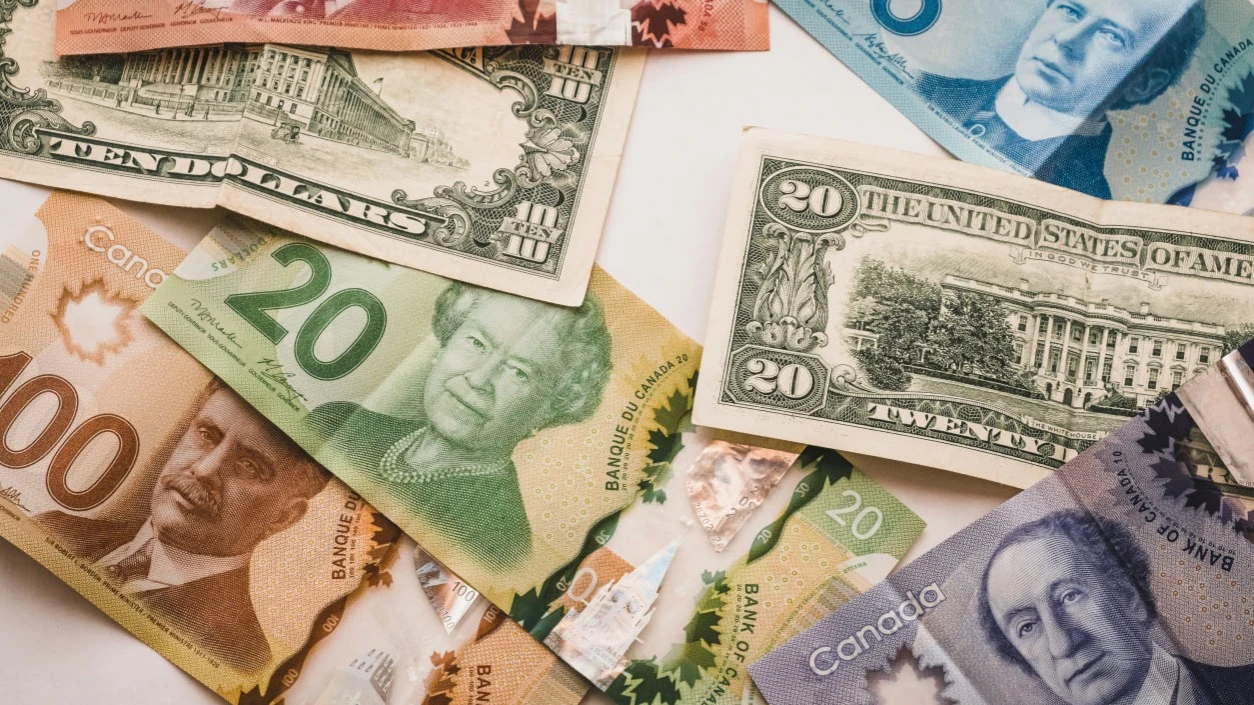
The Canadian dollar has been among the beneficiaries in the currency market since the start of the war in the Middle East. Photo: PiggyBank / Unsplash
With the outbreak of war in the Middle East, the commodity crisis forced many investors to revise their economic forecasts and look for safe havens. All of this has had a direct impact on the currency market. Gleb Nazarenko, CEO of Astero Falcon, wrote which ones showed resilience in the crisis, and which ones were among the victims.
In search of a safe harbor
After the U.S. and Israeli hostilities against Iran began, investors clearly began to favor the U.S. dollar and classic safe havens like gold and the Swiss franc.
The dollar index - its ratio to a basket of six major world currencies - has risen by about 2% since the start of hostilities in Iran, at its peak it was up to 3%. All this reflected a massive shift of capital into the most liquid protective asset. In the last few days, the dollar index has declined, but is still at levels higher than before the war in Iran.
First of all, such dynamics is connected with the growth of oil price - in recent weeks it rose to $120 per barrel Brent. Investment banks in their forecasts allow further growth (for example, Goldman Sachs does not exclude a jump to $150).
As a consequence, inflation expectations are also rising. Since the beginning of March, the breakeven inflation indicator - the average annual inflation rate that investors expect over the next five years based on government bond prices - has risen by 21 basis points, and by 36 basis points since the beginning of the year.
Economists and investors are revising their forecasts on the Fed's monetary policy. On March 18, the results of the FOMC meeting will be known, the market expects the regulator to keep the rate, and the chairman of the U.S. central bank Jerome Powell will assess the possible consequences for the U.S. economy from the military operation in Iran.
What do investors' expectations show? A month ago, the probability that the rate by the end of the year would remain unchanged relative to the current range was only 4.9%. Today it has already risen to 30%.
According to the latest Bloomberg survey on March 6-11, economists believe that the regulator will start cutting rates later - in June and October this year. Although in December 2025, they believed that the regulator would start easing the policy rate as early as March and September. According to the median answer, the prime rate will be 3-3.25% by the end of the year. Now its level is 3.5-3.75%.
Three more beneficiaries of the oil shock
But the dollar is not the only currency that has benefited from the oil crisis created by the conflict in the Middle East.
The currencies of oil-exporting countries were direct beneficiaries of the oil crisis. These included the Canadian dollar and the Norwegian krone.
For example, in the first week of the war in the Middle East, the Canadian dollar - slang traders call it the "loonie" - became one of the favorites in the $9.5 trillion currency market due to the fact that Canada is the world's fourth-largest oil producer.
Since the beginning of the war in Iran, the Canadian dollar has also strengthened against the dollar - at the maximum by 0.68%, but then lost this growth. During the month, the loonie strengthened against the euro by 2.35%, against the Japanese yen by 3.37%, and against the British pound by 1.14%.
The Norwegian krone was weakening against the U.S. dollar, but strengthened over the month against the euro by more than 2%, against the Japanese yen by almost 3.3%, and against the pound by just under 1%.
These two currencies have a lower range of defensive qualities compared to the US dollar, but the specifics of the current crisis (centered on oil) make them attractive. Compared to the dollar, they have lower liquidity both on their own and in terms of sovereign debt. Demand for these currencies is largely localized.
With the oil shock from the conflict with Iran gone, the Canadian dollar and Norwegian krone are likely to weaken as their appreciation is largely due to the temporary rise in oil prices.
Canada's economy is slowing down (its GDP in 2025 grew by 1.7%, the slowest annual growth since the recession in 2020.), in addition, it is vulnerable to US tariffs. The situation is similar for the Norwegian krone - the country's economy is significantly dependent on oil and gas, their contribution to GDP is about 20%.
The Chinese yuan also became a relatively stable currency during the Iran war . The reasons are a combination of tight exchange rate control by the Chinese authorities, a strong trade balance and China's special role in the Middle East oil system. China is the largest buyer of Iranian oil, much of the supply(it continues) is at a discount, which softens the blow to the Chinese economy from the rise in oil due to the war. In addition, China is also using the yuan as a tool of geopolitical pressure - for example, Iran has said it may charge for ships passing through the Strait of Hormuz in yuan. This strengthens the status of the Chinese currency internationally.
Currencies in the negative
The euro and Asian currencies, on the other hand, came under pressure.
The Euro was among the affected currencies as the energy crisis threatens to hit Europe hard. One of the simplest and most popular indicators of techanalysis is the 200-day moving average. In March, the European currency hit it and cannot overcome it. A move below this level, in our opinion, will be a significant event. On March 18, the euro traded against the dollar at $1.15. We believe that it has a probability of falling to $1.12.
Among the major currencies, the Japanese yen was also hit. The country is critically dependent on oil and gas imports from the Persian Gulf, so a jump in energy prices worsens its trade balance and puts pressure on the currency. Investors expect the Bank of Japan to be even more cautious about raising rates because of risks to the economy and rising costs. And that's widening the yield gap between Japanese securities and U.S. securities and keeping the dollar strong against the yen.
The currencies of large net oil importers with already vulnerable external balances are also being hit hard.
In March, the Indian rupee hit several consecutive historic lows against the dollar. India is one of the largest importers of oil in the world, more than 80% of consumption is covered by imports. Every $10 increase in oil prices can lead to a 30-40 basis points of GDP growth in the current account deficit. The exchange rate situation has been exacerbated by the behavior of foreign investors - from the beginning of the war in Iran to March 17, they have sold Indian stocks for almost $7 billion and are moving toward the maximum monthly sales volume since January 2025. The Reserve Bank of India is intervening, including through currency swaps, but pressure on the currency is likely to persist if oil prices remain high.
The South Korean won fell below 1,500 won per dollar in March, the lowest level since March 2009. From March 3 to 13, the monthly average exchange rate approached 1,477 won per dollar, the worst since March 1998, the era of the Asian financial crisis.
The key factor here is the same - critical dependence on energy imports, South Korea is the world's fourth largest purchaser of oil. According to the Korea Petroleum Association, nearly 70% of its oil comes from the Middle East. KB Securities estimates that a $10 per barrel rise in oil prices adds about 15 won to the Korean currency's exchange rate against the dollar.
The pressure on the currency was sharply intensified by capital outflows. On March 4, South Korea's Kospi index collapsed 12.06%, a historic record since the index was created in 1980. The index has fallen more than 5% since the conflict in the Middle East began.
This article was AI-translated and verified by a human editor