Lessons from Warren Buffett: how to invest in yourself and live to 100 years old

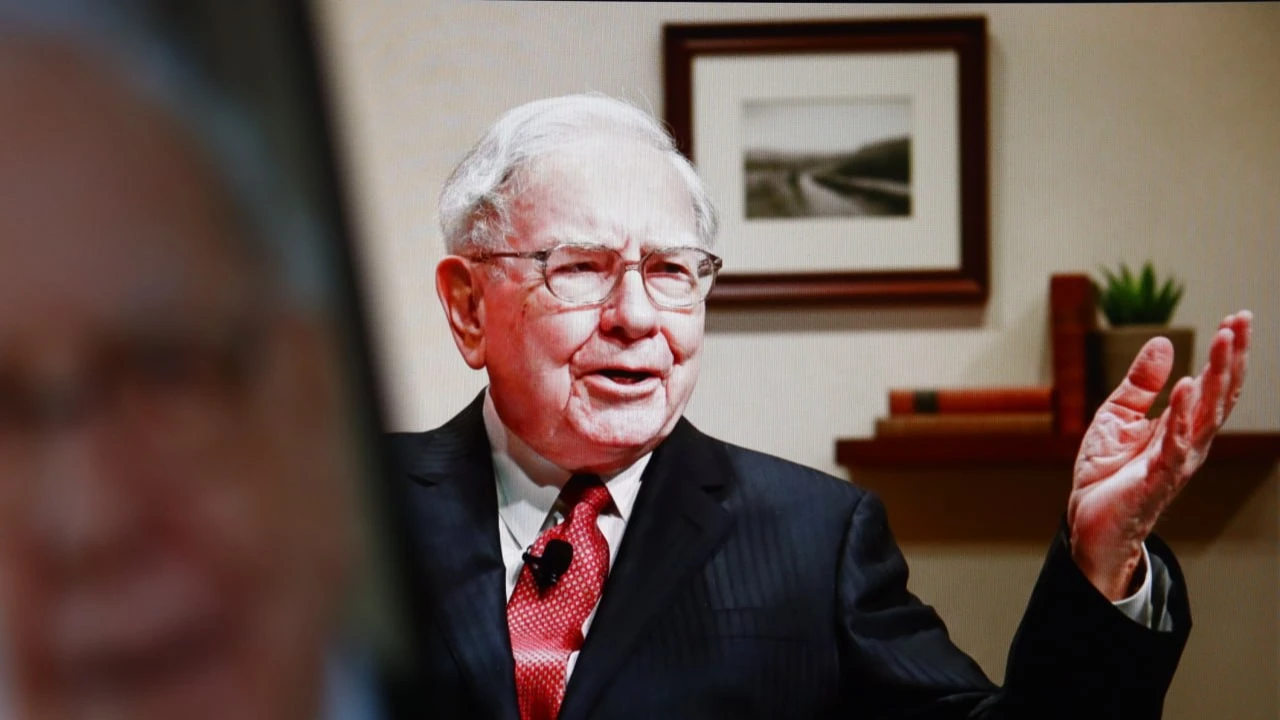
Warren Buffett doesn't just live a long life. In his 95 years, he is actively working, going to the office every day. What feeds this energy and why do some people retire at 65, while others don't seem to think about slowing down? A medical professional would probably answer something about proper nutrition and a healthy lifestyle. For the psychologist, however, the answer lies more in the motivation we choose in and for our lives. That is, why we actually live. This "longevity motivation" is what we can realize and develop in ourselves in order not only to prolong our years, but also to fill them with meaningful content.
Internal motivation as a source of energy after 60
At younger ages, people are often driven by external incentives: high salary, prestigious position, external approval - i.e. extrinsic motivation. We work to get something. However, with age there are some changes that everyone can observe, for example, in their older relatives or acquaintances, a kind of psychological shift. A meta-analysis conducted by a group of scientists led by K. Koij demonstrated that as a person grows older, the importance of intrinsic motivation increases. It includes the meaning and significance of the work process itself, which the person himself sees in his activity. It also includes the pleasure of challenging and solving a difficult task, as well as the feeling of being useful.
Enjoyment of the process
So why does Buffett work? Clearly not because of a need for bonuses or raises. He has had money for a long time. The billionaire continues to work every day because the process of analysis, decision-making and management is a game for him. For someone World of Tanks is a game, but for Buffett it is management, deals.
Why is Buffett working? This game is clearly not boring, because Buffett could have stopped and retired long ago. It is conducted for itself, the game for the sake of the process, the game for the sake that it just goes on. After all, you have to agree, when there is no life, there is nothing to go on. That's Buffett's "why?" Buffett's motivation. It is purely internal, connected with mastery and autonomy.
Thus, for longevity, you need to find a cause that will be a source of energy for you, not just a consumer of it.
The secret engine of a long and active life
Play is good, it's both fun and good for the brain. But what's at an even deeper level? Behind all of Warren Buffett's accounts and charts is probably the billionaire's unquenchable curiosity. It's not just a job, it's an ongoing quest to find information, to understand cause and effect. It's a Lie to Me series in real time and with real people. It is this drive to learn in the broad sense of the word that may be one of the most powerful factors determining active longevity.
Psychological studies, particularly an analysis of the Western Collaborative Group Study, have shown that older adults with high levels of situational curiosity, that is, a craving for specific information, lived an average of five years longer compared to less curious people.
And curiosity is not only a sign of an alert mind, but also a defense mechanism. The constant cognitive load of searching for answers literally "trains" the brain. Like practicing on a demo account when you familiarize yourself with the market, practicing skills. Research supports this thesis, linking high cognitive activity to a lower risk of dementia because it helps build what's called "cognitive reserve." Buffett, it could be argued, demonstrates this lesson: you need to retain and cultivate the area of knowledge that you are truly passionate about.
The formula for a successful career
Longevity and professional success are inextricably linked. This somewhat logical or intuitive conclusion is confirmed in a study that Lewis Terman started back in 1921 (he also developed a test measuring a person's intelligence level). It lasted, thanks to the psychologist's students and followers, for more than 80 years and revealed two important things. First, intelligence is not a direct guarantee of career success and a happy life. Second, people with a high level of personal organization and who were professionally successful lived on average several years longer than their less organized peers.
Here, the level of personality organization is understood more as a combination of personality traits from the so-called Big Five. These are five basic, global traits:
Neuroticism - a tendency toward negative emotions, anxiety, restlessness, and emotional instability
Extraversion is sociable, assertive and outward-looking, and introversion is a focus on the inner world
Conscientiousness is a level of organization, responsibility, self-discipline, and goal striving,
Openness to Experience - a tendency to be curious, imaginative, out-of-the-box thinking and new ideas,
Agreeableness - degree of trust in the world, altruism and willingness to cooperate.
Of all these "five", it was integrity that proved to be the most important for longevity. Here it is not simply understood as "being a good worker". From a psychological point of view, it is orderliness and planning, self-discipline and responsibility, as well as purposefulness, which means that you methodically move towards the tasks at hand without giving up in the face of difficulties. The bottom line is that active and structured participation in life, whether at work, in the community, or in a hobby, is the key to staying healthy and prolonging life.
More recent research has shown that qualities such as planning, self-discipline, and persistence can and even should sometimes be seen as vital defense mechanisms, especially for those who have not achieved resounding success but have remained highly active.
Betting on meaning
Psychology speaks of psychological vitality - the energy that not only triggers behaviors and actions, but sustains them over time. Later in life, when time horizons, and thus planning horizons, are perceived as limited, people instinctively focus on emotionally meaningful goals and the present moment. They seek not what will benefit them in the future, distant or not, but what is deeply satisfying in the current moment. That is, the philosophical maxim works: the past is gone, the future (and death) is not yet here, but there is what I am doing now.
Buffett has probably also reached the pinnacle in that he has created for himself a job that gives him maximum autonomy, continuous intellectual stimulation and a great sense of generativity - from the word generate: to generate, to create - the ability to create something of value and pass it on to others. His occupation may be his yet another "why?" that makes his life meaningful on a daily basis.
Longevity is not always and not so much a gift of fate, but an actively built lifestyle and style of thinking, based on constant, meaningful activity. They are based on intrinsic motivation, disciplined activity and unquenchable curiosity. And that's what we can consciously develop in ourselves, those investments that we can make without "leverage" and that we won't need to "short" on "hayes". This is how we can extend the years and make them the most vivid and meaningful.
This article was AI-translated and verified by a human editor