"Like a Superpower": The FT Reports on the Investment Boom in 'Mind-Reading' Devices
The neurotechnology sector is experiencing an influx of capital amid successful clinical trials and government support

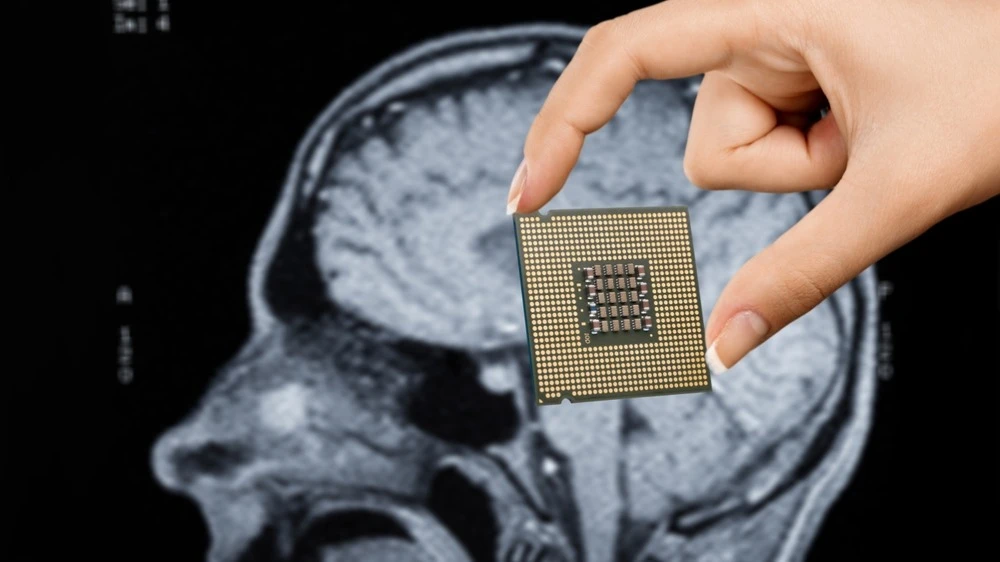
The most ambitious startups are developing invasive devices that are surgically implanted into the skull / Photo: Shutterstock.com
Startups developing brain-computer interfaces (BCIs) have already raised more than $1 billion from investors this year, whereas last year it took them four years to raise $1.56 billion, the Financial Times reports, citing data from PitchBook.
The startup Neuralink, founded by Elon Musk, remains the leader in attracting investment: over the past ten years, the company has raised more than $1.3 billion in seven funding rounds. However, dozens of competitors developing different approaches to connecting computers to the nervous system are also receiving significant funding.
“The industry is developing rapidly as investment flows into neurotechnology, even though the technology itself has long been studied and validated in academic circles,” noted Michael Meiger, CEO of the startup Precision Neuroscience. “Now, as an industry, we are turning this revolutionary technology into products that will have a broad impact.”
There are currently fewer than 200 people worldwide who have had BCI devices implanted that read neural activity and convert it into computer commands. One of them is 35-year-old American Jason Knight, who had a Precision Neuroscience interface implanted as part of a clinical trial during surgery to remove a brain tumor.
“Being able to control a computer with my mind, move the cursor across the screen, and play games—it was incredible. It was like telekinesis. I felt as if I had gained a superpower,” he said of his first experience using a BCI.
From Implanted Chips to Head-Mounted Scanners
Brain-computer interfaces could restore speech and mobility to people who have lost them due to injury or illness. If the technology becomes safe and affordable, it could make computers and prosthetics a more direct extension of the human body, transforming the relationship between people and machines, notes the FT.
The most ambitious startups are developing invasive devices that are implanted into the skull through a surgical incision. Some interfaces, such as those from Neuralink, are equipped with electrodes that penetrate directly into brain tissue. Other developers, including Precision Neuroscience, are creating thin, flexible neurointerfaces that rest on the surface of the brain without penetrating it.

A separate area of research focuses on noninvasive systems that are worn on the head and do not require surgery. However, they are not yet sensitive enough to reliably convert neural signals into commands for a computer.
“All the excitement and funding right now is focused on implantable interfaces. Non-invasive methods have lower spatial resolution, but they hold great potential for development in the next few years—for example, for influencing brain activity,” says Damien Coyle, who heads the Institute for the Augmented Human at the University of Bath.
Geography of Investments
American startups such as Synchron, Blackrock Neurotech, Axoft, and Merge Labs have certain advantages—the well-developed U.S. venture capital market and regulatory environment—and the FDA is praised within the industry for its flexibility and responsiveness, according to the FT. Nevertheless, a cluster of neurocomputer interface developers is also taking shape in Europe. Among them are Germany’s CorTec, the Netherlands’ Onward Medical, Spain’s InBrain, and Switzerland’s Neurosoft and Ability Neurotech.
“The advantages of operating in Europe lie in our rich traditions of engineering and precision manufacturing, as well as our strong talent pool in the field of neuroscience,” said Frank Dezier, CEO of CorTec. He added, however, that Europe faces a serious shortage of late-stage investment and capital for scaling up, and lacks a regulatory body that “would guide and advise manufacturers, as is the case in the U.S.” That is why CorTec chose the University of Washington and the Mayo Clinic in the U.S. for the first clinical trials of its devices.
In China, the industry is also growing rapidly. Last year, Beijing designated neural-computer interfaces as a strategically important sector and approved a “roadmap” calling for the creation of two to three world-class companies by 2030. According to the analytics firm ITJuzi, in the first half of 2026, venture capitalists invested 7 billion yuan ($1 billion) in the neurotechnology sector through 60 deals.
According to the Financial Times, about a dozen Chinese companies are currently working on invasive devices, and even more are working on non-invasive ones. Among the leaders is NeuroXess, which develops flexible implants for the treatment of severe neurological disorders. Analysts attribute China’s advantage to its large patient base for clinical trials and regulatory support.

Two-Way Communication and the Prosthetics of the Future
Most BCI interfaces operate in one direction—converting brain signals into electronic commands. But some companies are developing systems capable of sending feedback signals, creating what’s known as a closed loop. CorTec is one of them: “It’s like a dialogue with the brain: we adapt our therapy to the patient’s individual signals. In cases of stroke, we target the motor cortex, reading and stimulating cells so that they activate simultaneously. Neurons that activate simultaneously form connections with one another,” explained Dezier.
One promising opportunity may arise at the intersection of neural interfaces and another rapidly developing field—prosthetics. The British company Open Bionics creates prosthetic hands equipped with sensors that detect the movement of the user’s remaining muscles and transmit signals to the artificial hand. Since 2018, the company’s revenue has been growing by an average of 60% per year. According to Joel Gibbard, co-founder and CEO of Open Bionics, it is already technically possible to create an artificial hand that replicates natural movements, but the control systems for such prosthetics remain “very, very primitive.” Neurointerfaces are capable of solving this very problem by providing a direct connection to the brain and, through bidirectional signal transmission, restoring the sense of touch.
For now, Open Bionics is banking on the superhero image: the Hero Arm for children is available in designs licensed from Disney and other franchises, including “Black Panther.”
This article was AI-translated and verified by a human editor