Limit down: what is happening in the UAE

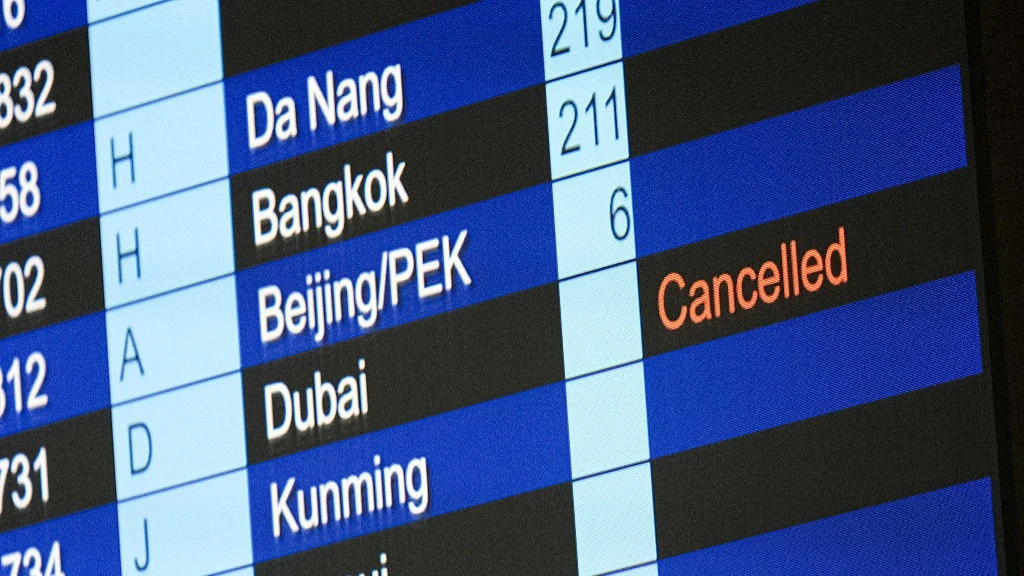
The US consulate in Dubai was attacked by a drone, air traffic with the Emirates is restricted. Photo: Sawayasu Tsuji/Getty Images
UAE stock exchanges opened down, the first trading day in the Emirates after the war started. In order to stabilize the market, trading floors temporarily set the limit down threshold - limit down - at 5%. Lyudmila Milevskaya, Oninvest's correspondent in the UAE, tells us how life in the country has changed since the start of military operations.
First trading day after the attacks: UAE bourses open downward
For two working days in the Emirates both stock exchanges - in Dubai and Abu Dhabi - did not work. The latter is the largest in the region. The authorities decided to close both sites for a while after the country was attacked by missiles and drones from Iran. On March 4, the index of the Dubai trading floor DFMGI showed a decline of 4.65%. On the Dubai Financial Market, among the fall leaders were Emirates Bank NBD, Dubai Residential REIT (a closed-end Shariah-compliant fund, the largest owner and operator of housing in Dubai), Dubai electricity and drinking water provider DEWA, and Air Arabia, all down ≈5%. The growth leaders section remained empty.
Abu Dhabi Securities Exchange also opened in the negative. ADX General Index lost about 3.5%. Two companies were the leaders of growth: local Commercial Bank International and Insurance House - about 1%. Abu Dhabi National Oil Company, developer Aldar and Abu Dhabi National Hotels were the leaders of decline - all lost 5% each.
Turbulence mode: airline promotions and limited connectivity
Air traffic in the country is still limited. On the evening of March 3, the UAE Ministry of Economy and Tourism said that more than 80 additional flights with a total capacity of more than 27,000 passengers affected by the recent events were scheduled. On the evening of March 2, UAE carriers Emirates, Etihad and flydubai resumed flight operations on a limited basis, but scheduled flights remain out of service. Shares of a number of major airlines have fallen since the war began. Air France-KLM shares have lost more than 16% in the two days since the start of the work week. Lufthansa shares fell 9% in the first two days. Shares of International Consolidated Airlines Group S.A., which includes British Airways, fell on Monday by almost 5.5%, on Tuesday - by another 5.4%. American airlines also closed in the negative on Monday. Thus, shares of United Airlines fell by 2.9%, and shares of Delta - by 2.2%. But US airlines closed in the green zone already on Tuesday (0.5% and 0.07%, respectively). United is the most widely represented of the U.S. carriers in the Middle East. Investors were deterred by fears of higher fuel prices and lower demand for flights.
Drones have hit the cloud: how Amazon and banks have been affected
A war in one of the world's most technologically advanced countries has caused the unimaginable to happen: a cloud server outage. On Sunday, two Amazon Web Services data centers in the Emirates were attacked by drones, the company reported a fire. This led to a power outage and temporary unavailability of the server area. Reuters reported that the outage affected about a dozen key cloud services. Reuters later quoted an update on the status page of Amazon Web Services' (AWS) cloud division as saying, "In the UAE, two of our facilities were directly impacted, and in Bahrain, a drone strike in close proximity to one of our facilities resulted in physical impact to infrastructure." Abu Dhabi Commercial Bank reported on Monday that its platforms and mobile app were unavailable due to a regional IT failure, but did not directly link the problem to the AWS incident. On Tuesday, the mobile app was still not working.
First Abu Dhabi Bank, the UAE's largest bank by assets, also reported on Monday evening technical problems affecting online and mobile banking.
The UAE is among the top three leaders in the region in data center construction, notes columnist Lionel Laurent. Unlike many other countries in the region, the Emirates did not bet on oil, but on attracting investment in the technology business and the financial sector. Now the image of a glamorous "safe harbor" is shaken, he believes.
The success of Dubai and Abu Dhabi in turning the country into the "Switzerland of the Middle East" can be measured by the number of hedge funds, influencers and white-collar workers who flocked here for the sun, sea and zero income tax. In recent days, however, they count for something else entirely - how many interceptors are left to repel Iran's missile fire while war engulfs the region. The illusion of the UAE and its neighbors as a safe haven has been seriously shaken.
Laurent notes that the UAE is being drawn into a conflict that is beginning to threaten the region's critical infrastructure - desalination plants, sea lanes, data centers: "This is a far cry from the 'stability first' model that their leaders have been promoting."
Supermarkets and prices
Major grocery chains report no availability problems, just people buying more than usual. Around Abu Dhabi's major retail chains, parking lots were full on Sunday. Delivery from major chain stores was also busy over the weekend, but on Monday and Tuesday it was possible to place an order with delivery within an hour or two.
On Tuesday, March 3, the authorities held a briefing where they once again assured that everything is under control, including the situation with food prices. A digital price monitoring system for nine major categories of goods (including bread, eggs, milk, sugar, poultry) is used to track prices. It is forbidden to increase the prices of these goods without prior approval of the Ministry.
On Tuesday, social media filled with footage of UAE President Sheikh Mohammed bin Zayed and Defense Minister Sheikh Hamdan bin Mohammed Al Maktoum strolling through the iconic Dubai Mall and chatting with visitors to reassure the country's residents.
Robotaxi on pause
Chinese robotaxi companies Baidu (Apollo Go autonomous cab platform) and WeRide reported on March 1 that they were suspending operations in Dubai amid conflict. WeRide in Abu Dhabi and Riyadh planned to continue operations. The companies were just beginning to roll out their operations, with WeRide launching last December and Apollo Go planning to start offering fully autonomous services in the region next month.
What residents think
In Abu Dhabi, the night was quiet, we did not receive alerts about attacks, although explosions were heard in the evening. Daria Nevskaya, founder of Nevskaya Consulting FZCO, told Oninvest what was happening in Dubai on Saturday night to Sunday:
We spent the first night after the situation escalated at the Marriott on Palma. It was turbulent: the Fairmont Hotel, which was hit by the raids, is nearby. But tourists even ran to shoot content on the balcony. On Sunday morning, some of the locals began to think about getting away from Dubai as major landmarks like the Burj Khalifa and the Burj Al Arab Hotel were targeted in the raids. People started leaving for hotels in Hatta, Al Ain, if any UAE resident needed to leave urgently, they went to Oman.
The situation is now normalizing in Dubai. says Nevskaya.
On Sunday, Telegram founder Pavel Durov expressed his opinion on the situation:
Unfortunately, I had to leave Dubai for Europe - so not only am I missing out on free fireworks from Iran, but I'm also putting myself at greater risk. Given the crime rate in Europe, Dubai is statistically safer even with rockets flying. Can't wait to go back&
The publication on X has already garnered more than 6.5 million views and 1.1 million on Telegram.
This article was AI-translated and verified by a human editor