Lufthansa expects profit growth despite the reduction of 20 thousand flights. How?

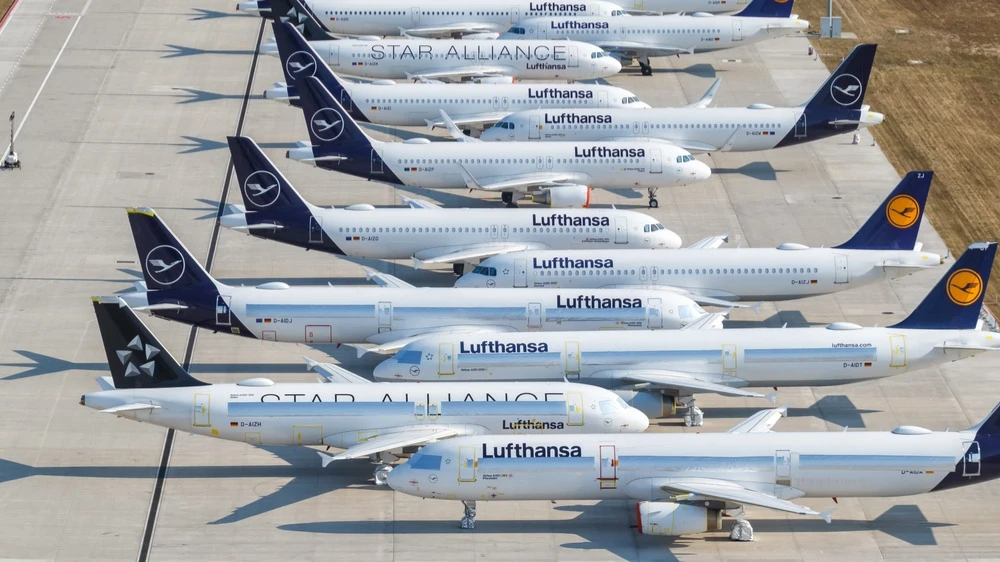
Lufthansa expects year-end profit growth despite flight cuts / Photo: Markus Mainka / Shutterstock
Despite the impact of the war in the Middle East, German airline Lufthansa said in its first-quarter report that it expects 2026 earnings to grow "significantly" year-on-year. The carrier hopes to achieve such results by increasing ticket prices, optimizing its route network and cutting costs, including the decommissioning of less efficient aircraft.
Details
- At the end of 2026, Lufthansa's adjusted operating profit will be "significantly above" the level of 2025, according to the company's report (then it was estimated at € 1.96 billion). Lufthansa made similar estimates before the war in the Middle East. However, now, despite the increased risks, Lufthansa notes that against the backdrop of the Iranian crisis, some passengers will reorient from the airports of the Gulf countries to the company's hubs, which will support demand for certain long-haul routes Lufthansa.
- Thus, while the airline's traffic in the first quarter came under pressure due to the war in the Middle East - as a result of temporary flight cancellations as well as strikes by Lufthansa employees in February and March 2026 - at the same time, strong demand for Lufthansa's routes to Asia and Africa in March 2026 - against the backdrop of the war - had a positive impact on passenger traffic, the report said.
Overall, the capacity of Lufthansa's passenger business in the first quarter of 2026 was up 1% year-on-year, while the load factor (defines the percentage of seats occupied by passengers out of the total number of seats offered) increased by 3.6 p.p. to 82.2% over the same period.
Increased demand for some of Lufthansa's long-haul routes allowed the company to raise prices for premium seats. According to its data, moderate growth in passenger traffic on long-haul routes compensated for a slight reduction in capacity on short-haul and medium-haul routes.
- At the same time, the company warned of growing risks, including a sharp rise in jet fuel prices and possible shortages in the second half of the year. Lufthansa estimates the additional financial burden due to its rising prices at about €1.7 billion ($2 billion) for the year, which, according to the airline, leads to the need for additional cost-saving measures. Thus, the company has already decided to close the regional carrier CityLine and retire older, less fuel-efficient planes, which, among other things, led to the reduction of 20,000 flights from Ma to October 2026, Bloomberg writes. The carrier also expects to compensate for the increased costs of jet fuel by increasing revenue from ticket sales and optimizing its route network.
"The current situation forces us to carefully deploy all available levers to reduce costs, increase efficiency and mitigate risks in order to maintain our ability to act decisively. The company's annual profit is likely to be below initial expectations," said CFO Till Streichert. His quote is quoted by Bloomberg.
He also said the company is confident in its ability to largely offset rising fuel costs in the second half of the year "based on current booking patterns," adding that it remains confident in its outlook for the year "provided there are no fuel supply disruptions or new strikes" by workers.
In April, the company faced a number of strikes. They were related to the demands of the pilots' and flight attendants' unions for better labor conditions, primarily higher pension payments and more favorable contracts.
What else did the company report
- Lufthansa's first-quarter revenue rose 7.6% year-on-year to €8.7 billion ($10.2 billion), beating Visible Alpha analysts' expectations of €9.3 billion ($10.9 billion), The Wall Street Journal reported.
- Lufthansa's adjusted loss before interest and taxes (EBIT) in the first quarter narrowed 15% year-on-year to €612 million ($720 million), beating the average estimate of analysts who expected a deficit of €650 million ($765 million), Bloomberg writes.
- Net income in the first quarter fell about 25% year-on-year to €665 million ($782 million).
The results were further supported by Lufthansa's maintenance division (specializing in aircraft repair and maintenance) as well as the cargo business, which benefited from strong demand for air cargo transport amid disruptions caused by the conflict in the Middle East.
What about the stock
Lufthansa shares rose 8.6% in Frankfurt trading after the confirmation of the annual forecast, but then slowed down and are adding just over 6% at the time of publication. They are down 2% since the beginning of the year.
Of the 22 analysts covering Lufthansa shares, the majority - 14 - advise buying the airline's securities, Marketscreener data shows. Seven are neutral and recommend keeping them in the portfolio. Only one advises selling.
Context
The world economy may face a shortage of aviation fuel amid the ongoing blockade of the Strait of Hormuz. The head of the International Energy Agency, Fatih Birol, warned in April that EU countries have only a few weeks left before stocks run out.
Aviation kerosene prices by the end of March rose 103% from the previous month and approached $200 a barrel, according to the International Air Transport Association (IATA). This increased airlines' costs by billions of dollars and forced them to cut routes and raise ticket prices, The Wall Street Journal reported on Ma. 2.
This article was AI-translated and verified by a human editor