Reserves close to lows: Goldman Sachs warns of jet fuel shortages

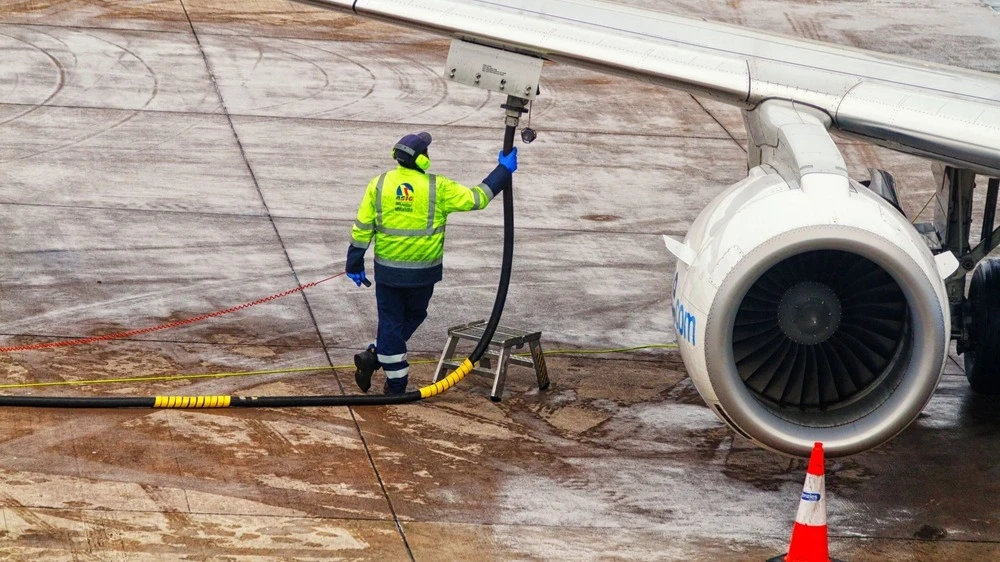
Jet fuel stocks fall to critical levels amid disruptions in Strait of Hormuz - Goldman Sachs / Photo: Milosz Maslanka / Shutterstock
Despite disruptions in oil supplies through the Strait of Hormuz, the global economy is not in danger of an oil shortage, according to Goldman Sachs analysts. However, stocks of jet fuel and other key petroleum products, which provide air transportation and uninterrupted operation of industrial supply chains, are rapidly decreasing, they warn. The analysts' data is cited by Business Insider.
Details
"The rate of inventory depletion and supply losses by region and product type is worrisome: available refined petroleum product reserves are rapidly approaching very low levels," Goldman Sachs observed.
Analysts estimate that while total oil inventories remain above critical levels, shortages are evident in selected refined products - primarily jet fuel, petrochemical feedstocks such as naphtha (a key feedstock for plastics and industrial chemicals), and liquefied petroleum gas (LPG) used for plastics and chemicals.
Goldman Sachs estimates that commercial jet fuel stocks in Europe - excluding government strategic reserves - could fall as early as June to below about 23 days of demand, which the industry considers critically low, according to International Energy Agency estimates.
Global commercial inventories of refined petroleum products have shrunk to about 45 days of demand - compared to about 50 days before the recent disruptions, analysts have calculated. By comparison - total global oil inventories are now sufficient for about 101 days of consumption, Business Insider notes.
Naphtha stocks have also declined significantly since the end of February: in particular, they fell by 72% in Fujairah storage facilities in the UAE and by 37% in northwest Europe (Amsterdam-Rotterdam-Antwerp hub), according to Goldman Sachs estimates.
Asian countries - excluding China - and parts of Europe look most vulnerable to shortages of refined fuels, the analysts said in a note. Goldman Sachs names South Africa, India, Thailand and Taiwan as the markets most exposed to the risk of shortages.
What you need to know about recycled fuel
Even when crude oil is available on the market, it cannot always be refined quickly enough into usable fuel, Business Insider points out. Refinery capacity constraints, trade disruptions and export restrictions create problems and risks, because of which surpluses in some regions cannot quickly compensate for shortages in others, analysts explain. This is most acute in aviation, where the world's largest airlines are already canceling flights amid growing fears of jet fuel shortages.
"Even if supplies through the Strait of Hormuz begin to recover soon, full normalization [of the situation] will take at least several weeks," analysts said.
Context
World airlines have already canceled more than 12 thousand flights for Ma, as well as reduced 2 million seats in their schedules for the next month, according to data from the analytical company Cirium, cited by the Financial Times (FT). In the face of possible disruptions in fuel supplies, some companies are also switching to more compact and fuel-efficient airplanes, Cirium said.
Since the war in the Middle East began in late February, the cost of jet fuel has doubled to nearly $200 a barrel. This has added billions of dollars to airlines' costs and forced them not only to cut routes but also to raise ticket fares, The Wall Street Journal reported. At the same time, the closure of airports due to fighting in the Persian Gulf, through which passed a third of European routes to Asia, destabilized global traffic, the FT points out.
Brent crude futures for July delivery were trading around $113 a barrel on Ma. 5, while June contracts for West Texas Intermediate (WTI) were trading around $105 a barrel.
This article was AI-translated and verified by a human editor