Mark Mobius: investors have developed immunity to Trump's 'surprises'

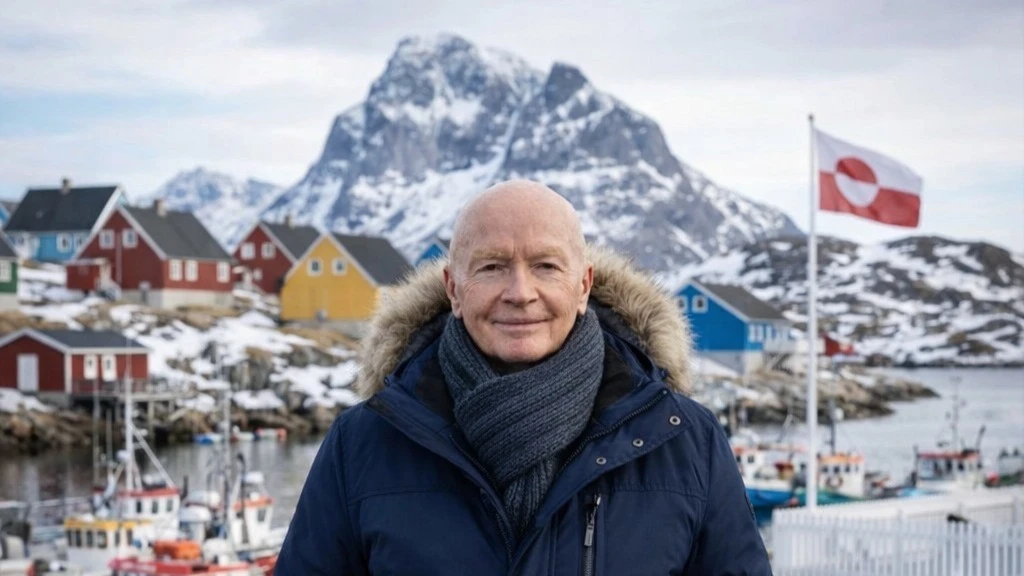
Mobius estimates that any attempt to force or administratively pressure Denmark will meet stiff resistance from U.S. lawmakers / Photo: X / MarkMobiusReal
The recent spiral of tensions around Greenland has not provoked sustained turbulence in the markets, notes Mark Mobius, founder of Mobius Capital Partners. According to the veteran investor, investors have adapted to Donald Trump's unpredictable policies, and the U.S. president's actual ability to change the island's status is limited.
Details
"The situation had little impact on financial markets: investors seem to have developed immunity to Trump's surprises and the threat of duties has been lifted," Mobius wrote in his blog on the Substack platform. The investor emphasizes that the market understands the institutional limitations of executive power in the U.S. "It is clear that while the president has full power, he is limited by U.S. law and the position of Congress."
Mobius estimates that any attempt to forcefully or administratively pressure Denmark would meet stiff resistance from U.S. lawmakers. "A bipartisan congressional delegation has already visited Copenhagen to send a clear message: lawmakers see Greenland as a partner and ally, not an 'asset,'" he notes.
The investor also points to the political split in the US on this issue. "While Democrats overwhelmingly reject Trump's rhetoric, the reaction of Republicans is mixed: some consider strategic cooperation logical, while others do not accept the very terminology of 'takeover'," Mobius emphasizes. He reminds that financial control remains in the hands of the legislative branch: "Ultimately, it is Congress that must authorize any military action, and by controlling the budget, it is able to block the financing of such an operation.
Context
On January 17, Trump threatened EU countries with new import duties of 25% if they refused to support his plan to gain control over Greenland. Investors reacted with a sell-off in stocks: the S&P 500 index fell more than 2%, showing the worst decline since October 2025. Sectors sensitive to trade wars, such as industrials and autos, were the hardest hit.
Markets reversed on January 21 after Trump's speech at the Davos forum. The US president promised "not to use military force" to acquire Greenland and withdrew threats of duties, announcing a framework agreement with NATO. Against that backdrop, the S&P 500 and Nasdaq rebounded 1.2%, recovering about half of their losses.
The island's sovereignty remains a red line, with Greenland's Prime Minister Jens-Frederik Nielsen and Danish Prime Minister Mette Frederiksen ruling out any talks on transferring ownership.
This article was AI-translated and verified by a human editor