Markets vote with money: why Middle East stocks don't believe Iran will win

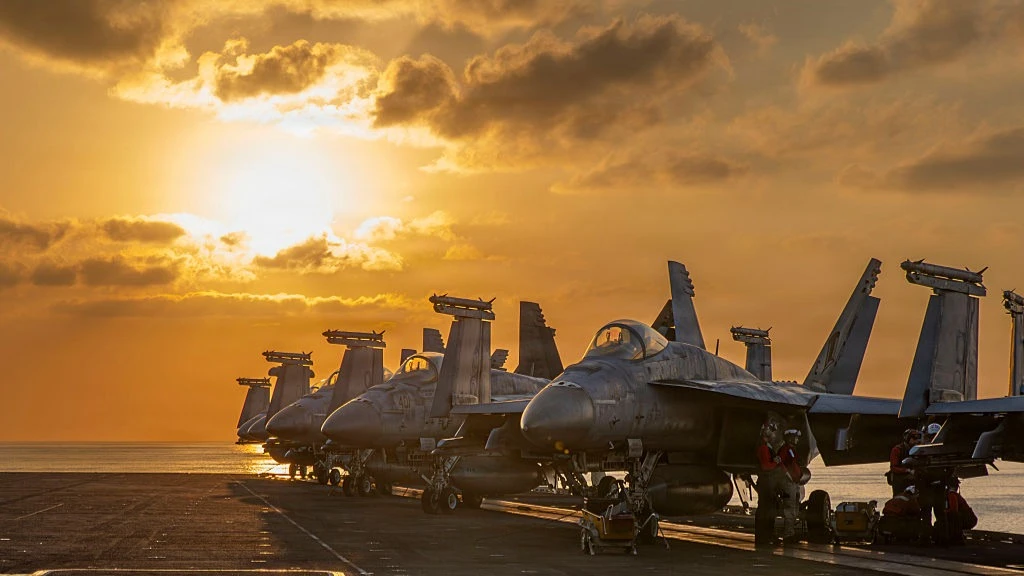
After geopolitical turmoil, oil, gold and stock prices often soar in the first few days of trading but usually normalize within weeks, even during protracted wars - Yahoo Finance. Photo: U.S. Navy via Getty Images
Israel launched a tenth wave of airstrikes on Tehran on Wednesday, with the country's defense minister vowing that "any leader" chosen by the Iranian regime would be an "obvious target for elimination". The price of Brent crude rose 12% in two days and continued to rise after traders assessed US President Donald Trump's order to insure and escort tankers passing through the Strait of Hormuz. Goldman Sachs head David Solomon believes that markets have reacted to the war in the Middle East with restraint, but investors will need a couple of weeks to make sense of what is happening. Elena Chirkova, Senior Partner at Movchan 's Group of Investment Management Companies, analyzes the markets' reaction to the conflict on her Facebook page.
Follow the money: what the numbers show
I marvel at the proponents of Iran winning the war in the Middle East. Several times I have read lists of targets hit by Iran. Allegedly that's a huge amount of damage. But why doesn't anyone look at the S&P Pan Arab index? It's actually down 6.85% for the month, down about 2.4% on Monday, and barely down on Tuesday. (And it still hasn't hit the lower peak of December 2025.) Meanwhile, most of the index is made up of large companies from Saudi Arabia, the Emirates, and Qatar, which are getting hit. I have a theory as to why it didn't fall. First, the damage is clearly insignificant. Second, oil prices have risen and exporters are benefiting. And most importantly, third. After defeating Iran, the Middle East will be a much calmer place. Because a country that openly says its goal is the destruction of other countries, and which has spread its proxy tentacles all over the Middle East, does not make it a calmer place. This time Iran will be milked for all it's worth - both its current stockpile of weapons and its ability to produce them. The US and Israel have multiples of superior power in terms of both quantity and quality of weapons. Military analysts estimate that they differ by 2.5 generations, which means Iran doesn't stand a chance. (Launchers are being hunted, the number of shells is not so important if there are no launchers).
Capital Alliance
There's a lot of talk that the world has become a world of entitlement for the powerful. I would say the rich as well. The rich are uniting with the rich, not on the basis of religion. So, on one side are the very rich Qatar, Emirates, USA and just rich Israel and Saudi Arabia, on the other side is poor Iran. That's also why it doesn't stand a chance. (Of course, wealth is not the only reason why they united, but an important one.)
Also wonder about all the memes about the exodus of realtors from Dubai. Really? What would I do now? If I wanted to buy an apartment in Dubai or Doha, I would look for sellers who have given in to the panic and are willing to sell at a discount. When it's all over, of course, there will be no discounts. Well, as a fund manager who invests in other funds, I'm going to go talk to a very cool Israeli fund. I've liked it for a long time, but I didn't invest because there was geopolitical tension around Israel and it wasn't 100% certain who would win, when and at what price - to what extent Iran would freeze Israel. Now there is clarity. Yesterday, I asked our analysts to take another look at this foundation and ask for a meeting. It's time to start talking.
Please note that I am not discussing the moral side of the war, only its financial implications.
This article was AI-translated and verified by a human editor