Mercedes-Benz profits are down 17%. What about the stock?
German automaker expects recovery in the second half of the year

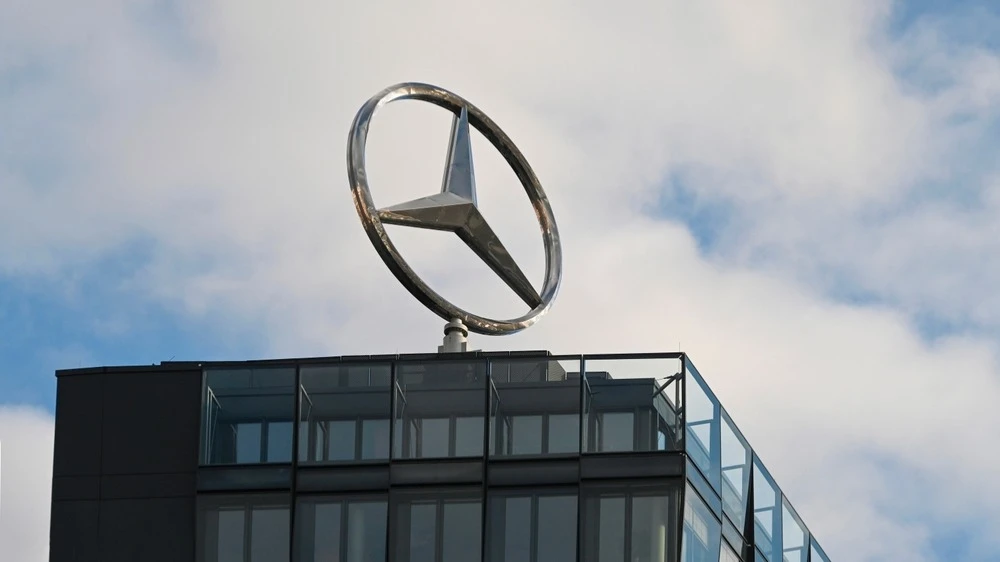
Mercedes-Benz Group's first quarter net profit fell 17.2% / Photo: Savvapanf Photo / Shutterstock.com
German automaker Mercedes-Benz Group reported on Wednesday, April 29, a decline in net profit and revenue for the first quarter of 2026. A significant decline in sales in China, which outweighed growth in the U.S. and the electric vehicle segment, had an impact. Mercedes hopes the second half of the year will be stronger, but warned that the conflict in the Middle East could undermine consumer confidence.
Details
Net profit of Mercedes-Benz Group in the first quarter fell by 17.2% year-on-year to €1.43 billion. Revenue fell by 5% to €31.60 billion. Sales of passenger cars fell by 6%. The automotive division's margin fell to 4.1% from 7.3% a year earlier. At the same time, the decline was less serious than analysts had predicted, Bloomberg reports.
The results of the German automaker were primarily affected by the performance in Asia, where sales collapsed by 24%. In China, the company's largest market, they collapsed by 27%. The company attributed this to "planned model changes, macroeconomic uncertainties and a continued challenging competitive environment."
A positive factor for Mercedes was the results of the electric car business: sales of fully electric cars increased by 9%, but plug-in hybrids were bought 20% less.
In addition, growth in North America provided some balance, with U.S. light vehicle sales up 20.3%. Additional pressure on profits in that region is being exerted by U.S. duties on imported cars, which complicate pricing, the company said. Last year, losses from U.S. trade restrictions totaled €1 billion, it said in February.
What's next?
Mercedes expects a stronger second half of the year. "The results of the first quarter allow us to stick to our full-year outlook. Strong demand for new products and a solid order book create the conditions for stronger momentum in the second half of the year," CFO Harald Wilhelm was quoted as saying in a company release.
The automaker is betting on a series of new models that should help restore business growth: it is combining updated models with internal combustion engines and a new generation of electric vehicles to expand the lineup and improve margins. Key new additions include an electric version of the best-selling GLC and a revamped flagship S-Class, scheduled to debut in the fall.
Meanwhile, Mercedes warned that the prolonged conflict in the Middle East could erode consumer confidence, with demand for cars vulnerable to rising fuel costs, higher interest rates and declining asset values, Bloomberg noted. Still, the company has already factored an expected rise in oil prices into its forecasts, it said.
Investors and analysts are watching particularly closely to see if Mercedes can regain its position in China. The current sales slump in the region has forced the company to more actively pursue local developments and partnerships to customize models for the local consumer. However, at the Beijing Motor Show, which took place last week, the group's management admitted that it is preparing for a prolonged slump due to the region's economic weakness, Bloomberg reports.
What about the stock
Mercedes quotes jumped 2.5% in trading on April 29, before cutting the rise to about 1.2%.
Of the 24 analysts covering the automaker's stock, 12 are neutral, nine are bullish, and three suggest selling or shorting positions in these securities. Despite the majority's caution, the consensus remains at Outperform with an average target price of €61.57. This target implies a potential upside of more than 25% from the last close.
Context
Mercede has been struggling with falling sales for a long time, the DPA agency points out . By the end of 2025, the company's net profit has almost halved under the influence of trade duties, unfavorable exchange rates and fierce competition in China.
As the performance remained weak since 2024, the group launched a cost-cutting program. However, the group faces serious obstacles in Germany, where almost half of its production capacity is concentrated, Bloomberg writes. Current labor agreements guarantee the preservation of jobs at German plants until 2035. In this regard, Mercedes is forced to optimize its staff due to the natural outflow of employees, and the main measures to reduce production are transferred to foreign sites.
This article was AI-translated and verified by a human editor