Morning in New York: macro data will increase volatility

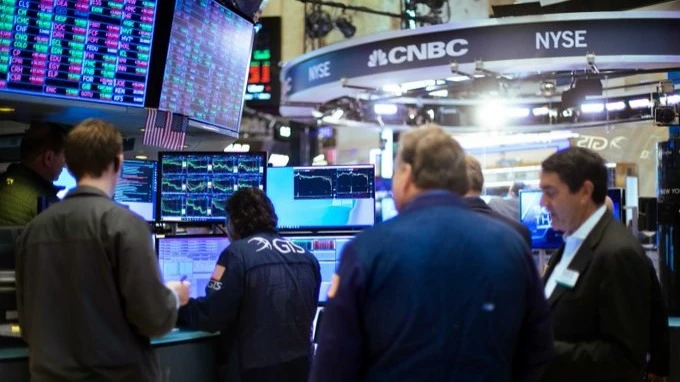
The cost of WTI crude oil has consolidated above $80 per barrel, which puts pressure on the U.S. stock market / Photo: X/NYSE
Daily review and forecast of events on the U.S. stock market from Mikhail Denislamov, Deputy Director of Freedom Capital Markets Research.
We expect
The most important macro publications this Friday will be the retail sales statistics for January and the February labor market report. In our assessment, the former requires a particularly cautious interpretation, as the weakness in December data was probably partly due to an overstated seasonal adjustment. With this in mind, the investment community will be watching not only the official month-to-month dynamics, but also for a possible revision of the December figures, as well as the structure of the January release.
The consensus expects a 0.3% m/m decline in total retail sales, following zero growth in December. We believe this forecast is likely to materialize given the weak auto sales data already released. That said, the more relevant components look steadier in our view. Excluding autos, we estimate that sales could rise by 0.3% m/m, while the benchmark group figure would rise by 0.4% m/m (consensus: 0% and 0.2%, respectively). If the benchmarks are confirmed, the market will see this as a sign of resilient consumer demand, despite the cooling of the overall indicator.
The Labor Ministry report may turn out to be formally weak. The number of new non-farm jobs is expected to be in the range of 0-30k. We view this as technical compensation for abnormally strong January data and believe that it will not change the general trend towards stabilization of the labor market with unemployment remaining at 4.3%. Average hourly earnings are projected to rise by 0.3% mom after 0.4% a month earlier, indicating moderate but still quite steady labor market pressures.
WTI quotes consolidated above $80 amid the actual blockage of the Strait of Hormuz and the lack of signs of an end to the conflict in the Middle East, which has already lasted for seven days. An alarming signal for the markets were reports of strikes on the UAE infrastructure, including Dubai airport, as it undermines the status of the region as a safe financial harbor. Further uncertainty is added by the legal wrangling surrounding Donald Trump's duty regime following a class action lawsuit by 24 states, as well as the public exchange of harsh statements from the heads of OpenAI and Anthropic on AI security and government contracts.
Embraer (EMBJ), Genesco (GCO), and Algonquin Power & Utilities (AQN) report before the open of trading.
Futures on S&P 500 show slightly negative dynamics. We assess the balance of risks for the upcoming session as neutral with increased volatility. Slowdown of oil rally, reduction of geopolitical uncertainty and strong details of macro releases are needed to improve risk appetite.
In sight
- Marvell Technology (MRVL) shares soared nearly 12% in the premarket after a strong quarterly report and a confident outlook. The company expects revenue to approach $11 billion in fiscal 2027, its main driver remains accelerating growth in the data center segment amid strong demand for AI infrastructure. Investors' positive reaction was also supported by expectations of further business expansion into custom chips and networking solutions for large customers.
- Quotes of Gap (GAP) declined by about 6% before the opening of the main trades, despite exceeding expectations of earnings and revenue figures for the quarter. Investors focused on risks due to duties and general cooling of consumption, as well as on conservative sales forecast for the current year.
- Samsara (IOT) is up 11% thanks to an upbeat full-year guidance that far exceeded analysts' average expectations. Exchange players positively welcomed the news about the active implementation of AI tools to automate work processes and improve the efficiency of operations.
- Ingram Micro (INGM) shares are losing about 13% on the pre-market due to the news about the intention of the largest shareholder (Platinum Equity) to sell a $200 mln stake in the company. Concerns about an oversupply of these shares in the short term offset the positive effect of fundamental improvements in the company's operating performance.
- Owlet (OWLT) stock is down about 23% ahead of the main session despite a fairly robust outlook for 2026. The company expects revenue growth of 19-23% and is betting on the development of Owlet360 subscription, OnCall telemedicine platform, as well as international expansion and solutions with artificial intelligence elements. The negative market reaction is probably due to investors' doubts about the feasibility of these plans amid tariff risks and persisting macroeconomic uncertainty.
The market on the eve of
March 5 trading on American stock exchanges ended with a decline, although the indices managed to recoup some of the intraday losses. S&P 500 fell by 0.56%, Nasdaq 100 lost 0.29%, Dow Jones fell by 1.61%, Russell 2000 fell by 1.91%.
The key driver of volatility was the escalation of the conflict in the Middle East and the mentioned rise in WTI oil prices above $80 per barrel for the first time since July 2024.
Shares of the "Magnificent Seven" showed mixed dynamics. AMD (AMD: -1.3%) was pressured by the news about the Trump administration's plans to tighten restrictions on AI chip exports.
The energy sector (XLE: +0.52%) looked better than the market amid the oil rally. Industry (XLI: -2.22%), including raw materials producers (XLB: -2.1%) were the outsiders.
Published macro statistics increased pressure on bonds. Initial jobless claims totaled 213k (consensus: 215k). Labor productivity and labor costs in the fourth quarter showed an increase of 2.8%, which exceeded average market expectations. This led to a 2-5 bps rise in Treasury yields. Investors fear that a strong labor market and rising costs will force the Fed to maintain tight monetary conditions longer.
An additional negative factor for the technology sector was reports of possible large-scale lay offs at Oracle (ORCL) due to cash shortages amid extreme capital spending on AI. Meanwhile, gold fell in price by 1.1% and bitcoin futures fell by 2.9%.
Company News
- Conglomerate Berkshire Hathaway (BRK.B: +2.6%) returned to buying back its own shares for the first time since Ma 2024. Investors saw this as a signal of management's confidence in the attractive intrinsic value of the stock.
- Okta 's (OKTA: +11%) quarterly report beat earnings and revenue expectations, although management gave a rather subdued guidance. Analysts emphasize the acceleration in subscription revenue growth, offsetting concerns about competition in the cybersecurity sector.
- Victoria's Secret (VSCO: -12.2%) reported strong financial results and announced the launch of a strategic review of non-core assets. The fall in its quotations was due to profit taking after a 160% rally over the last six months and extremely inflated investor expectations.
- Amprius Technologies (AMPX: +18.7%) successfully reported its fourth quarter results and gave a solid full-year outlook that exceeded Wall Street's average guidance. The growth drivers for its quotations were new contracts, expansion of cooperation with existing customers and improved production performance of the company's partners.
- Grocery Outlet (GO: -27.9%) disappointed the investing public with its 2026 reporting and guideposts, and reported increasing pressure on consumers, delayed federal payments, and the need to close a number of unprofitable stores due to increased promotional activity by competitors.
This article was AI-translated and verified by a human editor