The week after the Iran war began could be the worst for EU stocks in almost a year
However, there are "no signs of a large-scale panic sell-off", Barclays strategists state

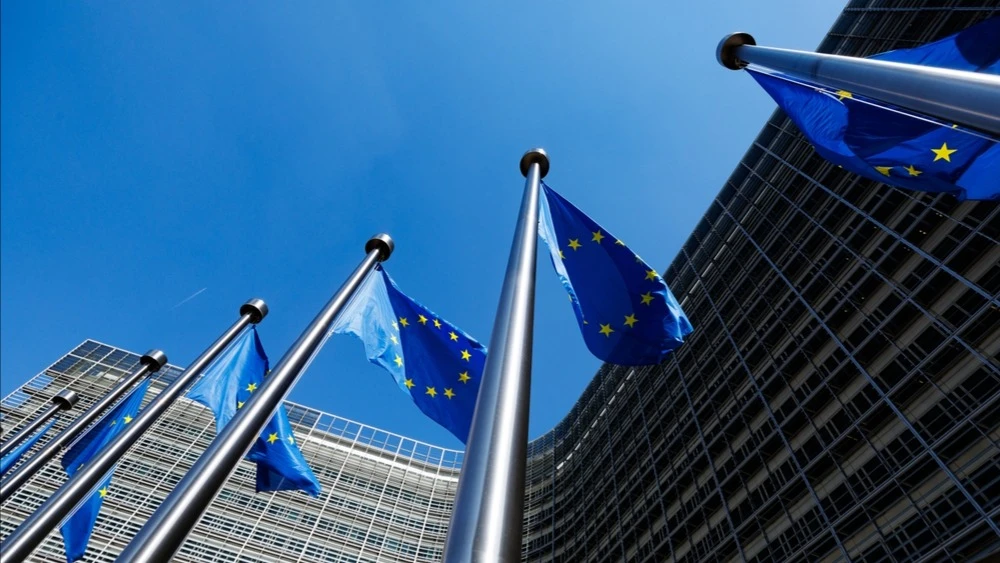
Photo: Christophe Licoppe / Shutterstock
European stocks are headed for their worst weekly decline since last April amid a war in Iran that shows no signs of ending soon, Bloomberg writes.
Details
- Although at the beginning of trading on March 6 pan-European index Stoxx Europe 600 at the intraday maximum rose by 0.6%, at the time of publication it went into the red zone by 0.3% to 602.95 points - its weekly decline is already more than 4%. The initial growth of the index was provided by securities of energy companies, which rose in price on the background of a jump in Brent oil prices above $85 per barrel after the actual stop of sea traffic through the Strait of Hormuz.
- On March 6, oil prices fluctuated upward, having recovered part of the previous decline. The world benchmark - Brent oil added more than 1%, trading at $86.5 per barrel. U.S. West Texas Intermediate (WTI) rose by 1.5% to $76.7 per barrel.
The rise in oil came after the U.S. issued India - the world's third-largest oil importer - a 30-day permit to resume purchases of Russian oil, CNBC reports, as well as warnings from Qatari authorities that if the conflict in the Middle East continues, it could "collapse the world economy": because of it, all energy-exporting countries in the Persian Gulf could cease production within weeks, which would lead to an increase in oil prices to $150 per barrel, the Financial Times writes. Before the escalation of the military conflict with Iran, Washington imposed "punitive" duties of 25% against India for the purchase of Russian oil, but in February they were canceled.
- German DAX index at the intraday maximum on March 6 also grew by 0.6%, but less than an hour after the start of trading fell into the minus by 0.16%; British FTSE 100 after a gain of 0.5% at the time of publication adds a symbolic 0.02%. French CAC 40 is down by 0.25% (after growth on March 6 by 0.5%), Italian FTSE MIB loses 0.41%, although at the opening of trading was also in the plus by 0.5%.
Among individual European companies, shares of Swedish medtech company Sectra AB rose 12% in Stockholm and led gains in the Stoxx Europe 600 index after the company reported net sales rose 8% in the nine months from Ma 2025 to January 2026 to $272 million. Its operating profit for the same period reached $54 million, up 21% from a year earlier.
Shares of German defense manufacturer Renk Group jumped 6%. Shares of British broadcaster ITV rose 4% in London after reports that the broadcaster is continuing talks with Sky Group on the possible sale of its television business.
On Thursday, March 5, stocks traded in Europe ended trading mostly lower due to uncertainty surrounding the conflict in the Middle East. This outweighed the cautious optimism that allowed regional markets to partially recover losses a day earlier, notes CNBC.
"The de-risking of markets has been orderly so far and we are not seeing signs of large-scale panic selling," said Barclays strategists (quoted by Bloomberg).
Context
The large-scale US and Israeli operation against Iran is now in its seventh day: Iran has responded to the attacks by sending dozens of its missiles and drones to at least five Middle Eastern countries where US military bases are located; while Israel has already conducted its 12th wave of airstrikes on Tehran, Bloomberg writes.
At a March 5 press conference, U.S. Defense Secretary Pete Hegseth said the U.S. has "just started a war." "Iran is hoping that we can't sustain this kind of action for long - and that's a serious mistake. The United States has no lack of resolve... If you think you've already seen something, just wait. The amount of combat power that is still being and will be directed against Iran will be many times the current level, if you consider both our capabilities and those of the Israeli Defense Forces," the agency head told reporters.
This article was AI-translated and verified by a human editor